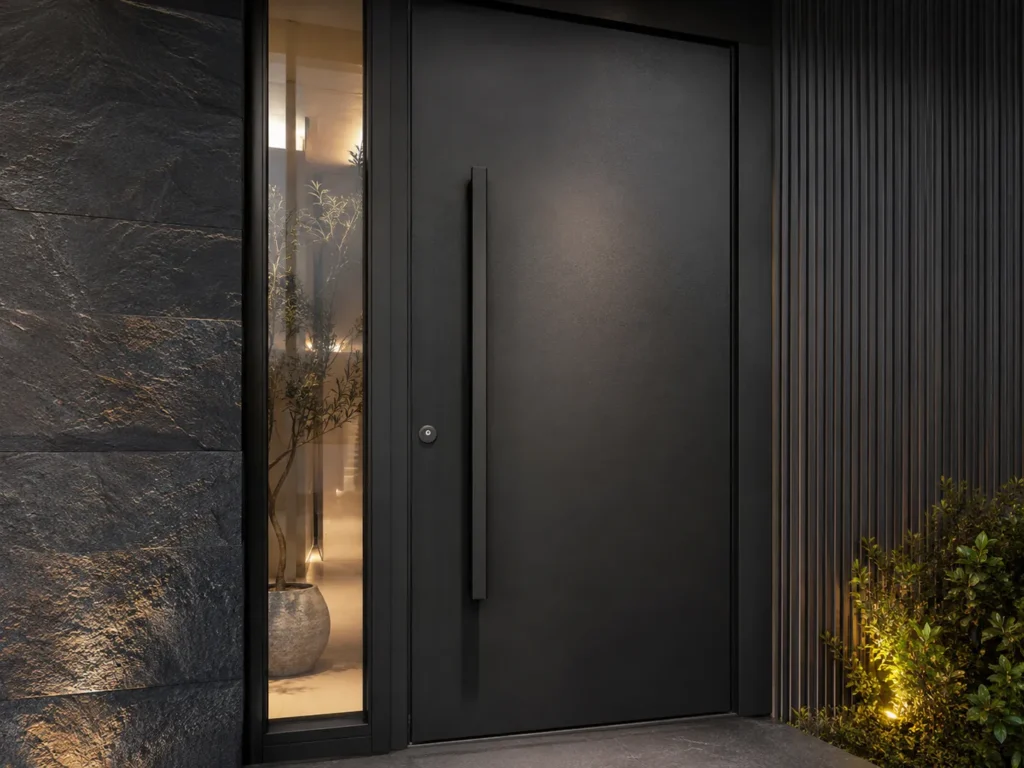
A front door is no longer just a point of entry. In luxury residential and commercial architecture, it defines the first impression of the entire property. For villas, boutique hotels, private clubs, office buildings, and high-end renovation projects, the entrance must look refined, perform reliably, and support the architectural language of the facade.
That is why black frame aluminum front doors have become a preferred choice for many modern projects. They combine slim-profile design, strong visual contrast, long-term weather resistance, and flexible customization. Compared with traditional timber doors or heavy steel systems, aluminum offers a balanced solution for projects that require both aesthetics and performance.
At George Homes, we work with builders, developers, contractors, and homeowners who need coordinated building solutions across doors, windows, furniture, kitchen systems, sanitary products, tile, and other project materials. In this article, we explain why black aluminum front doors are popular, what specifications matter, and how to choose the right system for your project.
Quick Answer: Why Are Black Aluminum Front Doors Popular?
Black aluminum front doors are trending because they offer a rare combination of modern design, durability, low maintenance, and customization. The black frame creates a strong architectural outline, while aluminum provides the strength needed for larger openings, slim profiles, glass panels, pivot systems, and smart hardware integration.
For high-end projects, the main advantages are clear:
- Clean, minimalist appearance
- Strong contrast against stone, concrete, wood, render, and glass facades
- Better resistance to warping compared with timber
- Lower maintenance than painted wood or untreated steel
- Compatibility with thermal breaks, insulated glass, smart locks, and multi-point locking
- Flexible customization for villas, hotels, apartments, and commercial entrances
However, not every black aluminum door is equal. The final performance depends on the aluminum profile, thermal-break design, coating quality, glass specification, hardware system, drainage detail, and installation accuracy. For B2B buyers, the goal is not simply to choose a black door, but to specify a complete entrance system that fits the climate, building type, security requirement, and project budget.
Design Value: Slim Frames, Strong Contrast, and Quiet Luxury
Modern architecture has moved toward cleaner lines, larger openings, and fewer decorative elements. Instead of relying on carved panels or heavy ornamentation, luxury facades now often use proportion, material contrast, and precise detailing to create visual impact.
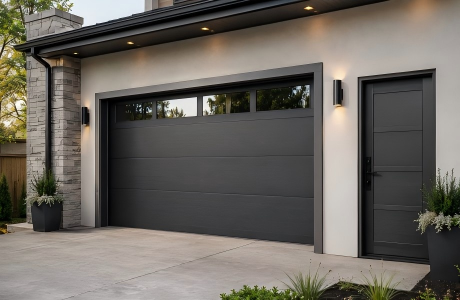
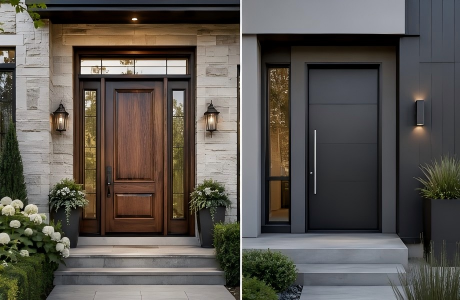
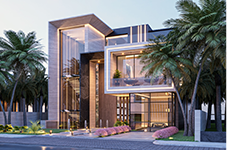
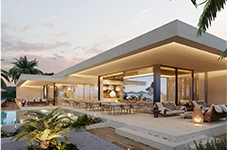
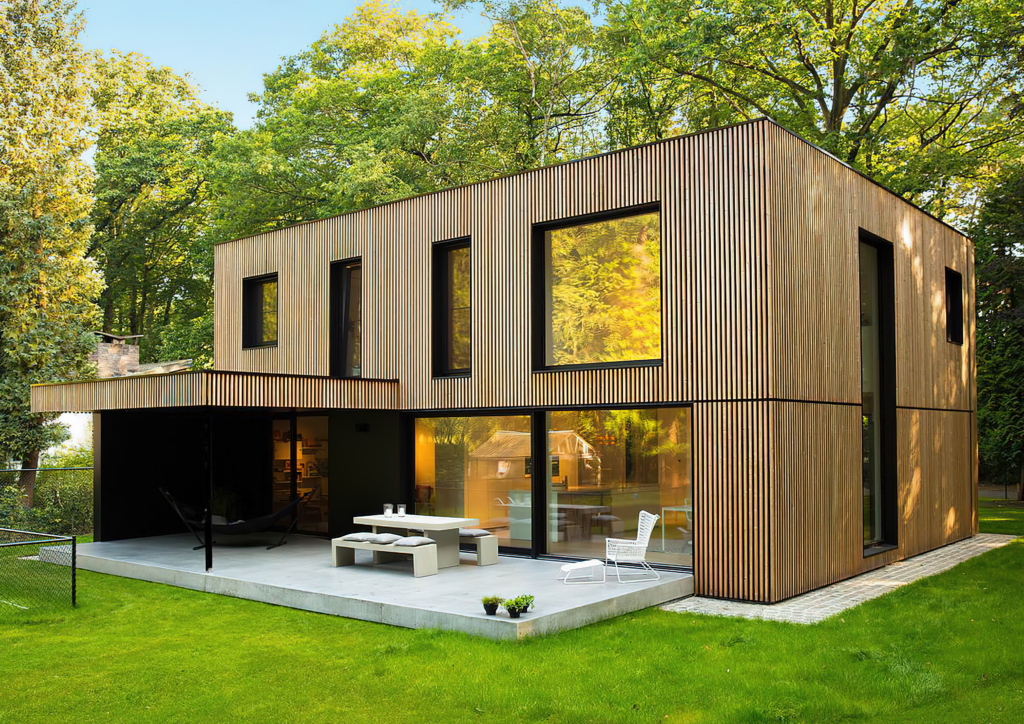
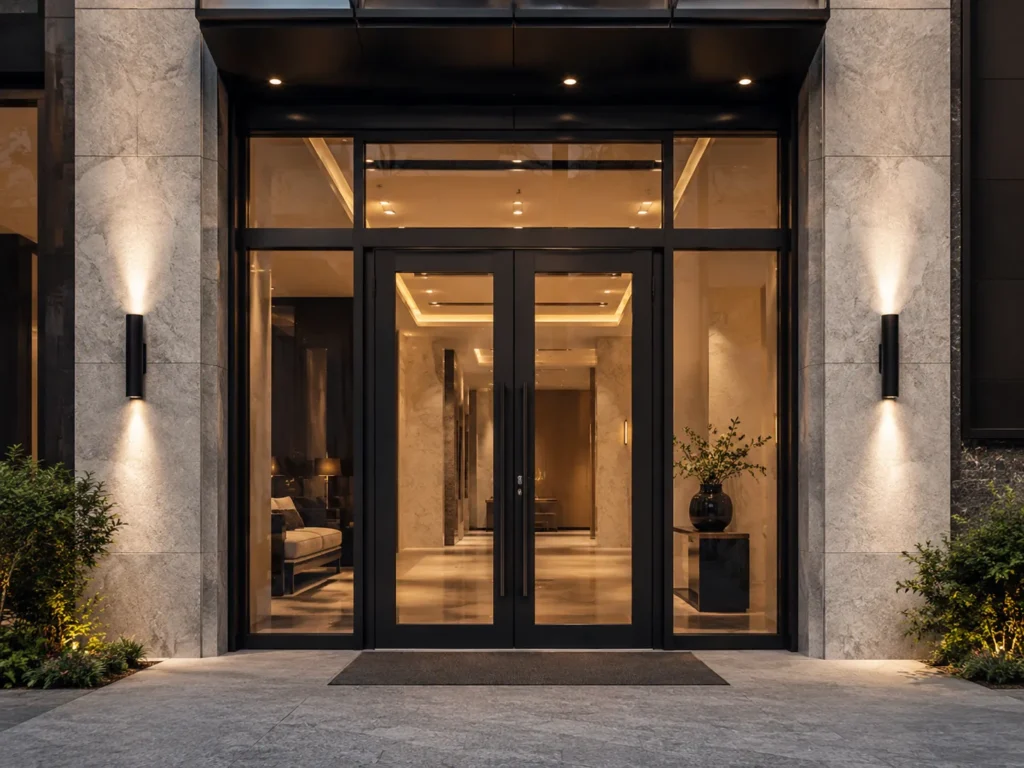
This is where black aluminum performs well. A black frame creates a sharp outline around the entrance and visually connects the door with other facade elements such as windows, curtain walls, balcony railings, metal cladding, and exterior lighting. For projects that use large glass surfaces, stone walls, concrete panels, or warm wood finishes, black aluminum provides a stable visual anchor.
The style also fits the “quiet luxury” direction in high-end architecture. Quiet luxury is not about exaggerated decoration. It is about refined materials, clean proportions, accurate installation, and long-lasting details. A matte or satin black aluminum entrance door can look premium without feeling overly decorative.
For luxury villas, black aluminum doors often work well with:
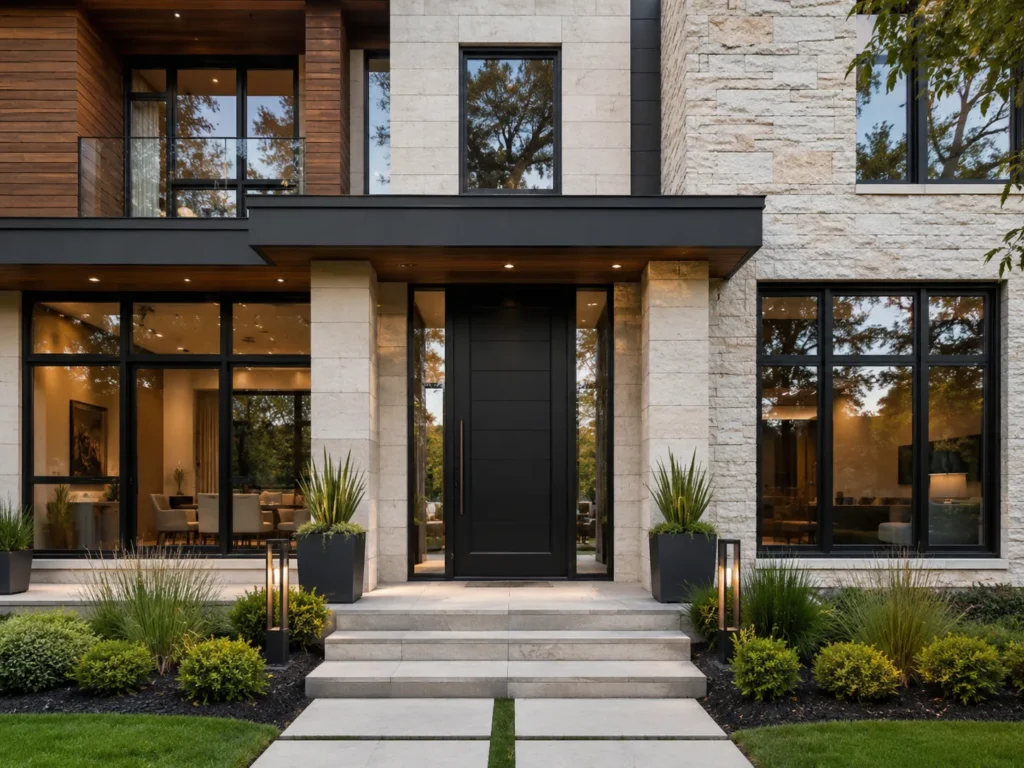
- Natural stone exterior walls
- Minimalist white or beige render
- Warm wood ceiling or wall panels
- Large aluminum windows
- Glass railings and modern landscape lighting
- Oversized pivot-door entrances
For commercial projects, black aluminum front doors can create a professional and durable entrance for boutique hotels, showrooms, office lobbies, restaurants, and retail spaces. The appearance is simple enough to match different branding styles, but strong enough to make the entrance feel intentional.
Performance Value: Thermal Breaks, Coatings, and Weather Resistance
The biggest misunderstanding about aluminum doors is that they are only chosen for appearance. In reality, the best aluminum entrance systems are highly engineered products. For exterior applications, performance should be specified as carefully as the design.
The first important factor is thermal performance. Aluminum is naturally conductive, so a basic aluminum frame can transfer heat or cold more easily than timber or uPVC. High-quality exterior aluminum doors solve this through thermal-break technology. A non-conductive barrier is placed between the interior and exterior parts of the aluminum profile, reducing heat transfer and improving indoor comfort.
For energy-conscious projects, the door system should be reviewed together with the rest of the doors & windows package. Buyers should ask about thermal-break depth, insulated glass options, U-factor, SHGC, air infiltration, water penetration resistance, and local code requirements. A door with good appearance but poor thermal detailing can create condensation, discomfort, and long-term performance complaints.
The second factor is finish quality. Black exterior doors are exposed to sunlight, rain, dust, salt air, and temperature changes. Low-quality paint can fade, chalk, or peel over time. For luxury projects, buyers should consider high-performance powder coating, PVDF coating, or anodized finishes depending on the project climate. Coastal villas, high-UV regions, and desert projects require stronger coating specifications than mild inland environments.
The third factor is weather sealing. A premium black aluminum front door should include suitable gaskets, drainage details, threshold design, and accurate installation tolerance. This is especially important for coastal properties, high-rise apartments, hotels, and commercial entrances exposed to wind-driven rain.
A well-specified system should answer three practical questions:
- Will the black finish remain stable in the project climate?
- Will the door reduce air and water leakage?
- Will the system maintain smooth operation after years of use?
If the answer is unclear, the buyer should request technical drawings, coating information, glass specifications, hardware details, and installation guidance before confirming the order.
Aluminum vs. Timber vs. Steel: Which Material Fits Luxury Projects?
Different entry door materials can work well in different project types. The right choice depends on climate, design style, door size, maintenance expectations, and budget.
| Performance Factor | Black Aluminum Front Doors | Timber Front Doors | Steel Front Doors |
|---|---|---|---|
| Design Style | Modern, slim, minimalist | Warm, classic, natural | Industrial, strong, bold |
| Large Opening Suitability | Very good with proper profile and hardware | Limited by warping risk | Good, but heavy |
| Maintenance | Low | High in humid or sunny climates | Medium, depending on corrosion protection |
| Thermal Performance | Good with thermal break | Naturally good | Requires careful thermal detailing |
| Finish Stability | Strong with proper coating | Requires regular repainting or sealing | Can corrode if protection fails |
| Hardware Compatibility | Excellent for pivot, smart locks, multi-point locking | Good, but profile-dependent | Good, but heavier to operate |
| Best Use Case | Villas, hotels, modern homes, commercial entrances | Traditional homes, warm interiors | Industrial-style buildings, high-security areas |
For most modern luxury projects, aluminum offers the best balance between design flexibility and long-term practicality. Timber provides warmth but requires regular maintenance. Steel provides strength but can be heavy and more complex to install. Aluminum sits between the two: strong enough for large formats, lighter than steel, and more stable than timber in many climates.
For deeper design inspiration, buyers can also review 2026 Design Trends: Minimalist Entry Doors for Quiet Luxury Homes to explore how slim frames, matte black finishes, oversized proportions, and clean facade details are shaping luxury residential entrances.
Specification Checklist for Architects, Developers, and Contractors
When selecting black aluminum front doors for a project, avoid choosing based only on photos. A door may look premium in a rendering but fail on site if the specification is incomplete.
Use this checklist before placing an order.
1. Confirm the door type
Decide whether the project needs a hinged door, double door, pivot door, glass door, solid panel door, or mixed panel-and-glass design. For high-end villas, a custom minimalist aluminum pivot door can create a more dramatic entrance, especially for tall openings.
2. Check the aluminum profile
Ask about profile thickness, frame depth, thermal-break design, reinforcement options, and maximum recommended door size. Oversized doors require stronger engineering than standard entrance doors.
3. Specify the finish clearly
Do not simply write “black aluminum door.” Define the finish type, gloss level, coating grade, texture, and sample approval process. Matte black and satin black can look very different under natural light.
4. Review glass performance
If the door includes glass, choose the right glazing package. Laminated glass improves safety and security. Insulated glass improves thermal performance. Low-E glass can help reduce heat transfer. For coastal or storm-prone regions, impact-resistant glass may be necessary.
5. Confirm hardware and locking
For residential projects, multi-point locking, concealed hinges, smart locks, and soft-closing pivot hardware may be important. For commercial projects, review closer systems, access control, panic hardware, threshold requirements, and traffic volume.
6. Consider accessibility and threshold design
A luxury entrance should still be practical and code-conscious. For commercial buildings and hospitality projects, threshold height, door clearance, opening force, and accessible entry requirements should be reviewed early in the design stage.
7. Coordinate installation details
Many door problems are not caused by the door itself, but by poor coordination between the supplier, contractor, and facade team. Check wall opening dimensions, waterproofing details, drainage, floor level, fixing method, and delivery schedule before production.
Common buyer mistake: choosing a beautiful black aluminum door without confirming coating grade, thermal break, lock system, and installation drawings. This can lead to fading, condensation, water leakage, difficult operation, or expensive site adjustments.
Why George Homes Is a One-Stop Sourcing Partner
Large building projects rarely fail because of one product alone. More often, problems happen because different suppliers produce different parts without coordination. The door supplier, window supplier, tile supplier, kitchen supplier, furniture supplier, and sanitary supplier may all work separately. This can create mismatched finishes, delayed delivery, inconsistent dimensions, and additional communication costs.
George Homes helps reduce this risk through a one-stop project sourcing model. Instead of treating the black aluminum front door as an isolated product, we review it as part of the whole building solution. This is especially valuable for overseas villas, apartment projects, boutique hotels, and commercial developments that need consistent design quality across multiple product categories.
Our project support can include:
- Door and window system recommendations
- Custom size and profile coordination
- Finish sample confirmation
- Hardware and lock selection
- Drawing review before production
- Coordination with kitchen, wardrobe, furniture, tile, sanitary, and other project materials
- Export packaging and delivery planning
For developers, contractors, and homeowners, this reduces the number of suppliers to manage and helps keep the project more consistent from design to installation.
If you are planning a villa, hotel, apartment, or commercial project, submit your drawings to a dedicated project manager. George Homes can review your entrance requirements, recommend a suitable black aluminum front door system, and prepare a coordinated project quotation.
Frequently Asked Questions
No. High-quality architectural aluminum doors utilize advanced fluoropolymer (PVDF) coatings or marine-grade anodizing. These industrial finishes provide exceptional resistance to ultraviolet light, ensuring the black color remains deep and chalk-free even in harsh, sun-exposed climates.
Yes. Modern aluminum extrusions offer immense structural rigidity. When paired with laminated impact glass and concealed multi-point locking hardware, slim-profile aluminum doors exceed commercial security standards, providing formidable resistance against forced entry while maintaining a delicate aesthetic.
Yes. The inherent strength-to-weight ratio of aluminum makes it the ideal material for oversized architectural openings. Utilizing heavy-duty pivot hardware, these doors can be custom-engineered to span massive dimensions, providing a monumental entrance without putting excessive stress on the surrounding building frame.
Aluminum is usually better for modern projects that need slim frames, large openings, low maintenance, and better resistance to warping. Wooden doors still provide a warm traditional look, but they require more regular sealing, painting, or refinishing, especially in humid or sunny climates.
References
- National Fenestration Rating Council (NFRC). “Energy Performance Ratings for Windows, Doors, and Skylights.”
- U.S. Department of Energy. “Energy Performance Ratings for Windows, Doors, and Skylights.”
- ENERGY STAR. “Residential Windows, Doors, and Skylights.”
- U.S. Access Board. “Chapter 4: Entrances, Doors, and Gates.”
- Fenestration and Glazing Industry Alliance (FGIA). “AAMA 2605-22: Performance Requirements for Superior Performing Organic Coatings on Aluminum Extrusions and Panels.”