Fiberglass is generally the safer long-term choice for exposed residential entrances, humid climates, coastal projects, and properties where low maintenance is a priority. Its exterior skin does not rust and is less likely than steel to develop visible dents during normal use.
Steel, however, may be the better option when a lower initial cost, a smooth modern appearance, or a tested high-security door assembly is the primary requirement.
The most important point is that material alone does not determine service life. The durability of an entry door depends on the complete system, including the door skin, core, frame, threshold, finish, weather seals, hardware, installation quality, sun exposure, moisture exposure, and maintenance schedule.
This guide compares fiberglass vs steel entry doors from the perspective of contractors, developers, architects, project managers, and luxury villa owners.
Fiberglass vs Steel Entry Doors: Quick Comparison
| Selection Factor | Fiberglass Entry Door | Steel Entry Door | Practical Recommendation |
|---|---|---|---|
| Corrosion resistance | Door skin does not rust | Exposed steel may corrode if the coating is damaged | Fiberglass is usually safer for coastal and humid locations |
| Dent resistance | Resists many everyday dents but may crack or gouge under severe impact | Strong but more likely to show permanent dents | Fiberglass is often better for appearance-sensitive entrances |
| Energy performance | Commonly uses an insulated foam core | Commonly uses an insulated foam core | Compare certified U-Factor, not material alone |
| Security | Depends on lock block, frame, hardware, glazing, and installation | Can provide strong security when specified as a complete assembly | Compare tested door-system performance |
| Maintenance | Usually requires cleaning and periodic finish inspection | Scratches and exposed edges may require prompt touch-up | Fiberglass normally requires less finish maintenance |
| Design options | Realistic woodgrain, stained, painted, or smooth finishes | Smooth, embossed, painted, contemporary, or industrial finishes | Choose according to the architectural style |
| Initial cost | Often higher for premium woodgrain models | Often lower for standard configurations | Steel may suit budget-led projects |
| Best applications | Villas, coastal homes, luxury residences, low-maintenance projects | Utility entrances, apartments, commercial spaces, security-led projects | Match the door to its exposure and performance requirements |
Which Entry Door Actually Lasts Longer?
There is no credible universal rule stating that every fiberglass door lasts a specific number of years and every steel door must be replaced after a shorter fixed period.
A properly manufactured and installed door of either material can provide long service. The difference lies mainly in the type of deterioration each material is more likely to experience.
Fiberglass does not rust, making it less vulnerable to corrosion-related damage. This is a meaningful advantage in humid, rainy, or coastal environments. It is also less likely to develop obvious dents from routine contact.
Steel can remain durable when its protective coating stays intact and the entrance is reasonably sheltered. However, scratches, exposed cut edges, damaged paint, or incompatible hardware may create points where corrosion begins.
For that reason, fiberglass often presents a lower maintenance risk in exposed residential applications. Steel can still offer excellent long-term value when the finish, frame, hardware, installation, and local climate are correctly specified.
How Fiberglass Entry Doors Are Constructed
A typical fiberglass entry door includes:
- Compression-molded fiberglass exterior skins
- A polyurethane or polystyrene insulating core
- Reinforced lock areas
- Composite or engineered edge materials
- A factory-applied paint, stain, or protective topcoat
- Optional decorative, insulated, laminated, or impact-resistant glazing
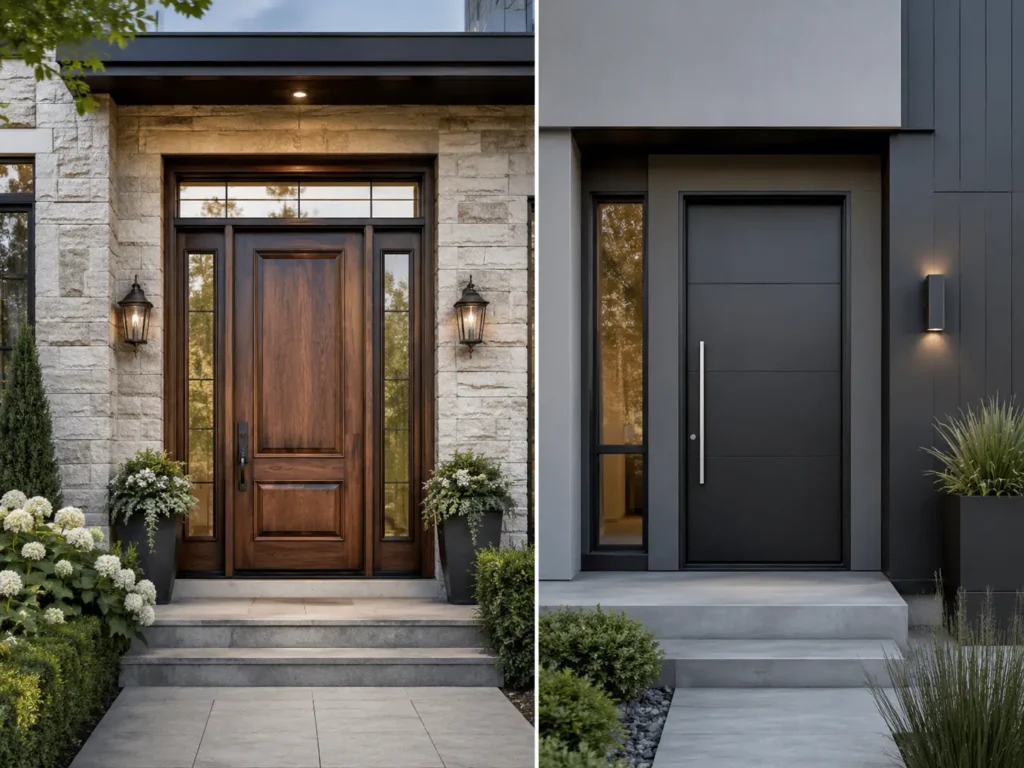
The fiberglass skin can be molded to reproduce oak, walnut, mahogany, and other woodgrain patterns. This allows a premium fiberglass entry door to create the visual warmth of natural timber without relying on a solid wood exterior surface.
Working with an experienced fiberglass entry door manufacturer also gives project buyers greater control over dimensions, woodgrain patterns, finishes, glazing, opening direction, frame systems, thresholds, and hardware preparation.
However, not every fiberglass door offers the same quality. Thin skins, poorly reinforced lock areas, low-quality edge materials, inadequate topcoats, or weak frames can reduce the performance of the entire system.
How Steel Entry Doors Are Constructed
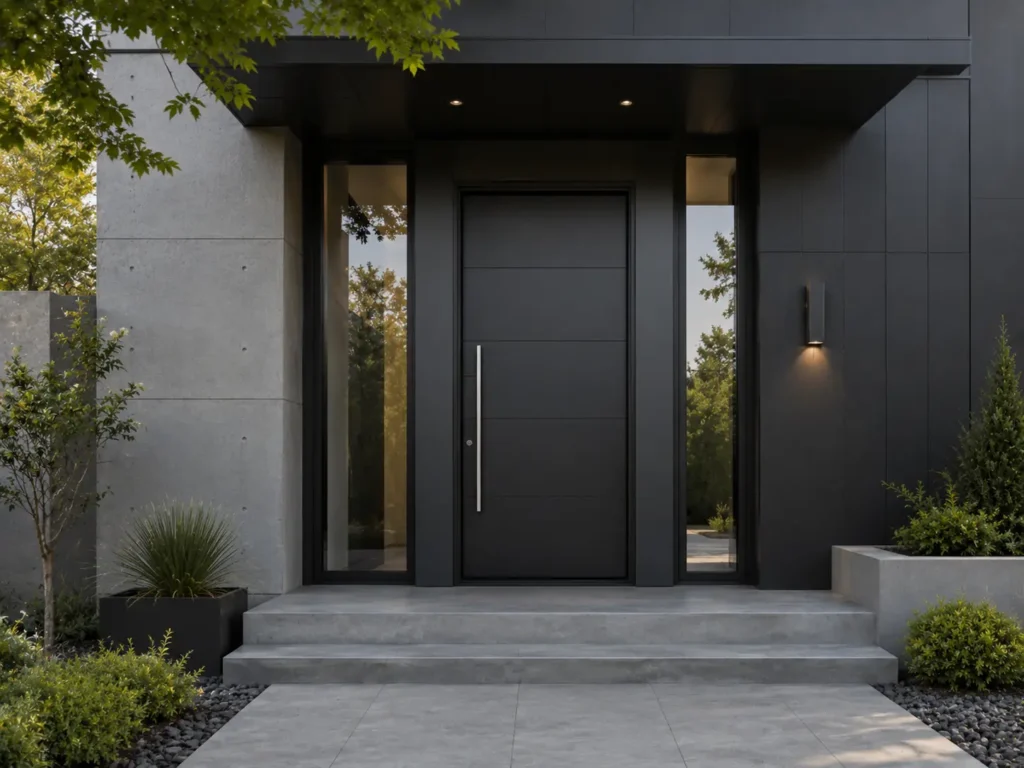
A steel entry door generally includes:
- Galvanized or coated steel exterior skins
- A polyurethane or polystyrene foam core
- Steel or reinforced lock areas
- Wood, steel, or composite edge construction
- A primed, painted, or powder-coated finish
- Optional glazing, louvers, fire-rated components, or security hardware
Steel thickness is often described by gauge. A lower gauge number normally indicates thicker steel, but gauge alone should not be used as the only quality measurement.
The strength of a steel door also depends on the frame, reinforcements, lock preparation, hinges, welds, edge construction, surface treatment, and installation method.
For commercial and security-sensitive applications, buyers should request performance documentation for the complete assembly rather than relying only on a statement such as “heavy-duty steel door.”
Weather Resistance in Different Climates
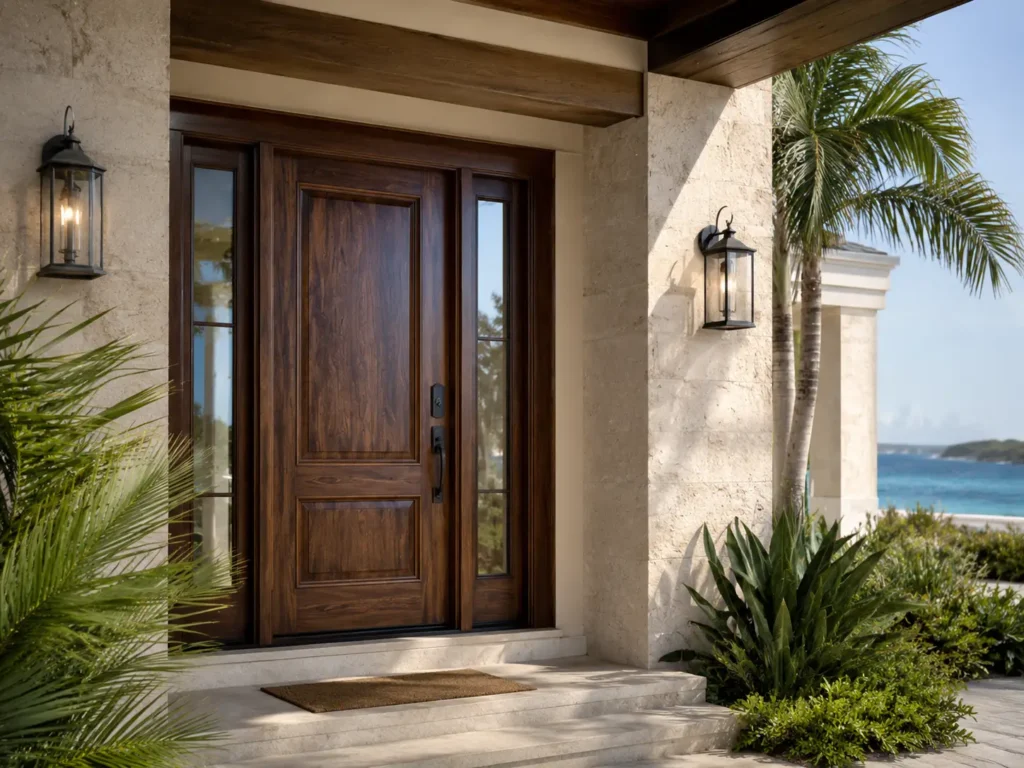
Coastal and High-Humidity Environments
Fiberglass is usually the more forgiving choice for entrances exposed to salt air, frequent rain, or high humidity because the fiberglass skin itself cannot rust.
However, a fiberglass door system still contains components that may corrode. Hinges, screws, locksets, multipoint locking components, thresholds, fasteners, and decorative metal inserts must also be specified for the environment.
For coastal projects, request:
- Corrosion-resistant or marine-grade hardware
- Suitable fasteners and hinges
- Exterior-grade sealants
- Compatible thresholds and sill pans
- Written finish and coastal warranty conditions
- Clear maintenance instructions
A steel door may still be used near the coast, but the coating system, cut-edge protection, hardware specification, installation detailing, and maintenance plan become especially important.
Hot and High-UV Locations
Intense sunlight affects the finish of any exterior door. Dark colors may absorb more heat, while prolonged UV exposure can gradually change the appearance of stains, paints, and clear topcoats.
Review the manufacturer’s approved color range, finish warranty, exposure limitations, and maintenance instructions—especially for oversized doors or entrances facing strong afternoon sun.
Avoid statements that a finish will remain unchanged indefinitely. Even a high-quality exterior finish requires inspection and eventual maintenance.
Cold and Mixed Climates
Both insulated fiberglass and insulated steel doors can perform well in cold climates.
The result depends on:
- The certified U-Factor
- Air leakage around the door
- Weatherstripping quality
- Threshold adjustment
- Frame insulation
- Glazing area and glass specification
- Installation around the rough opening
A poorly installed premium door may lose more energy through air leakage than a correctly installed mid-range door.
Which Is More Energy Efficient?
Material alone does not provide a reliable answer.
The U.S. Department of Energy notes that most steel and fiberglass-clad entry doors without windows have R-values in approximately the R-5 to R-6 range. Both materials commonly use insulating foam cores and can perform substantially better than a solid wood door of similar thickness.
For an accurate project comparison, review the National Fenestration Rating Council label or equivalent verified documentation.
The most useful values include:
U-Factor
U-Factor measures heat transfer through the complete product. A lower U-Factor indicates better insulating performance.
Solar Heat Gain Coefficient
SHGC is especially relevant when the door includes a substantial glass panel. A lower SHGC reduces solar heat entering the building, while a higher value may be useful where passive solar gain is desirable.
Air Leakage
Air leakage affects comfort and energy use around the perimeter of the door. Weather seals, frame alignment, sill adjustment, installation, and long-term hardware operation all influence this value.
Glazing Specification
A large decorative glass insert can change the thermal performance of the entire door. Confirm whether the glass is double glazed, Low-E coated, laminated, tempered, insulated, impact rated, or otherwise suited to the project.
The correct procurement question is therefore not “Is fiberglass always more efficient than steel?” It is:
“What is the verified energy rating of this exact door, frame, glazing, threshold, and weather-seal configuration?”
Which Entry Door Is More Secure?
Steel is often associated with higher security because of its rigid metal skin. However, the door skin is only one component of a secure entrance.
A door may fail at the:
- Lock or cylinder
- Strike plate
- Jamb
- Frame-to-wall connection
- Hinges
- Glazing
- Threshold
- Door edge
- Multipoint locking system
ASTM F476 evaluates the security of swinging door assemblies and includes components such as the door, lock, strike, hinge, and jamb. This illustrates why buyers should evaluate the complete system rather than assuming that one slab material is automatically secure.
For security-sensitive projects, request information about:
- Reinforced lock blocks
- Multipoint locking systems
- Hinge security
- Strike and jamb reinforcement
- Frame anchoring
- Laminated or impact-resistant glazing
- Tested forced-entry performance
- Access-control compatibility
- Relevant local code requirements
A high-quality fiberglass entry door with a reinforced frame and multipoint lock may provide better practical security than a basic steel slab installed in a weak frame.
Conversely, a properly tested steel door assembly may be the preferred option for commercial, utility, apartment, or restricted-access locations.
Impact Resistance: Dents, Cracks, and Everyday Wear
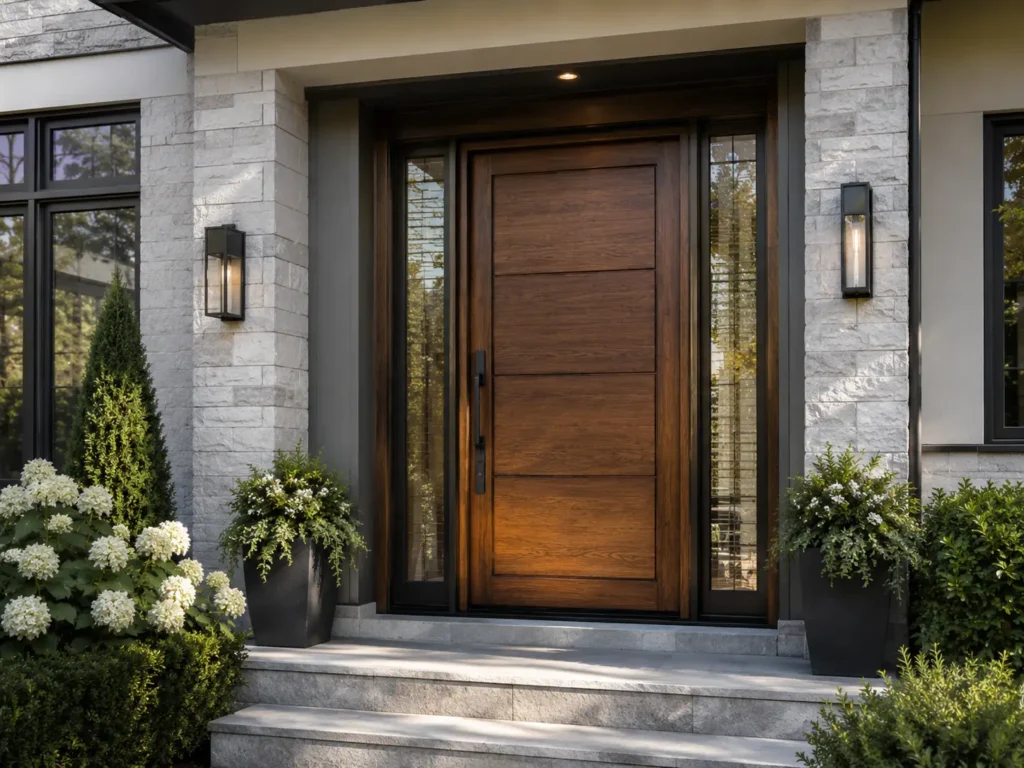
Everyday knocks affect these two materials in different ways. Fiberglass tends to retain a smooth appearance under routine use, while steel offers strong structural rigidity but is more likely to show visible dents.
Fiberglass Entry Doors
Under normal residential use, fiberglass can withstand minor contact from luggage, furniture, tools, and delivery items without developing the surface dents commonly seen on metal doors. This makes it a practical choice for prominent entrances where long-term appearance matters.
A severe or sharply focused impact may still chip, crack, or gouge the outer skin. Minor cosmetic damage can often be repaired and refinished, but deeper cracks near the lock area, door edge, or internal reinforcement should be inspected by the manufacturer or supplier before the door is used again.
Steel Entry Doors
Steel is strong but can develop visible dents. Once dented, the surface may require filling, sanding, priming, and repainting.
Damage that breaks the protective coating should be repaired promptly to reduce the risk of corrosion.
For entrances exposed to luggage carts, construction equipment, delivery traffic, or frequent commercial use, discuss impact risks with the supplier before choosing the material and skin thickness.
Maintenance Requirements
No exterior door is completely maintenance-free.
Fiberglass Door Maintenance
Typical maintenance includes:
- Cleaning with mild soap and water
- Inspecting the paint, stain, or clear topcoat
- Checking exposed edges and joints
- Lubricating hinges and locking hardware
- Replacing damaged weatherstripping
- Adjusting the threshold when necessary
- Renewing the protective finish according to manufacturer instructions
Steel Door Maintenance
Typical maintenance includes:
- Inspecting scratches, dents, seams, and lower edges
- Repairing coating damage promptly
- Removing early signs of corrosion
- Repriming and repainting repaired areas
- Checking hinges, locks, weather seals, and thresholds
- Keeping drainage and sill areas clear
Maintenance Required for Both Materials
Regardless of material, periodically inspect:
- Frame alignment
- Sealant joints
- Door sweep
- Weatherstripping
- Threshold compression
- Lock operation
- Hinge screws
- Water drainage
- Glazing seals
- Wall-to-frame connections
Many problems attributed to the door material are actually caused by water intrusion, movement of the frame, incorrect installation, or neglected hardware.
Fiberglass vs Steel Entry Door Cost
Steel entry doors often have a lower initial purchase price in standard sizes and finishes. Premium fiberglass doors may cost more, particularly when they include realistic woodgrain skins, custom stains, oversized dimensions, sidelights, transoms, decorative glazing, or advanced locking systems.
For a B2B project, initial unit price should not be the only comparison.
Calculate the total installed and operating cost, including:
- Door and frame price
- Hardware
- Glazing
- Finish upgrades
- Shipping and packaging
- Installation
- Site adjustment
- Maintenance
- Finish repair
- Energy performance
- Replacement risk
- Spare parts
- Warranty coverage
Fiberglass may create better lifecycle value in an exposed, appearance-sensitive entrance where corrosion and dents would be costly to repair.
Steel may create better value for a sheltered utility entrance, apartment project, service area, or commercial application where initial cost and standardized specifications are more important.
Which Material Is Better for High-End Projects?
For many luxury villas and premium residential developments, fiberglass offers an effective balance of durability, insulation, design flexibility, and low maintenance.
Realistic woodgrain fiberglass can support warm minimalist, transitional, contemporary, Mediterranean, coastal, or “quiet luxury” architectural styles. It can provide the appearance of wood while reducing some of the maintenance concerns associated with a natural timber exterior.
Steel remains suitable for high-end projects when the design requires:
- A smooth minimalist surface
- A crisp painted finish
- An industrial architectural character
- A security-oriented entrance
- A commercial or utility application
- A specific tested or listed door assembly
The correct decision should follow the architectural concept and performance specification rather than a simple assumption that one material is always more premium.
B2B Entry Door Procurement Checklist
Before approving a fiberglass or steel entry door, confirm the following information.
Project Environment
Provide the project country, city, climate, distance from the coast, building height, entrance orientation, roof protection, and expected sun and rain exposure.
Door Dimensions and Configuration
Confirm the structural opening, door slab size, single or double configuration, sidelights, transoms, opening direction, swing direction, and accessibility requirements.
Frame and Threshold
Specify the frame material, jamb depth, threshold type, thermal break requirements, sill-pan details, drainage design, and wall connection.
Energy Performance
Request the tested U-Factor, SHGC when glazing is included, air-leakage data, glazing construction, Low-E coating, spacer system, and applicable energy certification.
Weather and Structural Performance
Confirm the required air, water, structural, wind-load, impact, and hurricane performance for the project location.
Do not assume that a residential door designed for a sheltered entrance is suitable for a high-rise, exposed façade, or hurricane-prone region.
Security Requirements
Define the locking system, lock reinforcement, strike reinforcement, hinge security, glazing security, access control, and any required forced-entry test standard.
Finish and Color
Approve physical samples rather than relying only on screen images. Confirm color, gloss level, woodgrain pattern, stain variation, UV resistance, touch-up procedure, and warranty limitations.
Hardware Compatibility
Verify hinges, handles, cylinders, multipoint locks, door closers, smart locks, access-control systems, and replacement-part availability.
Installation Documentation
Request shop drawings, anchoring details, sealant recommendations, sill-pan requirements, installation tolerances, and adjustment instructions.
Packaging and Logistics
For overseas projects, confirm protective packaging, corner protection, crate construction, loading method, container planning, product labeling, spare hardware, and delivery sequence.
Why Source Entry Doors Through George Homes?
Managing a large villa, apartment, hotel, or commercial project requires more than selecting an individual door model.
The entrance system must coordinate with façade dimensions, flooring heights, wall finishes, security hardware, interior design, lighting positions, and the overall construction schedule.
With 20 years of project experience, George Homes provides one-stop building-material and furnishing solutions for international projects.
Our project services can include:
- Product and material selection
- Door and frame customization
- Shop-drawing coordination
- Finish and sample approval
- Hardware integration
- Quality-control inspection
- Packaging and container planning
- International logistics coordination
- Whole-project design consistency
A custom entry system can also be coordinated with your project’s Doors & Windows, Lighting, and Kitchen & Wardrobe selections, reducing the risk of inconsistent finishes, dimensions, and design language.
Each project is supported by a Dedicated Project Manager who coordinates requirements from initial consultation through manufacturing, inspection, packaging, and shipment.
Frequently Asked Questions
Yes, like any exterior material, extreme UV exposure can cause minor fading over long periods. However, premium fiberglass doors are finished with UV-resistant topcoats that drastically slow this process. Reapplying a clear UV-protective coat every few years ensures the color remains vibrant indefinitely.
Yes, but it is labor-intensive. Minor dents can be repaired using auto-body filler (Bondo), followed by meticulous sanding, priming, and repainting. However, achieving a perfectly flat, factory-smooth finish after a repair is highly difficult, often leading to aesthetic imperfections.
Yes, the initial purchase and manufacturing cost of a premium fiberglass entry door is generally higher than that of a standard steel door. However, because fiberglass requires virtually zero maintenance and lasts decades longer, the lifetime cost is significantly lower.
What information is needed for an accurate project quotation?
Prepare:
- Door schedule or architectural drawings
- Structural opening sizes
- Required quantities
- Project location and climate
- Opening and swing directions
- Frame and threshold requirements
- Finish references
- Glazing requirements
- Hardware and lock requirements
- Required energy, wind, water, fire, impact, or security certifications
- Delivery destination and construction schedule
Providing complete information reduces quotation revisions and helps the supplier identify technical risks before production.
Final Verdict
Fiberglass is generally the better long-term choice for exposed luxury residential entrances, coastal or humid climates, realistic woodgrain designs, and projects seeking lower finish-maintenance requirements.
Steel is often the better choice for budget-controlled developments, smooth contemporary designs, utility entrances, commercial applications, and projects requiring a specific tested security or fire-rated assembly.
The final decision should not be based on material alone.
Compare the complete door system, including:
- Verified energy performance
- Climate suitability
- Frame and threshold design
- Hardware and locking system
- Glazing
- Finish warranty
- Installation details
- Testing documentation
- Maintenance requirements
- Total lifecycle cost
Need help selecting the right entry door for your villa, apartment, hotel, or commercial project?
Send George Homes your drawings, dimensions, quantities, finish references, project location, and performance requirements for a customized proposal. Click the WhatsApp icon in the bottom right corner to speak directly with our project team.
Technical References
- U.S. Department of Energy, Energy Saver: Doors
- National Fenestration Rating Council: Door Energy Performance Ratings
- ENERGY STAR Residential Windows, Doors, and Skylights Version 7.0
- ASTM F476: Standard Test Methods for Security of Swinging Door Assemblies