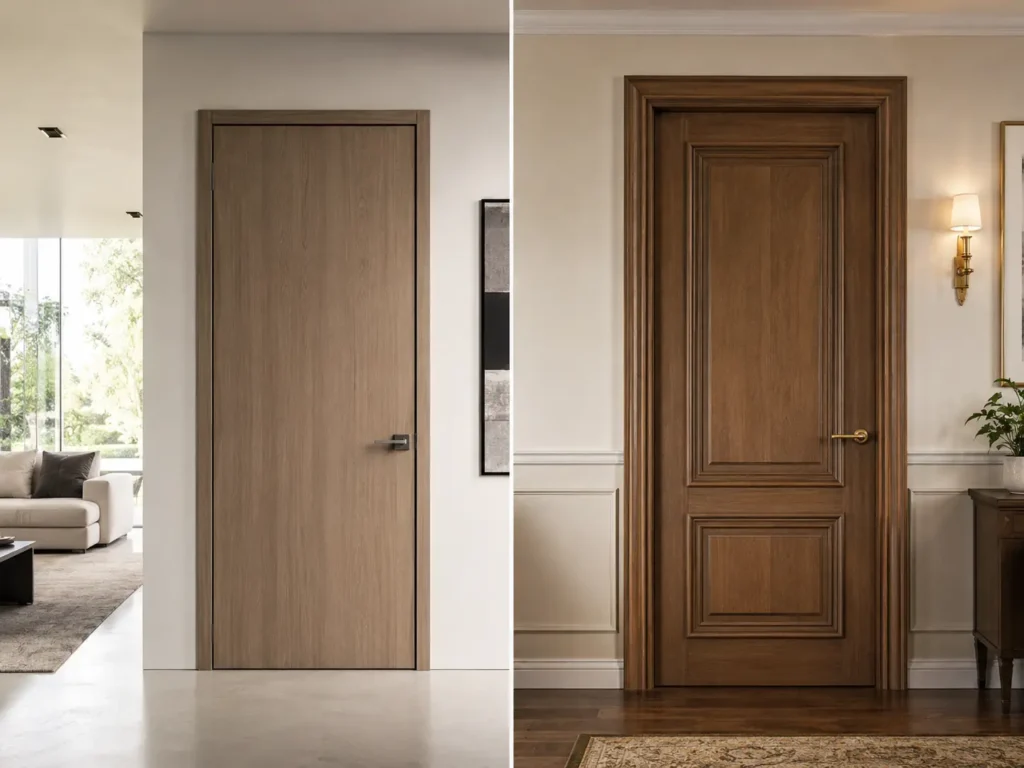
Choosing the right doors is a critical decision for any building project, whether you are developing a large commercial complex, constructing a modern apartment building, or designing a luxury custom villa. Doors are not merely functional barriers; they define the aesthetic flow and functional acoustic privacy of a space.
When sourcing materials, builders, contractors, and project managers frequently face a common dilemma: flush door vs panel door. Both options have distinct characteristics, benefits, and ideal applications.
As a leading provider of One-Stop Solutions for Building Materials and Furniture, George Homes has spent over 20 years supplying premium Doors & Windows to global clients. In this comprehensive comparison, we will break down the differences between flush doors and panel doors to help you make the best procurement decision for your specific project.
What is a Flush Door?
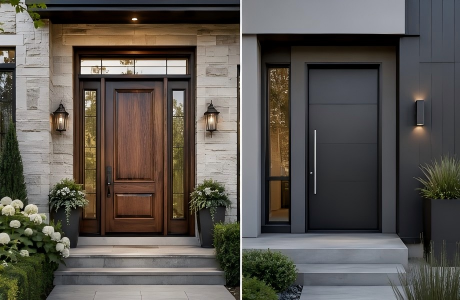
A flush door is characterized by its completely smooth, flat surface on both sides. Unlike traditional doors with raised or recessed details, flush doors offer a sleek, uninterrupted aesthetic that aligns perfectly with contemporary and minimalist architectural designs.
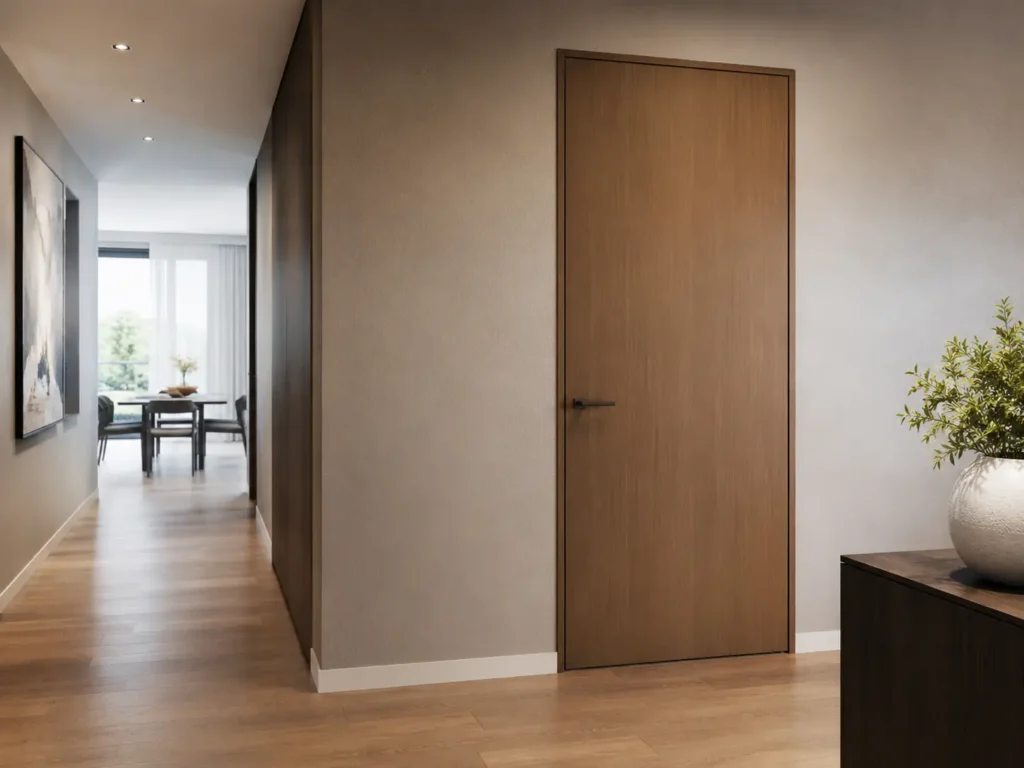
Construction & Key Features
Flush doors are typically constructed using a wooden framework covered by MDF (Medium-Density Fiberboard) or plywood. The core of the door determines its weight and durability:
- Hollow Core: Filled with a honeycomb cardboard structure. Extremely lightweight and cost-effective, ideal for standard residential interiors.
- Solid Core: Filled with solid wood blocks, particleboard, or mineral core. These provide superior soundproofing, fire resistance, and structural integrity.
The surface is usually finished with wood veneers, high-pressure laminates (HPL), or paint, allowing them to match various interior elements seamlessly.
Pros & Cons of Flush Doors
Pros:
- Cost-Effective: Their straightforward manufacturing process makes them highly budget-friendly, especially for bulk procurement.
- Modern Aesthetic: The minimalist, flat surface fits flawlessly into modern, industrial, and contemporary interior designs.
- Easy to Clean: Without grooves or intricate moldings, dust does not easily accumulate, making maintenance a breeze.
- Lightweight: Hollow core flush doors are easy to handle, significantly reducing installation time and labor costs.
Cons:
- Limited Visual Depth: They lack the traditional charm, depth, and character of carved doors.
- Hard to Repair: If the veneer or laminate is deeply scratched or punctured, the door often requires a complete replacement rather than a simple repair.
What is a Panel Door?
A panel door is the classic door style recognized by its framed construction containing one or more raised or recessed panels. These doors exude craftsmanship, adding texture, depth, and a sense of luxury to any room.
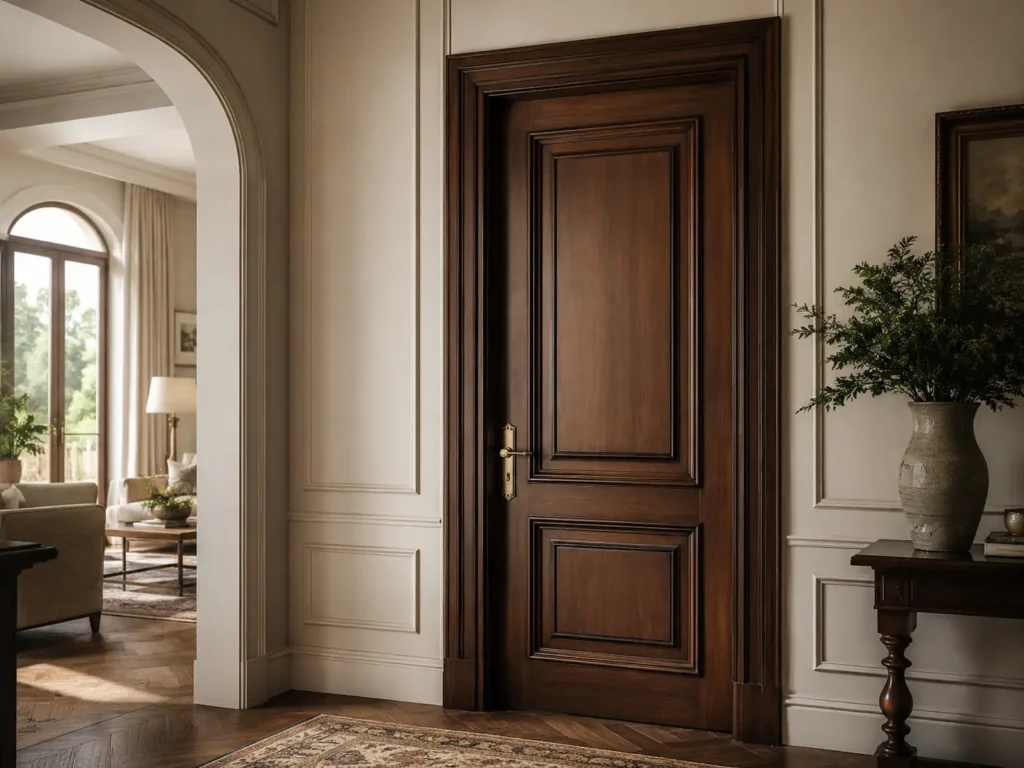
Construction & Key Features
Panel doors are built using a traditional joinery technique involving vertical stiles and horizontal rails. The spaces between this heavy-duty frame are filled with floating panels made from solid wood, engineered wood, or even glass.
Because they are predominantly made of solid timber or dense engineered wood, panel doors are robust, heavy, and engineered to withstand fluctuations in humidity without warping.
Pros & Cons of Panel Doors
Pros:
- Elegant Aesthetics: Panel doors offer timeless beauty and can be customized with various panel configurations (e.g., 2-panel, 4-panel, or 6-panel designs).
- Exceptional Durability: Built with solid frames, they are incredibly strong, weather-resistant, and can last for decades.
- Superior Insulation: The dense construction provides excellent acoustic insulation and thermal efficiency.
- Repairable: Unlike flush doors, minor scratches or dents on solid wood panel doors can easily be sanded down and refinished.
Cons:
- Higher Investment: The complex craftsmanship and premium materials make panel doors more expensive.
- Maintenance: The detailed grooves, stiles, and rails can collect dust and require more frequent, careful cleaning.
Flush Door vs Panel Door: Head-to-Head Comparison
To help you quickly evaluate the flush door vs panel door debate, here is a breakdown of how they compare across critical project metrics:
| Feature | Flush Door | Panel Door |
| Aesthetics | Modern, sleek, flat, minimalist. | Traditional, elegant, textured, classic. |
| Durability | Moderate (Solid core is highly durable). | Very High (Built to withstand heavy use). |
| Cost Efficiency | Highly economical, great for bulk orders. | Premium pricing, high investment value. |
| Sound Insulation | Low to Moderate (depends heavily on the core). | Excellent (due to dense, solid materials). |
| Maintenance | Very low; smooth surface is easy to wipe clean. | Moderate; dust can settle in panel grooves. |
| Best Applications | Modern apartments, commercial offices, hospitals. | Luxury villas, high-end homes, main entrances. |
How to Choose the Right Door for Your Project
Choosing between a flush door and a panel door ultimately comes down to your project’s architectural style, budget, and functional requirements.
For Commercial Projects & Modern Interiors
If you are managing a large-scale commercial project, a multi-family apartment building, or an office space, flush doors are generally the superior choice. They are exceptionally cost-effective for high-volume purchasing. Furthermore, their sleek design pairs wonderfully with modern Flooring & Staircase materials and minimalist Furniture Collections.
For High-End Villas & Custom Homes
If you are a contractor or homeowner working on a luxury private residence or villa, panel doors are the standard. They bring an undeniable sense of prestige and craftsmanship. A solid wood panel door serves brilliantly as an imposing exterior entryway, while matching interior panel doors elevate the overall elegance of the home.
The George Homes Advantage
Coordinating the procurement of various door types alongside your Tile, Sanitary, and Kitchen & Wardrobe elements can be a logistical nightmare.
At George Homes, we eliminate the headache of dealing with multiple factories. By offering true One-Stop Solutions for Building Materials, we ensure that your flush doors and panel doors are perfectly color-matched and structurally aligned with your overall design vision. Furthermore, every client is assigned a Dedicated Project Manager who handles everything from sourcing to global logistics, ensuring your project stays on time and within budget.
Frequently Asked Questions (FAQ)
Generally, a panel door is more expensive. This is because panel doors require intricate craftsmanship, solid wood frames, and detailed joinery. In contrast, flush doors are mass-produced with simpler structures and materials, making them a highly cost-effective choice for large-scale building projects.
No, standard hollow flush doors are not recommended for main entrances. While excellent for interiors, they lack the structural security and weather resistance required for exteriors unless you specifically choose a solid core flush door heavily reinforced with metal or specialized heavy-duty veneers.
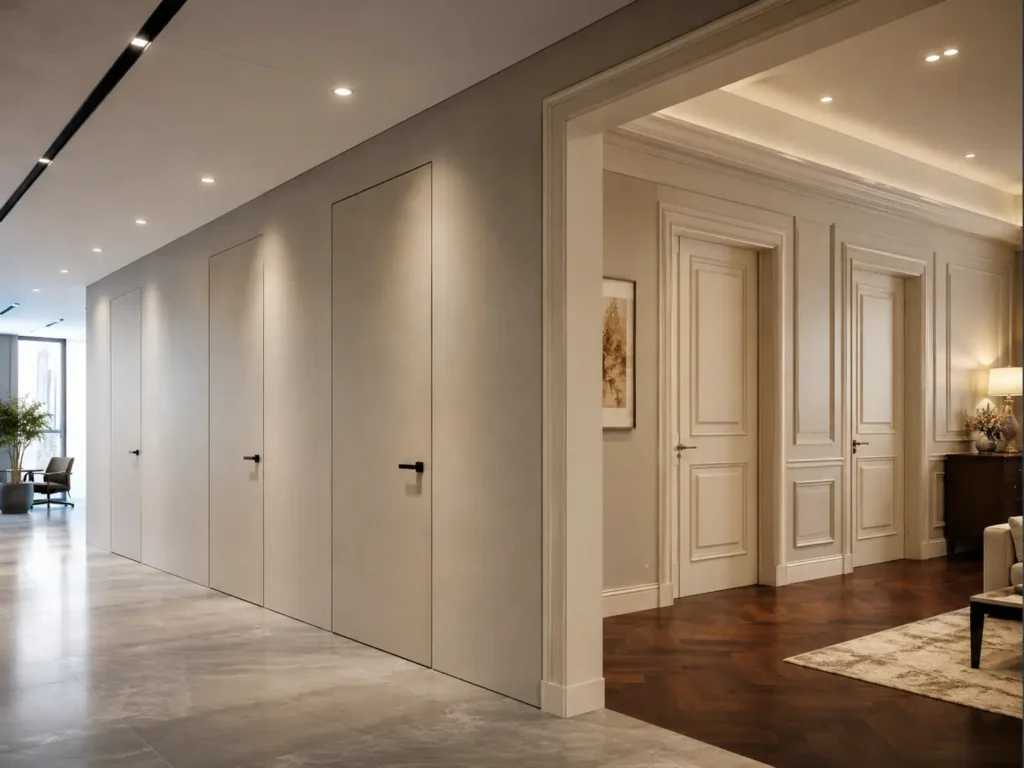
Yes, absolutely. While traditionally associated with classic aesthetics, modern panel doors feature clean lines, minimalist shaker styles, and sleek painted finishes. They seamlessly blend into contemporary homes and commercial spaces, offering both structural integrity and a refined visual appeal.
Conclusion & Call to Action
The decision in the flush door vs panel door comparison relies heavily on the scope and style of your project. Flush doors offer budget-friendly, modern minimalism perfect for large commercial spaces, while panel doors provide the durability and timeless elegance demanded by luxury villas and high-end residential builds.
Don’t let the complexities of building material procurement slow down your construction timeline. Let George Homes streamline your supply chain.
Ready to elevate your next project?
Contact George Homes today via WhatsApp to speak directly with a Dedicated Project Manager. Request your bespoke catalog, get a bulk pricing quote on our premium Doors & Windows, and experience the ease of our one-stop building solutions.
References & Further Reading:
- ArchDaily – A Guide to Choosing the Right Interior Doors for Your Project
- Designing Buildings Wiki – Door Construction and Terminology