Introduction
The entryway sets the architectural tone for any luxury villa, boutique hotel, or high-end commercial building. For project managers, architects, and builders, selecting the right entrance system goes beyond aesthetics; it is a critical decision impacting structural engineering, long-term durability, and spatial flow.
Today, the industry faces a common dilemma: choosing between the modern, quiet luxury of pivot front doors and the proven, standardized reliability of traditional hinged doors.
As a premier provider of One-Stop Building Project Solutions with over 20 years of experience, George Homes simplifies this choice. We help international contractors and developers navigate structural specifications, source premium materials, and ensure flawless installation for world-class entryways.
Understanding Pivot Front Doors
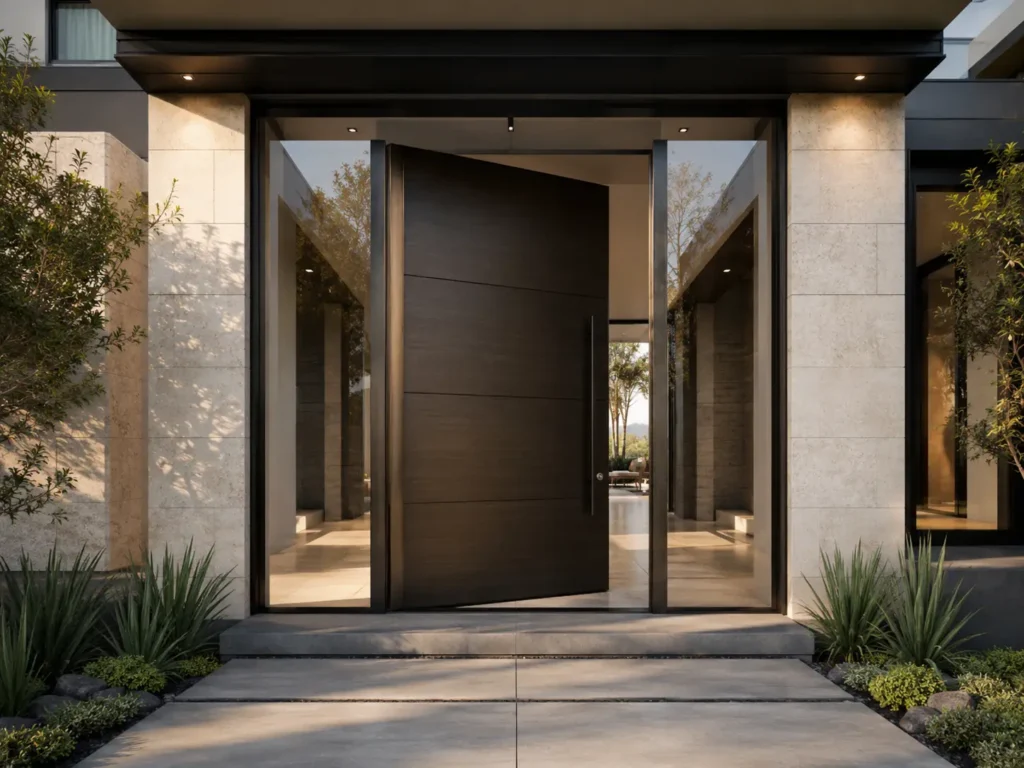
Unlike standard doors that hang from the side of a frame, a pivot door rotates on a vertical axis. It utilizes a sophisticated spindle hardware system mounted at the top and bottom of the door, distributing the weight entirely into the floor rather than the side jambs.
Pros of Pivot Front Doors
- Massive Scale & Unmatched Aesthetics: Pivot systems are the ultimate expression of minimalist, high-end design. They are engineered to support massive, oversized panels. While a standard door maxes out quickly, a premium pivot system can effortlessly carry door panels weighing 300kg to over 500kg, with custom widths spanning 1.5m to 3m wide.
- Seamless Operation: Because the floor bears the weight, even the heaviest, armor-plated or Metal & Glass reinforced doors glide open with a light push.
- Architectural Flexibility: The pivot point can be offset (e.g., 300mm from the edge), creating a stunning, architectural “wow” factor when the door opens, leaving clearance on both sides of the axis.
Cons of Pivot Front Doors
- Clearance Requirements: The offset pivot point means the door swings into both the interior and exterior spaces, requiring more sweeping clearance than side-hinged doors.
- Installation Complexity: They require perfectly leveled flooring and precise pre-embedding of the floor spring or pivot box during the foundation phase.
- Inherent Sealing Challenges: Because pivot doors lack a traditional side stop, standard weatherstripping cannot be used, historically making them vulnerable to air and water infiltration.
Technical Solution: Overcoming Sealing Challenges
For high-end projects, the traditional “leaky pivot door” is a myth of the past. Today’s premium pivot systems achieve European standard water and air tightness through advanced engineering. We utilize automotive-grade EPDM weatherstripping, automatic drop-down bottom seals that engage only when the door closes, and concealed drainage systems integrated into the threshold.
This is precisely where the dedicated project support team at George Homes excels—we deploy field engineers to guide the pre-embedded installation process on-site, addressing sealing and leveling challenges directly at the source to ensure flawless execution.
Understanding Traditional Hinged Doors
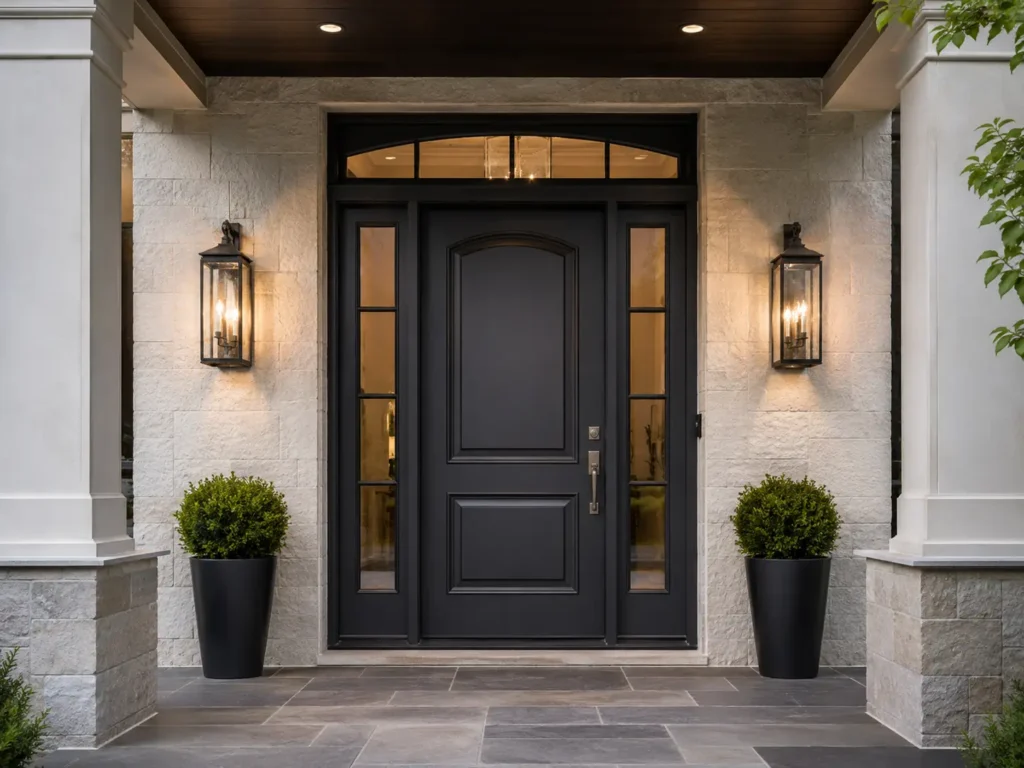
The classic side-hinged mechanism relies on two to four butt hinges attached to the vertical side of the door frame. The frame and the wall structure must support the entire weight of the door panel.
Pros of Traditional Hinged Doors
- Exceptional Weatherproofing: By resting firmly against a rebated door frame stop on three sides, side-hinged doors create a tight, highly insulated seal, making them ideal for areas with extreme weather conditions.
- Standardized Cost & Installation: They are the industry standard. Installation does not require complex sub-floor prep, making labor costs lower and project timelines faster.
- Universal Design Application: They easily adapt to nearly any architectural style, from classical to transitional.
Cons of Traditional Hinged Doors
- Strict Weight and Size Limitations: Standard hinges bear the brunt of gravity. To prevent the hinges from sagging and the door from dragging over time, traditional hinged doors must generally be kept under 100kg in weight and strictly within 1.2m in width.
- Design Constraints: They lack the dramatic, oversized visual impact required for ultra-modern or monumental entryways.
Head-to-Head Comparison
| Feature | Pivot Front Doors | Traditional Hinged Doors |
| Aesthetics | Modern, minimalist, architectural statement piece. | Classic, versatile, familiar. |
| Weight Capacity | Extreme (300kg – 500kg+). | Limited (Typically <100kg). |
| Size Limits | Ultra-wide (1.5m – 3m+). | Standard (Up to 1.2m). |
| Weather Sealing | Requires advanced engineering (drop-down seals). | Naturally superior due to frame stops. |
| Typical Installation Complexity & Timeline | High; requires floor pre-embedding, precise leveling, and specialized teams. | Low; standardized framing, fast installation by general carpenters. |
Total Cost of Ownership Over 10 Years
B2B buyers and developers must consider the long-term financial footprint. Pivot doors demand a higher initial capital expenditure for top-tier European hardware (like FritsJurgens or Dormakaba) and specialized installation labor. However, when specified correctly, their heavy-duty floor springs require virtually zero maintenance over a decade. Traditional hinged doors have a lower upfront cost, but pushing a standard hinged door to its maximum size limits often results in sagging, necessitating hardware replacements, frame adjustments, and higher maintenance costs over a 10-year lifecycle.
Best Applications for Building Projects
When to Specify Pivot Front Doors
Pivot doors are the definitive choice for luxury modern villas, high-end corporate headquarters, and boutique retail spaces. They shine when integrated into a broader spatial system. For example, a frameless pivot door allows for a continuous, seamless floor transition with luxury Marble & Granite foyers. When synchronized with smart entry Lighting, it creates the ultimate “quiet luxury” arrival experience. We frequently provide the synchronized edge profiles and sensor lighting solutions to achieve this exact commercial look.
When to Rely on Traditional Hinged Doors
Side-hinged doors remain the optimal specification for standard residential developments, side/rear utility entries, and geographic locations facing intense, direct coastal weather where absolute hermetic sealing is the highest priority.
Why Choose George Homes for Your Project Materials?
Managing a large-scale construction project usually means wrestling with dozens of fragmented suppliers. George Homes eliminates this friction with our One-Stop Building Project Solutions.
From engineering bespoke Doors & Windows to coordinating the exact finish of your Flooring & Staircase, Tile, and Sanitary fixtures, we act as your singular, reliable partner.
- Dedicated Project Manager: You get a single point of contact who understands your blueprints, manages the supply chain, and ensures your Kitchen & Wardrobe elements match your overarching design language.
- Complete Lifecycle Support: We don’t just sell products; we offer full design support and cross-category sourcing, including comprehensive Furnishings & Supplies and Appliances to make your properties turnkey-ready.
- Global Reach, Local Expertise: With 20 years of manufacturing excellence, we invite all prospective B2B clients to visit our expansive offline showroom in Foshan, China, to experience our quality firsthand.
Frequently Asked Questions (FAQs)
Yes. Modern pivot doors utilize multi-point locking systems and can be integrated with advanced biometric or smart-home access controls, making them just as secure—if not more so, due to their sheer weight—as traditional doors.
Failure rates are exceptionally low if premium hardware is used. You should always check that the supplier uses top-tier European or domestic tier-one spindle systems tested for at least 1,000,000 open/close cycles, backed by a 5-to-10-year hardware warranty.
Significantly. Because the top pivot pin acts as a critical stabilizing anchor against lateral forces, the door header must be structurally reinforced (often with an I-beam or heavy-gauge steel framing) to prevent micro-deflections when moving a 400kg panel.
No, provided they are engineered correctly. High-end pivot doors utilize concealed automatic drop-down door bottoms and multi-layer EPDM compression seals to meet strict commercial weatherproofing standards.
References
- American Architectural Manufacturers Association (AAMA) – Guidelines on structural performance and weather sealing for commercial entryways.
- ArchDaily Materials Handbook – Architectural applications of large-scale pivot mechanisms and structural floor loading.
Ready to Elevate Your Next Building Project?
Whether you are finalizing the entryway for a single luxury villa or specifying doors for a 50-unit commercial development, the engineering and material sourcing must be flawless. Stop coordinating with multiple factories and let our experts streamline your workflow.
Contact George Homes today for a customized quote and expert engineering support.
- Fill out the form (on the side or bottom), and we’ll get in touch with you!
- Connect with your Dedicated Project Manager instantly via WhatsApp. (Click the icon in the bottom right corner to start a chat!)