Choosing the right window size is not only a design decision. For builders, contractors, developers, and project owners, it affects framing accuracy, material cost, production lead time, shipping efficiency, and on-site installation speed.
That is why understanding standard window sizes is important before placing an order or finalizing drawings. The right window dimensions can help reduce rework, avoid structural changes, and make procurement much easier, especially when you are sourcing windows for multiple rooms, floors, or buildings.
In this guide, we will explain the most common window dimensions by window type, how standard sizes are written, how to measure rough openings, and when custom windows are the better choice for your project.
What Are Standard Window Sizes?
Standard window sizes refer to commonly manufactured window dimensions that are widely used in residential and light commercial construction. These sizes are usually easier to quote, produce, ship, and replace because manufacturers already work with similar specifications on a regular basis.
However, “standard” does not mean one universal size fits every project. A bedroom window, bathroom awning window, villa picture window, hotel room window, and apartment sliding window may all follow different common size ranges.
For project planning, standard sizes are most useful when you need:
- Faster quotation and production
- Easier coordination with architectural drawings
- More predictable framing dimensions
- Better control over project cost
- Simpler replacement and maintenance in the future
For large residential developments, apartments, villas, hotels, and commercial buildings, using standard window dimensions where possible can help simplify the full procurement process.
Why Standard Window Sizes Matter for Builders and Project Buyers
Window sizing affects much more than appearance. If the size is wrong, the impact can spread across framing, waterproofing, wall finishes, energy performance, and installation schedules.
For project buyers, standard window dimensions offer several advantages.
More predictable project cost
Standard-size windows are generally easier to price because the production process is more familiar to the supplier. This helps contractors and developers estimate budgets more accurately during the early stage of a project.
Shorter production and sourcing time
When a window specification follows common dimensions, suppliers can usually quote faster and plan production more efficiently. This is especially useful for multi-unit residential projects, hotels, apartments, and villa developments.
Easier installation coordination
Standard sizes make it easier for architects, framers, installers, and suppliers to communicate. Clear sizing reduces mistakes between drawings, rough openings, shop drawings, and final production.
Better long-term replacement planning
For property owners and developers, standard window sizes make future repair and replacement easier. If one window is damaged years later, the replacement process is usually more straightforward than with highly customized dimensions.
Standard Window Sizes Chart by Window Type
The table below provides a practical reference for common window dimensions. These sizes may vary by supplier, country, building code, frame system, and project requirement, so final dimensions should always be confirmed with your window manufacturer before production.
| Window Type | Common Widths | Common Heights | Best Used For |
|---|---|---|---|
| Double-Hung | 24″, 28″, 32″, 36″, 40″, 48″ | 36″, 44″, 48″, 52″, 60″, 72″ | Bedrooms, living rooms, traditional homes |
| Sliding / Glider | 36″, 48″, 60″, 72″, 84″ | 24″, 36″, 48″, 60″ | Apartments, villas, wide walls, modern homes |
| Casement | 18″, 24″, 30″, 36″ | 36″, 48″, 60″, 72″ | Kitchens, bedrooms, bathrooms, high ventilation areas |
| Awning | 24″, 30″, 36″, 48″, 60″ | 12″, 18″, 24″, 30″, 36″ | Bathrooms, basements, above doors, rainy areas |
| Picture (Fixed) | 24″, 36″, 48″, 60″, 72″, 84″, 96″ | 24″, 36″, 48″, 60″, 72″, 96″ | Living rooms, stairwells, lobbies, luxury villas |
In many markets, window sizes may also be written using a four-digit format. For example, a 3040 window usually means 3 feet 0 inches wide by 4 feet 0 inches high. This format is useful for quick communication, but you should still confirm whether the supplier is referring to the frame size, rough opening size, or actual glass size.
Common Window Dimensions by Style
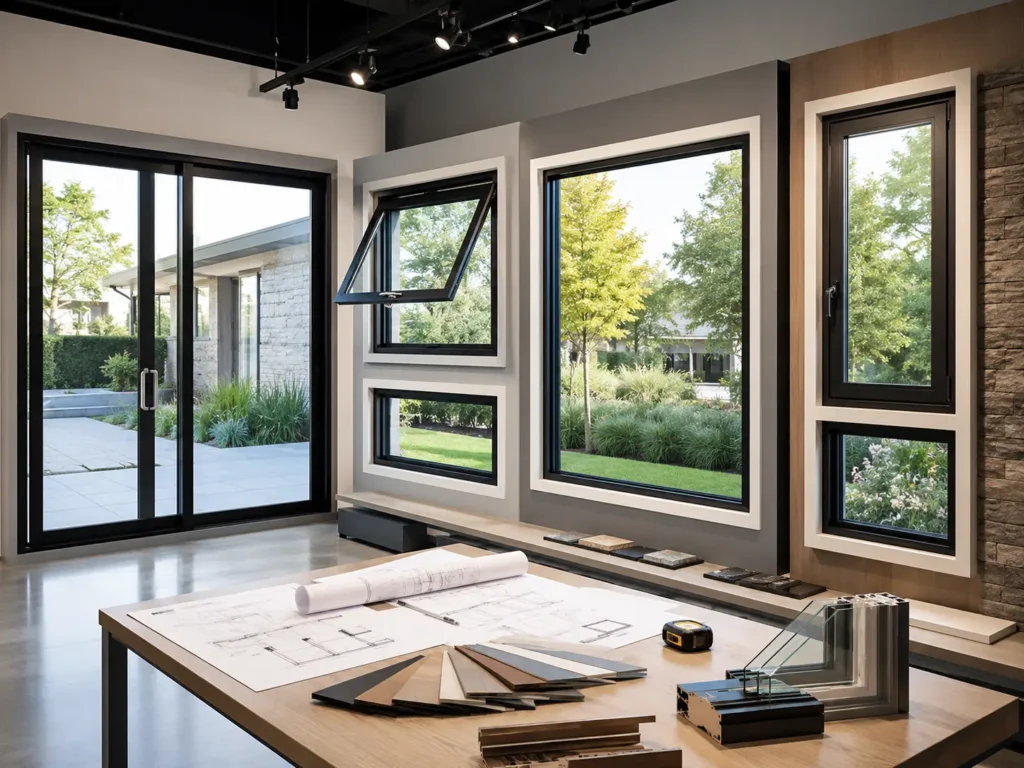
Different window styles have different size ranges because they open differently, carry different loads, and serve different design purposes.
Single-Hung and Double-Hung Windows
Single-hung and double-hung windows are common in residential buildings, especially in North American-style homes. They are usually taller than they are wide and are often used in bedrooms, living rooms, and traditional home designs.
Common size range:
- Width: 24 inches to 48 inches
- Height: 36 inches to 72 inches
The main advantage of this window type is that it does not swing outward. This makes it suitable for areas near walkways, patios, balconies, or other spaces where an outward-opening sash may not be convenient.
For residential developments, double-hung windows are often selected when the project needs a familiar appearance, easy ventilation, and straightforward replacement planning.
Sliding Windows
Sliding windows, also called glider windows, open horizontally. They are popular in apartments, villas, modern homes, and projects where a wide view is required.
Common size range:
- Width: 36 inches to 84 inches
- Height: 24 inches to 60 inches
Sliding windows are often used in bedrooms, dining rooms, living rooms, and basement areas. Because they are wider than many other window types, they are a good choice for projects that need more natural light without using a fixed picture window.
For bulk projects, standard sliding window sizes can also help simplify production and installation because the same system can be repeated across many rooms.
Casement Windows
Casement windows are hinged on the side and open outward like a door. They are known for good ventilation and strong sealing performance when properly manufactured and installed.
Common size range:
- Width: 18 inches to 36 inches
- Height: 36 inches to 72 inches
Casement windows are frequently used in kitchens, bedrooms, bathrooms, and villa projects. They are useful in areas where airflow is important because the open sash can help catch outside air and direct it indoors.
For energy-conscious projects, casement windows are often considered because the sash can close tightly against the frame. Final performance still depends on the frame material, glass specification, hardware, sealing system, and installation quality.
Awning Windows
Awning windows are hinged at the top and open outward from the bottom. Their horizontal shape makes them suitable for bathrooms, basements, laundry rooms, and high-wall applications.
Common size range:
- Width: 24 inches to 60 inches
- Height: 12 inches to 36 inches
One advantage of awning windows is that they can provide ventilation while offering better rain protection than some other window types. This makes them useful for humid or rainy climates.
They are also commonly placed above doors, below larger fixed windows, or in rooms where privacy is important but ventilation is still needed.
Picture and Fixed Windows
Picture windows do not open. Their main purpose is to provide daylight, views, and a clean architectural appearance.
Common size range:
- Width: 24 inches to 96 inches
- Height: 24 inches to 96 inches
Fixed windows are often used in living rooms, stairwells, hotel lobbies, commercial reception areas, and luxury villa spaces. They can create a high-end visual effect, especially when combined with large glass panels, slim frames, or curtain wall systems.
Because large fixed windows can be heavy, the supplier should confirm glass thickness, wind load requirements, frame strength, transportation method, and installation conditions before production.
Standard Window Sizes by Room
Window size should match the function of the room. A bathroom window does not need the same size as a living room window, and a villa stairwell may require a completely different design from an apartment bedroom.
Bedroom windows
Bedroom windows usually need a balance of daylight, ventilation, privacy, and safety. Common choices include double-hung, sliding, and casement windows.
For projects in the United States or other regulated markets, bedroom windows may also need to meet emergency escape and rescue opening requirements. Always confirm local building codes before finalizing the order.
Living room windows
Living rooms usually use larger windows to increase daylight and improve the view. Sliding windows, picture windows, casement combinations, and large fixed glass panels are common choices.
For villas and high-end residential projects, living room windows may also be customized to match floor-to-ceiling layouts, panoramic views, or modern minimalist elevations.
Kitchen windows
Kitchen windows are often placed above countertops or sinks. Casement and sliding windows are common because they are practical and easy to operate in limited spaces.
When choosing kitchen window sizes, consider cabinet height, backsplash height, faucet position, and ventilation needs.
Bathroom windows
Bathrooms usually require smaller windows that provide ventilation while maintaining privacy. Awning windows, frosted glass casement windows, and small sliding windows are commonly used.
For bathroom projects, buyers should also consider moisture resistance, hardware quality, glass privacy options, and long-term corrosion protection.
Commercial and hotel windows
Commercial and hotel projects often require more consistent window dimensions across rooms. This helps simplify drawings, production, installation, and maintenance.
For hotels, apartments, and office buildings, the most important factors are not only size, but also acoustic performance, thermal insulation, safety glass, waterproofing, and facade consistency.
Standard vs. Custom Window Sizes: Which Should You Choose?
Standard window sizes are practical for many projects, but custom windows are sometimes necessary. The best choice depends on your building type, design requirements, budget, and construction stage.
Choose standard window sizes when:
- You are working on apartments, townhouses, hotels, or multi-unit residential projects
- The architectural design allows repeated window dimensions
- You want faster quotation and production
- You need better cost control
- You want easier future replacement
Choose custom window sizes when:
- You are renovating an existing building with non-standard openings
- The project requires floor-to-ceiling windows
- The facade design needs special proportions
- You are working on luxury villas or high-end commercial spaces
- The building requires special glass, frame, or performance specifications
Custom windows can create a stronger architectural effect, but they usually require more detailed communication. Before ordering, you should confirm drawings, frame system, glass type, opening direction, hardware, color, finish, packaging, and shipping method.
At George Homes, we can support both standard and custom window needs. Whether your project requires repeated standard sizes for a development or customized windows for a luxury villa, our team can help coordinate the specifications before production.
How to Measure Rough Openings for Standard Windows
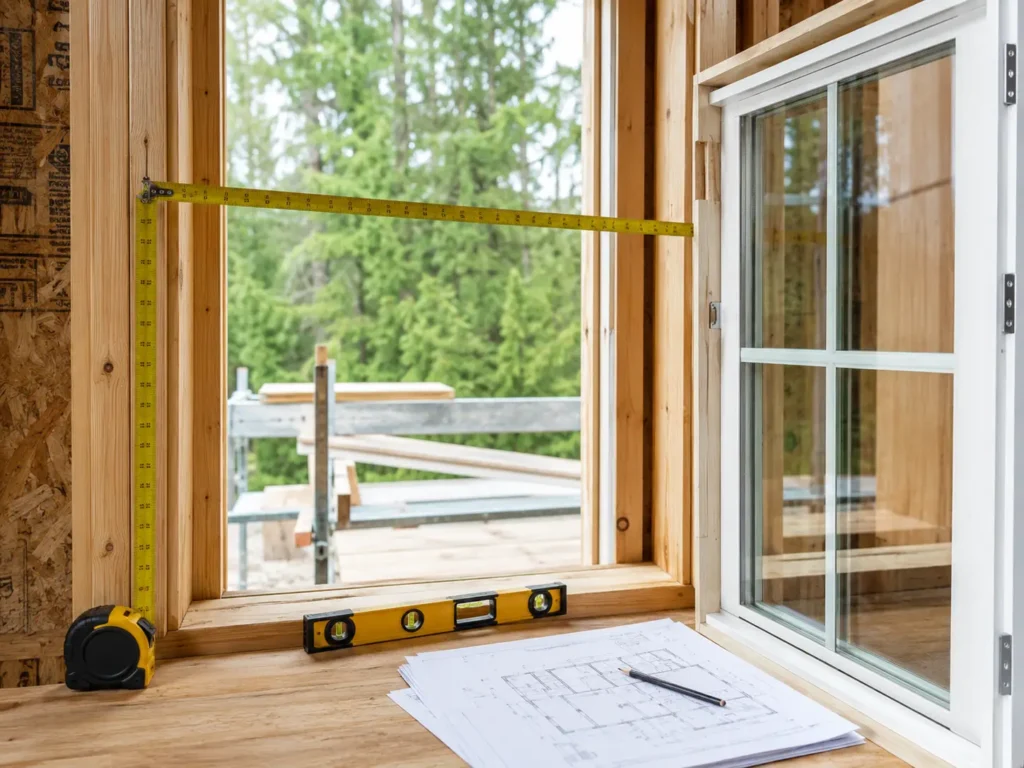
A rough opening is the framed opening in the wall where the window will be installed. It is not always the same as the actual window size. This is one of the most common areas where mistakes happen during procurement.
Before placing an order, confirm whether your drawings show rough opening size, window frame size, or glass size.
Measure the Width
Measure the opening from left to right in three places: top, middle, and bottom. Use the smallest measurement as your reference.
Measure the Height
Measure from the header to the sill in three places: left, center, and right. Again, use the smallest measurement.
Account for Clearance
In many installations, the rough opening is slightly larger than the window frame to allow room for leveling, shimming, insulation, and adjustment. A common allowance is about 1/2 inch wider and 1/2 inch taller than the window frame, but this can vary by manufacturer and window system.
Always follow the supplier’s shop drawings and installation instructions before final framing.
Check for Squareness
Measure diagonally from corner to corner. If both diagonal measurements are the same, the opening is square. If they are different, the opening may need adjustment before installation.
A window installed in an out-of-square opening may have problems with operation, sealing, drainage, and long-term durability.
What to Confirm Before Ordering Windows
Before placing a bulk order, do not rely on window size alone. A complete window specification should include all key details.
Confirm the following before production:
- Window type
- Width and height
- Quantity
- Frame material
- Glass type
- Glass thickness
- Opening direction
- Hardware color and brand
- Frame color and surface finish
- Screen requirement
- Energy performance requirement
- Acoustic requirement
- Wind load requirement
- Waterproofing requirement
- Packaging and shipping method
- Installation accessories
- Shop drawings
For international projects, this step is especially important because different countries may use different measurement systems, building codes, installation methods, and performance standards.
Why Source Windows with George Homes?
Sourcing windows from different suppliers can create many problems. One factory handles windows, another handles doors, another handles cabinets, and another handles tiles. This often leads to mismatched schedules, inconsistent quality, unclear responsibility, and more communication work for the buyer.
George Homes helps simplify this process by offering coordinated building material supply for residential, villa, hotel, apartment, and commercial projects.
Our Doors & Windows Solutions can be matched with your project drawings, architectural style, performance requirements, and budget. Instead of only selling standard products, we help buyers confirm specifications before production so that the final materials are easier to install on site.
With a Dedicated Project Manager, your window order can be coordinated together with Kitchen & Wardrobe, Tile, doors, flooring, sanitary ware, stairs, lighting, and other building materials.
This is the value of our One-Stop Building Project Solutions: fewer suppliers, clearer communication, better project coordination, and more efficient global sourcing.
FAQ About Standard Window Sizes
One common residential size is 24 inches wide by 36 inches tall, often written as 2030. However, the most suitable size depends on the window type, room function, building design, and local requirements.
In many cases, standard window sizes are more cost-effective because they are easier to produce and quote. Custom sizes may require extra engineering, special glass, adjusted frame systems, and longer communication before production.
The rough opening is the framed wall opening. The window size usually refers to the actual frame size. The rough opening is normally slightly larger than the window frame to allow space for adjustment, insulation, and installation.
Yes. Standard sizes can be used in villa projects, especially for bedrooms, bathrooms, kitchens, and secondary rooms. However, living rooms, stairwells, facade windows, and luxury areas often use custom sizes for a more premium appearance.
In many markets, bedroom windows may need to meet emergency escape and rescue requirements. The exact requirement depends on local building codes, so project buyers should confirm with the architect, contractor, or local authority before ordering.
Final Thoughts
Understanding standard window sizes helps builders, contractors, developers, and homeowners make better decisions before production begins. Standard dimensions can reduce cost, shorten lead times, simplify installation, and make future replacement easier.
However, the best window size is not only about width and height. You also need to consider room function, opening style, rough opening, frame material, glass performance, local code, installation method, and project budget.
If you are planning a residential, villa, hotel, apartment, or commercial project, George Homes can help you review your drawings, confirm window specifications, and coordinate your building materials through one streamlined sourcing process.
Send us your BOQ or architectural drawings, and our team will help you prepare a practical window and building material solution for your project.
References
- International Code Council (ICC). “2021 International Residential Code, Section R310: Emergency Escape and Rescue Openings.”
- ENERGY STAR. “Residential Windows, Doors, and Skylights.”
- U.S. Department of Energy. “Energy Performance Ratings for Windows, Doors, and Skylights.”
- National Fenestration Rating Council. “NFRC Window Energy Performance Ratings.”
- Pella. “Making Sense of Standard Window Sizes.”
- Andersen Windows & Doors. “Sizing Guides & Resources.”