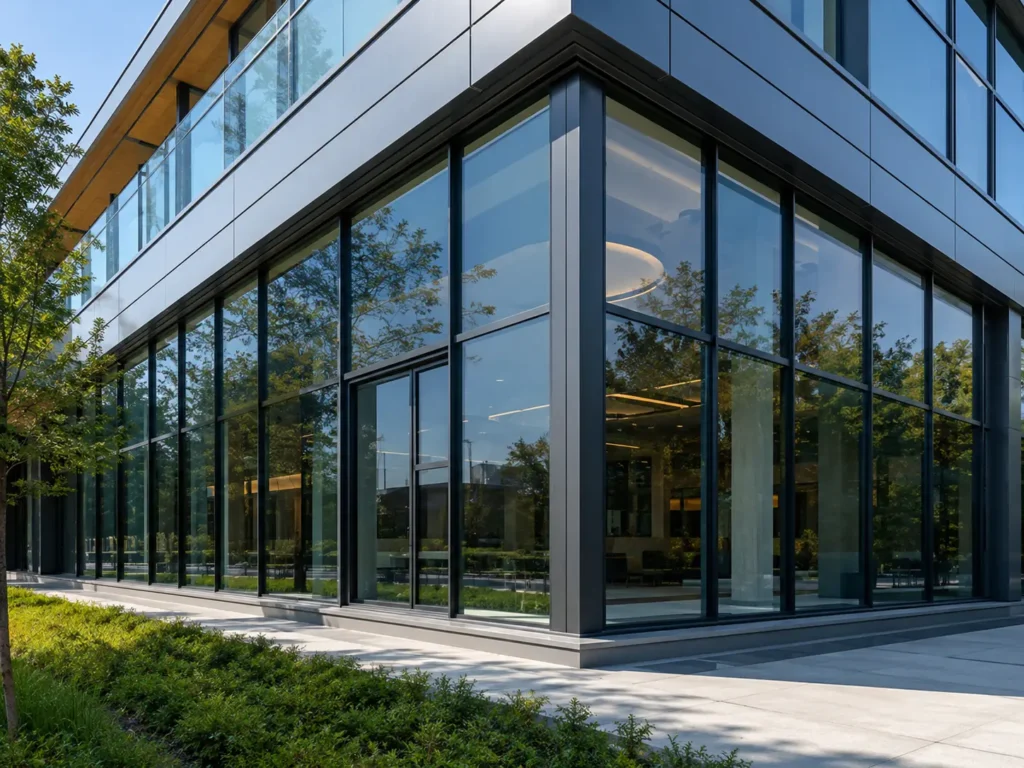
Choosing the right window system is not only a design decision. For commercial buildings, hotels, apartments, villas, schools, offices, and mixed-use developments, windows directly affect energy performance, facade appearance, installation efficiency, maintenance costs, and long-term project value.
For many builders, developers, architects, and procurement teams, the comparison often comes down to thermal break aluminum windows vs uPVC windows.
Both options can deliver good insulation and weather resistance, but they are not designed for the same project conditions. uPVC windows are widely used in residential and mid-range projects because they are cost-effective and naturally insulating. Thermal break aluminum windows, on the other hand, are often preferred for commercial buildings, high-end villas, large openings, slim-frame designs, and projects that require stronger structural performance.
In this guide, we compare thermal break aluminum and uPVC windows from a commercial project perspective, including insulation, strength, appearance, lifespan, maintenance, cost, and long-term ROI.
What Are Thermal Break Aluminum Windows?
Aluminum has long been used in modern architecture because it is strong, lightweight, stable, and suitable for large window and door systems. However, standard aluminum conducts heat easily. Without proper insulation technology, heat and cold can pass through the frame, reducing energy efficiency and increasing the risk of condensation.
That is why thermal break aluminum windows were developed.
How the Thermal Break Works
A thermal break is an insulating barrier placed between the interior and exterior aluminum profiles. In high-quality systems, this barrier is usually made from reinforced polyamide strips. These strips separate the inner and outer aluminum sections, reducing heat transfer through the frame.
This structure allows aluminum windows to maintain their strength while improving thermal insulation. When combined with Low-E glass, double glazing, triple glazing, argon gas filling, and quality sealing systems, thermal break aluminum windows can meet the performance requirements of many commercial and residential projects.
Key Advantages for Commercial Projects
Thermal break aluminum windows are especially suitable for projects that require strength, durability, and a premium appearance.
They are often used in:
- Apartment buildings
- Hotels and resorts
- Office buildings
- High-end villas
- Commercial storefronts
- Large sliding window systems
- Floor-to-ceiling window designs
- Projects with larger glass panels
The biggest advantage is structural stability. Aluminum can support larger glass areas while keeping the frame slim and elegant. This makes it a strong choice for modern architectural designs where natural light, wide views, and clean lines are important.
What Are uPVC Windows?
uPVC stands for Unplasticized Polyvinyl Chloride. It is a rigid plastic material commonly used for window frames. Unlike flexible PVC, uPVC does not contain plasticizers, which makes it harder, more stable, and suitable for exterior building applications.
uPVC windows are popular in many markets because they offer good insulation at a relatively affordable price.
How uPVC Window Profiles Work
uPVC is naturally less conductive than aluminum, so it provides good thermal insulation without requiring a separate thermal break. Most uPVC window profiles are designed with multiple internal chambers. These chambers trap air inside the frame and help reduce heat transfer.
For small and medium-sized windows, this structure can provide strong energy performance. However, for larger openings or commercial buildings, uPVC often requires steel reinforcement inside the profile to improve strength. This can make the frame thicker and heavier.
Key Advantages and Limitations
uPVC windows are a practical option for projects where budget control and insulation are the main priorities. They are commonly used in residential developments, affordable housing, and smaller-scale projects.
However, compared with aluminum, uPVC has more limitations in large-size applications. It is not as strong, the profiles are usually bulkier, and color customization is more limited. In hot climates or areas with strong UV exposure, lower-quality uPVC may also face discoloration or surface aging over time.
Thermal Break Aluminum Windows vs uPVC Windows: Quick Comparison
| Feature | Thermal Break Aluminum | uPVC |
|---|---|---|
| Thermal Insulation | Excellent with thermal break and insulated glass | Excellent due to natural insulation and multi-chamber profiles |
| Structural Strength | Very strong, suitable for large openings and commercial buildings | Moderate, often requires steel reinforcement |
| Frame Appearance | Slim, modern, premium | Thicker, more residential-looking |
| Glass Area | Supports larger glass panels | Better for smaller and medium-sized windows |
| Lifespan | 40–50+ years with quality finishing | Usually 20–30 years depending on quality and climate |
| Customization | Wide color, finish, and profile options | More limited color and finish options |
| Maintenance | Low maintenance | Low maintenance |
| Initial Cost | Higher | Lower |
| Long-Term ROI | Strong for commercial and high-end projects | Good for budget-sensitive residential projects |
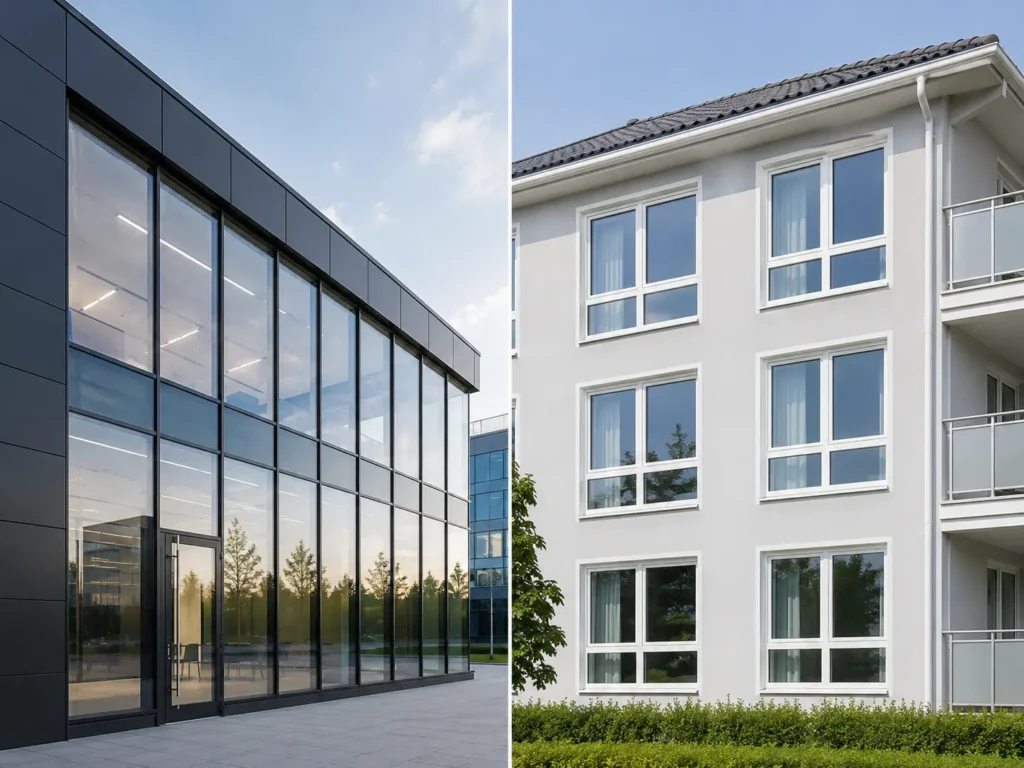
Energy Efficiency and Insulation
Both thermal break aluminum and uPVC windows can provide strong energy efficiency when properly designed.
uPVC has a natural insulation advantage because the material itself does not conduct heat easily. Its multi-chamber structure also helps reduce heat transfer. This makes uPVC a good option for projects where thermal performance and cost control are the main concerns.
Thermal break aluminum improves insulation through its polyamide barrier. This barrier separates the inner and outer aluminum sections and reduces thermal bridging. When paired with high-performance glass, quality gaskets, and proper installation, thermal break aluminum can also achieve excellent U-values.
For commercial projects, the frame material is only one part of the total window performance. Glass type, spacer system, sealing quality, installation accuracy, and project climate all affect the final energy result.
If your project requires larger windows, curtain wall-style openings, or a premium facade, thermal break aluminum usually provides a better balance between insulation and structural performance.
Structural Strength and Durability
Structural strength is one of the biggest differences between the two materials.
This is where thermal break aluminum windows have a clear advantage. Aluminum is strong, rigid, and suitable for large window sizes. It performs well under wind pressure, frequent use, and long-term exposure to outdoor conditions.
For commercial buildings, large villas, hotels, and apartments, window systems may need to handle:
- Large glass panels
- High wind loads
- Frequent opening and closing
- Long-term sun exposure
- Rain, humidity, and temperature changes
- Strict installation and safety requirements
Thermal break aluminum is better suited for these conditions. It is less likely to deform under stress and can maintain better dimensional stability over time.
uPVC performs well in many standard residential applications, but for oversized windows or demanding commercial environments, it may require steel reinforcement. This increases frame thickness and may reduce the clean, slim appearance many modern projects require.
Appearance and Design Flexibility
Modern commercial architecture often emphasizes slim frames, large glass surfaces, and clean visual lines. In this area, aluminum usually performs better.
Aluminum’s strength allows manufacturers to produce slimmer profiles while still supporting large glass panels. This gives architects more freedom to design wide openings, panoramic views, and minimalist facades.
Thermal break aluminum frames can also be powder-coated in many colors, including black, grey, bronze, white, champagne, and custom RAL colors. They can be designed with matte, textured, metallic, anodized, or wood-grain finishes.
This makes aluminum easier to match with other building materials such as Metal & Glass systems, facade panels, railings, canopies, and exterior decorative elements.
uPVC windows can also be made in different colors, but the options are usually more limited. Many colored uPVC windows rely on laminated films or foils. In long-term outdoor use, especially under strong sunlight, lower-quality finishes may fade, peel, or age faster than powder-coated aluminum.
For high-end commercial or villa projects, aluminum generally provides a more premium and modern look.
Cost and Long-Term ROI
uPVC windows usually have a lower initial cost. For developers working on budget-sensitive projects, this can be attractive. If the project uses standard window sizes and does not require large openings or high-end exterior design, uPVC can be a practical solution.
However, commercial projects should not only compare purchase price. They should also consider long-term value.
Thermal break aluminum has a higher upfront cost, but it often delivers stronger long-term ROI because of its durability, structural performance, design flexibility, and longer service life. For buildings expected to operate for decades, these advantages can reduce replacement risk and support higher property value.
A lower-cost window system may save money at the beginning, but if it limits design, requires thicker frames, ages faster, or cannot support larger sizes, it may increase costs later.
For hotels, apartments, office buildings, luxury villas, and commercial developments, thermal break aluminum is often the better investment.
Which Window Type Is Better for Your Project?
The best choice depends on your project type, budget, climate, design style, and performance requirements.
Choose uPVC windows if your project needs:
- Lower initial cost
- Good insulation for standard-size windows
- Simple residential-style design
- Low maintenance
- Budget-friendly procurement
Choose thermal break aluminum windows if your project needs:
- Larger window sizes
- Slimmer frames
- Stronger structural performance
- Better long-term durability
- Premium modern appearance
- More color and finish options
- Better suitability for commercial or high-end projects
For small residential buildings, uPVC may be enough. For commercial buildings, luxury villas, hotels, apartments, and projects with large glass openings, thermal break aluminum is usually the stronger choice.
Simplifying Your Supply Chain: The George Homes Advantage
Choosing the right window material is only one part of a successful building project. For international developers, contractors, and procurement teams, the bigger challenge is often managing product sourcing, technical coordination, quality control, shipping, and installation support.
Working with too many separate suppliers can create problems such as inconsistent finishes, delayed delivery, unclear communication, and mismatched product specifications.
At George Homes, we help solve these problems through One-Stop Building Project Solutions.
Instead of sourcing windows, doors, flooring, tiles, cabinets, sanitary ware, lighting, furniture, and other building materials from many different vendors, you can coordinate your project through one experienced supplier.
When you source Doors & Windows from George Homes, our team can also help ensure the window style, color, and performance match other project materials such as Tile, Marble & Granite, exterior cladding, interior finishes, and the overall design concept.
This is especially useful for hotels, apartments, villas, resorts, and commercial projects where consistency matters across the whole building.
Frequently Asked Questions
Yes. Thermal break aluminum windows usually cost more than uPVC windows because aluminum profiles, thermal break technology, surface finishing, and structural design require higher manufacturing investment. However, for commercial and high-end projects, the longer lifespan, slimmer appearance, and stronger performance often make thermal break aluminum the better long-term choice.
Yes. Thermal break windows can greatly reduce condensation risk because the insulating barrier helps keep the interior frame surface closer to indoor temperature. However, condensation can also be affected by indoor humidity, glass type, ventilation, and installation quality.
Thermal break aluminum usually lasts longer than uPVC in demanding commercial applications. High-quality aluminum windows with proper powder coating or anodized finishing can offer excellent resistance to weather, UV exposure, deformation, and long-term wear.
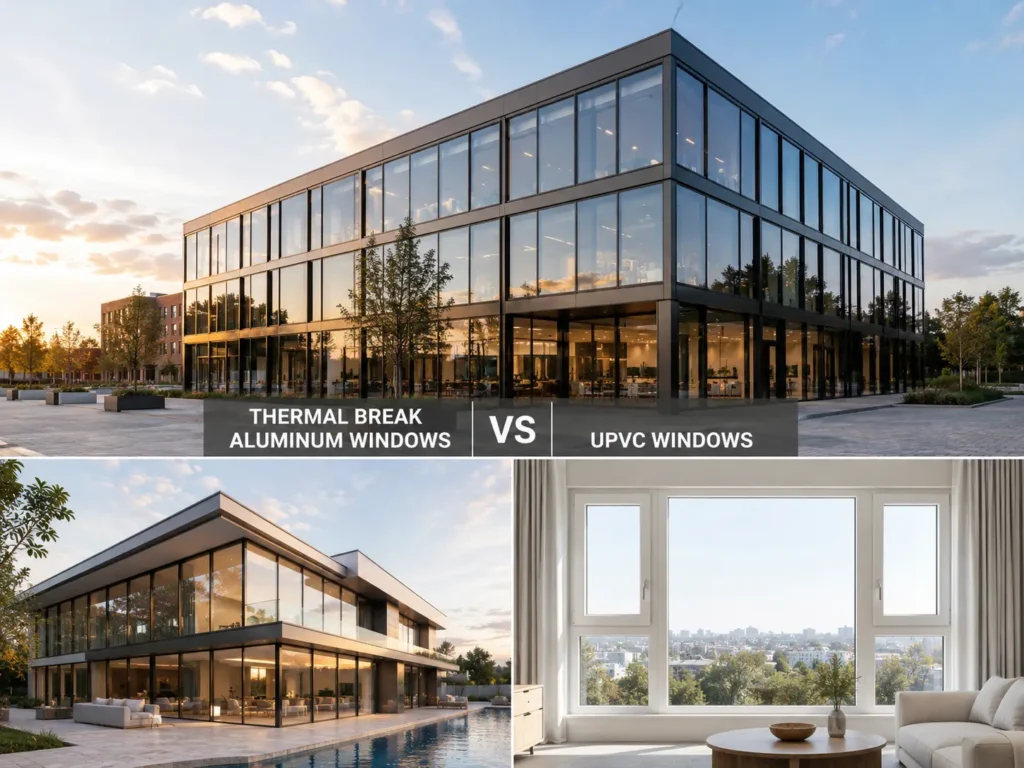
Why Contractors and Developers Choose George Homes
Dedicated Project Coordination
Every project needs clear communication. With George Homes, you work with a professional project team that helps coordinate product selection, technical details, production, quality inspection, packaging, and shipping.
Your Dedicated Project Manager helps reduce communication gaps and makes the procurement process more efficient.
Full Building Material Support
George Homes is not only a window supplier. We support a wide range of project categories, including Flooring & Staircase, Kitchen & Wardrobe, Sanitary, Lighting, Furnishings & Supplies, and Appliances & Sourcing.
This helps contractors and developers save time, reduce supplier management pressure, and keep the project style more consistent.
Design and Technical Support
For window and door projects, technical accuracy is very important. Our team can support drawings, product recommendations, size confirmation, material matching, and specification review.
This helps reduce mistakes before production and improves project efficiency.
Offline Showroom Experience
For buyers who want to inspect materials, finishes, profiles, and complete project solutions in person, George Homes also welcomes clients to visit our offline showroom in China. This allows you to compare product quality directly and make more confident sourcing decisions.
Final Recommendation
For budget-sensitive residential projects with standard window sizes, uPVC windows can be a cost-effective and energy-efficient choice.
For commercial buildings, hotels, apartments, villas, and projects that require larger openings, slim frames, modern appearance, and long-term durability, thermal break aluminum is usually the better option.
The key is not only choosing the right material, but also working with a supplier that understands project requirements, technical details, quality control, and international delivery.
Ready to Elevate Your Commercial Project?
Choosing between thermal break aluminum and uPVC windows will affect your building’s appearance, performance, maintenance, and long-term value.
If you are planning a hotel, apartment, villa, commercial building, or full renovation project, George Homes can help you compare window systems, review specifications, match materials, and provide a complete project solution.
Let’s discuss your project blueprints. Contact George Homes today to connect with your Dedicated Project Manager for a free design consultation, technical evaluation, and customized quotation.
- WhatsApp us directly from the bottom right corner for fast project support.
- Explore our Commercial Doors & Windows Solutions to view more window and door options for modern commercial projects.