In modern high-end residential and commercial architecture, the building envelope is only as strong as its weakest thermal link. For luxury villas and upscale developments, the garage facade often represents the largest single opening in the structure—acting as a massive thermal black hole if improperly specified.
For real estate developers, project managers, and architects, specifying premium garage door insulation is no longer an optional upgrade; it is a critical engineering decision that dictates whole-building energy performance, HVAC efficiency, and structural longevity. As a premier 20-year supplier offering One-Stop Building Project Solutions worldwide, George Homes bridges the gap between architectural vision and elite manufacturing execution.

The Engineering Behind Garage Door Insulation: Foaming Processes Explained
Understanding the core manufacturing processes behind insulated panels is essential for sourcing the right materials for international projects. The industry primarily relies on two distinct chemical foaming technologies, each delivering vastly different performance metrics.
Polystyrene Insulation (EPS/XPS): The Standard Panel Approach
Polystyrene (commonly known as expanded or extruded polystyrene) represents the traditional approach to thermal barrier construction.
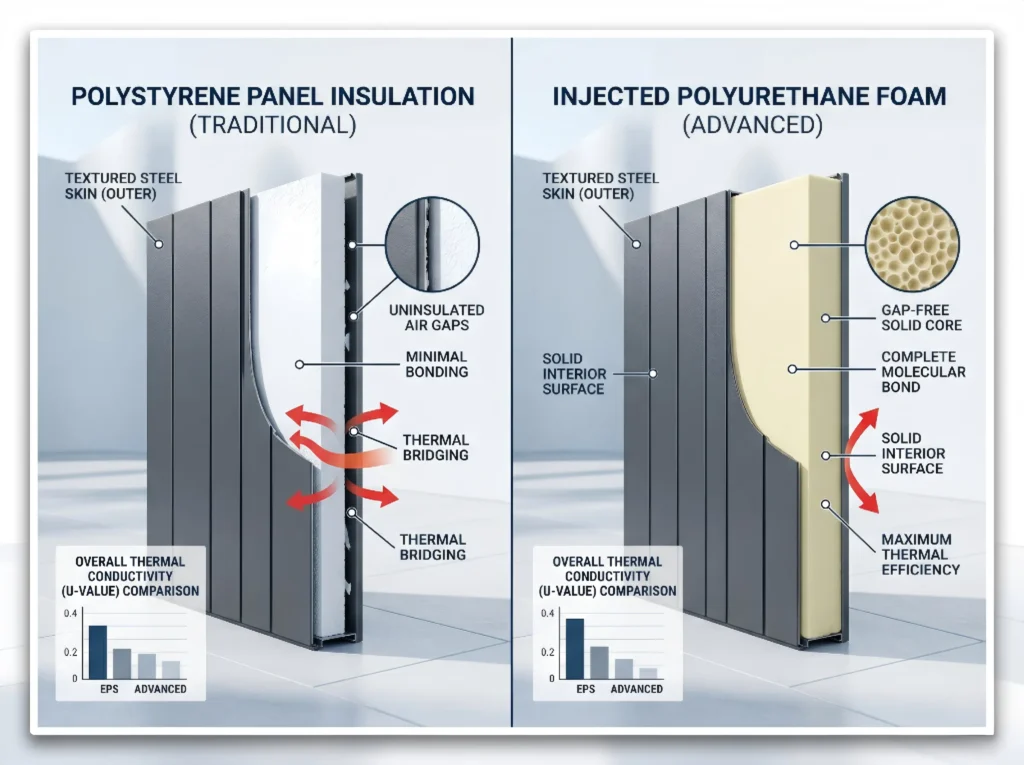
- The Manufacturing Process: Rigid sheets of pre-formed polystyrene are precision-cut to size and manually or mechanically inserted between the front and back steel skins of the garage door panel.
- Performance Profile: While polystyrene offers a dependable thermal barrier and is highly cost-effective, the rigid nature of pre-cut panels means they cannot perfectly conform to the complex internal contours of a stamped steel door. This inherently leaves microscopic air pockets within the panel shell.
- Best Suited For: Mid-scale residential developments, detached garage structures, and projects located in mild to moderate climate zones where extreme thermal resistance is not the primary objective.
Polyurethane Insulation (PU): The Premium Injected Foam Technology
For bespoke architectural projects demanding uncompromising thermal and acoustic control, polyurethane insulation is the gold standard.
- The Manufacturing Process: Unlike pre-cut sheets, polyurethane utilizes a high-pressure liquid injection foaming process. The chemical composite is injected directly into the fully assembled steel door panel. Within seconds, the liquid expands to 100% fill capacity, effortlessly permeating every microscopic crevice, seam, and contour before curing into a dense, solid core.
- Chemical Bonding: As the polyurethane cures, it forms a high-strength chemical bond directly with the interior steel walls. This composite sandwich construction transforms the panel from a simple sheet metal housing into a unified, highly rigid structural element.
- Core B2B Advantages: * Maximum Thermal Resistance: Delivers the highest possible thermal resistance per inch of thickness.
- Superior Structural Integrity: Dramatically increases resistance to high wind loads, structural deflection, and daily mechanical wear.
- Acoustic Dampening: Absorbs exterior street noise and eliminates the hollow, metallic rattling typical of standard overhead doors.
Data Showdown: Polyurethane vs. Polystyrene R-Values
To help engineering consultants and procurement managers evaluate the return on investment (ROI) for custom builds, the following matrix contrasts the physical properties of both insulation methodologies.
| Insulation Methodology | Foaming Density | Average R-Value (Per Inch) | Structural Rigidity Impact | Acoustic Control (STC) | B2B Project Suitability |
| Polystyrene (Panels) | Low to Medium | R-3.5 to R-4.5 | Minimal enhancement | Moderate | Standard Housing / Detached Garages |
| Polyurethane (Injected) | High Composite | R-6.0 to R-7.1+ | Up to 2x stronger panel rigidity | Excellent (High STC rating) | Luxury Villas / LEED Commercial Builds |
Architectural Note: A standard 2-inch thick polyurethane-injected garage door consistently achieves an overall insulation rating exceeding R-16 to R-18, whereas a comparable polystyrene panel typically maxes out around R-9.
How High R-Value Garage Doors Impact Whole-Building Energy Performance
Transitioning from an isolated product view to a holistic whole-building perspective reveals why high R-value facade elements are heavily scrutinized in green building frameworks.
Meeting LEED Certification and Modern Green Building Codes
For commercial developments and luxury residential estates targeting LEED (Leadership in Energy and Environmental Design) certification, every component within the thermal envelope counts. Premium polyurethane-insulated doors directly assist green building consultants in securing critical Energy and Atmosphere (EA) Credits. By establishing an airtight, highly insulated barrier, these doors optimize the building’s baseline energy modeling, proving indispensable for compliance with stringent international codes like Title 24 or passive house standards.
Eliminating Thermal Bridging & Optimizing HVAC Efficiency
In premium villa layouts, garages are seamlessly integrated into the primary living structure, often situated directly beneath master suites or adjacent to custom living spaces.
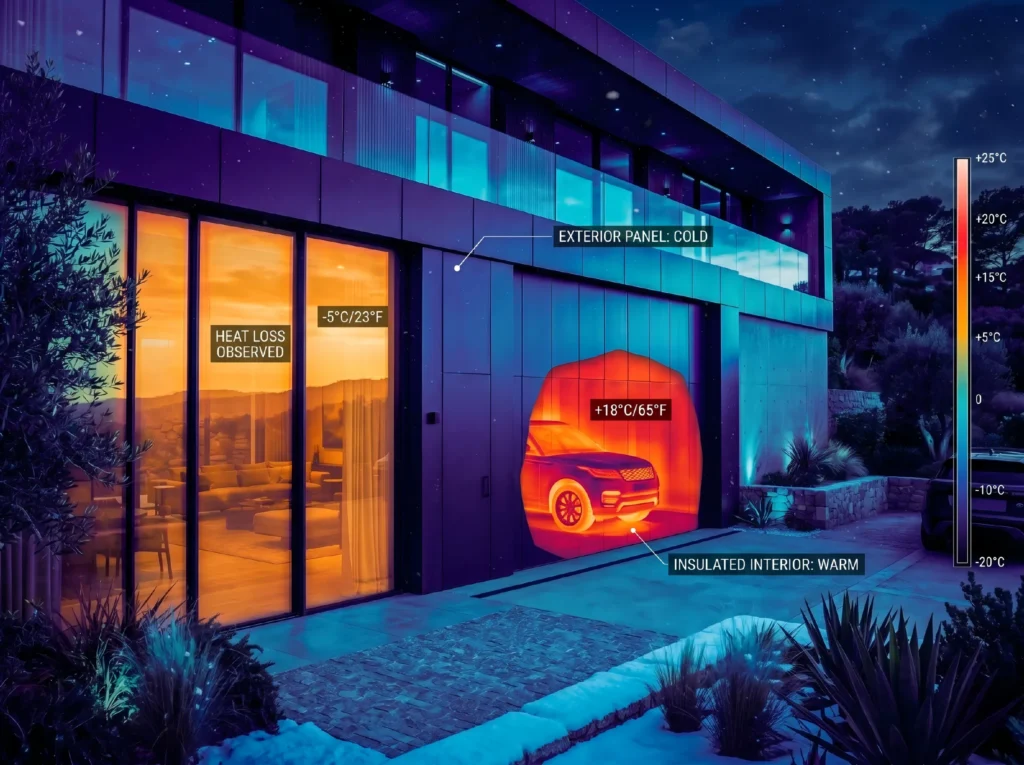
An uninsulated or poorly insulated garage acts as a massive thermal bridge, allowing ambient exterior temperatures to flood the interior slab and shared boundary walls. Specifying a high R-value garage door stabilizes the internal garage climate. This drastically reduces thermal transfer, minimizes the operational load on central HVAC systems, and drives down continuous energy consumption across the estate.
Crafting Cohesive Facades: George Homes’ One-Stop Capability
A truly exceptional architectural design demands that high-performance engineering works in perfect harmony with aesthetic continuity. The garage facade should never look like an engineering afterthought; it must fluidly extend the visual language of the entire estate.
At George Homes, we eliminate the friction of sourcing complex architectural packages. When you specify our premium insulated garage doors, our customized design process ensures the exterior metal finishes, panel profiles, and color palettes perfectly match your architectural Doors & Windows Solutions.
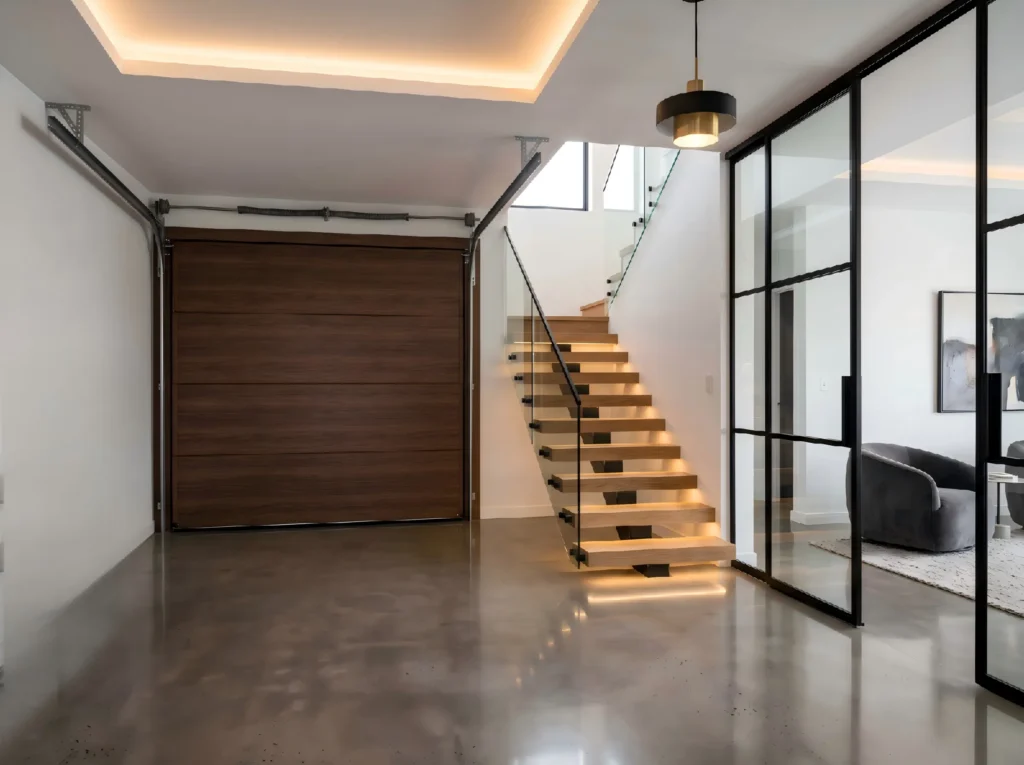
Transitioning into the property’s interior, our engineering teams ensure seamless visual and physical thresholds. We coordinate durable, luxury Flooring & Staircase materials for entry mudrooms, seamlessly integrated Lighting systems to showcase premium auto collections, and bespoke Metal & Glass partitions to maintain a sleek, modern flow.
Sourcing Without the Headache
Overseas developers and general contractors frequently face the massive pain point of coordinating customized specifications across dozens of fragmented, unreliable factories. George Homes solves this by providing:
- True One-Stop Procurement: From structural building materials to final furnishing collections, managed under a single unified contract.
- A Dedicated Project Manager: One expert point of contact overseeing your project from initial shop drawings and OEM customization to rigorous quality control and synchronized global shipping.
- Global Showroom Access: We warmly invite international project teams and villa owners to visit our expansive offline showrooms to experience our manufacturing excellence firsthand.
Frequently Asked Questions
Polyurethane is superior for high-end projects. Injected as a liquid, it expands to eliminate air pockets, delivering nearly double the R-value per inch of polystyrene. It also provides maximum structural rigidity and exceptional acoustic dampening.
An R-value of R-12 to R-18+ is recommended for attached garages in extreme climates. Achieving this thermal standard requires premium polyurethane insulation, which blocks thermal bridging and reduces operational strain on central HVAC systems.
Yes. High R-value garage doors optimize the building’s thermal envelope and lower overall energy consumption. Specifying premium insulated facades directly contributes to Energy and Atmosphere (EA) credits under modern LEED certification standards.
References & Industry Standards
To support project modeling and compliance verification, the thermal performance and green building integration data cited in this guide align with the following international engineering standards:
- DASMA Technical Data Sheet 163:Thermal Performance of Garage Doors and Validation Requirements for the DASMA R-Value Certification Program.
- U.S. Green Building Council (USGBC): LEED v4 / v4.1 for Building Design and Construction (BD+C): Energy and Atmosphere (EA) Prerequisite: Minimum Energy Performance & EA Credit: Optimize Energy Performance.
- ASHRAE Handbook—Fundamentals: Thermal Properties of Building and Insulating Materials (Polyurethane Foam vs. Expanded/Extruded Polystyrene Thermal Resistance Standards).
- U.S. DOE Building Technologies Office: * Building Technologies Office: Air Sealing and Insulation Guidelines for Attached Garage Thermal Boundaries in High-Performance Residential Architecture.
Tailored B2B Solutions for Your Next Masterpiece
Looking for the ultimate facade solution for your next high-end villa or commercial project? George Homes delivers customized, high R-value sandwich insulated garage doors that seamlessly blend minimalist aesthetics with superior thermal performance. We fully support OEM specifications to match your exact architectural vision.
Ready to streamline your procurement and eliminate multi-factory hassles?
[Simply submit your project details via the inquiry form located below or in the right-hand sidebar] to request precise technical specifications and highly competitive bulk-purchase quotes from our team of engineering consultants.
For instant support or to discuss urgent project timelines, click the WhatsApp button in the bottom right corner to connect directly with your Dedicated Project Manager today. Let’s build excellence together.