Why Choosing the Right Interior Doors Matters for Your Project
For architects, developers, and project managers, selecting the right types of interior doors is far more than a basic design decision. Interior doors dictate the acoustic privacy, fire safety, and overall aesthetic flow of a building. Whether you are outfitting a sprawling luxury villa with quiet, minimalist elegance or sourcing highly durable materials for a high-traffic commercial complex, specifying the correct door type is crucial to passing inspections and satisfying clients.
As a 20-year top-tier supplier, George Homes specializes in One-Stop Building Project Solutions. We understand the massive headache of coordinating with dozens of different factories for a single build. By partnering with us, you gain access to unified factory direct quality, rigorous QA, and an expansive catalog that ensures your doors perfectly match your overall architectural vision.
Below is a comprehensive breakdown of the core interior door types to help you specify the right materials for your next bulk procurement.
Solid Wood Doors: Unmatched Luxury and Craftsmanship
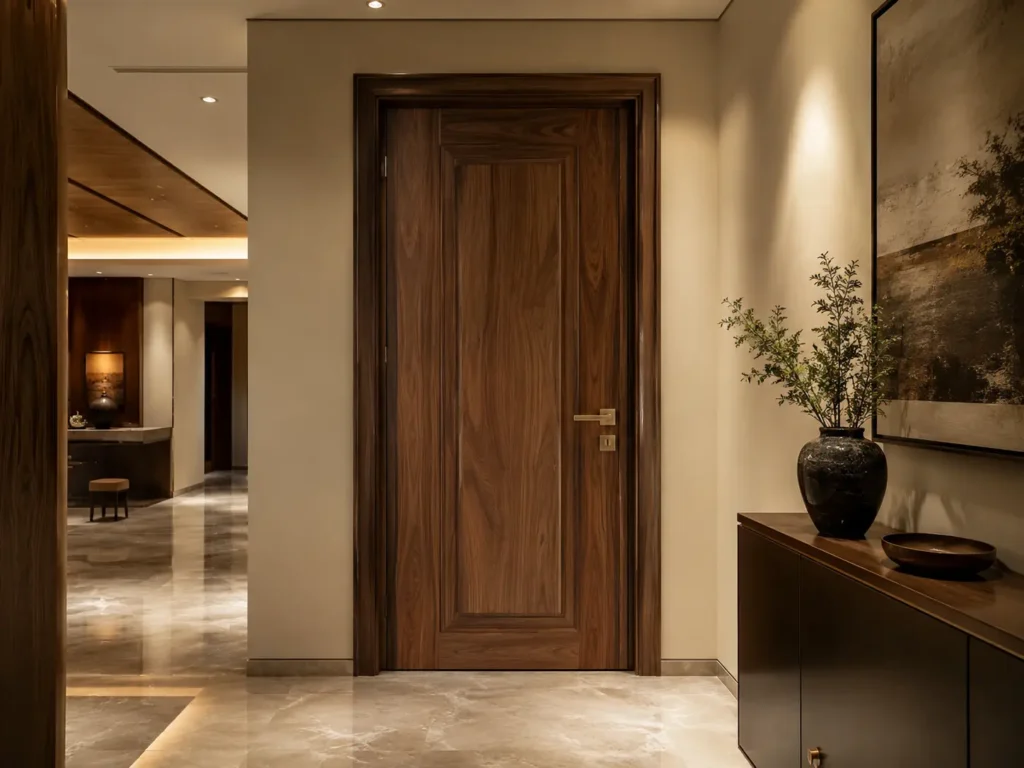
When the project demands premium quiet luxury and a high-end, tactile experience, the solid wood door remains the absolute gold standard. These doors are milled from single pieces of natural wood or edge-glued solid timber, showcasing authentic, beautiful wood grains.
- Key Features: 100% natural wood composition, substantial weight, and rich, customizable finishes.
- Pros: Incredible longevity, superior acoustic insulation, and an unmistakable aura of luxury. They can be sanded and refinished multiple times.
- Cons: Higher price point. Being a natural material, wooddoors can expand or contract with extreme humidity fluctuations if the building lacks climate control.
- Best Applications: Master suites in luxury residential villas, high-end hospitality lobbies, executive boardrooms, and upscale private clubs.
Explore our complete range of premium solid wood options in our Doors & Windows collection.
Solid Core Doors: The Ideal Balance of Quality and Budget
For developers who require the heavy feel and soundproofing of a solid wood door but are bound by tighter commercial budgets, solid core doors are the ultimate solution. These doors feature an exterior veneer of engineered wood or MDF over a dense, heavy core made of particleboard or mineral compositions.
- Key Features: Heavyweight core construction with a refined veneer surface.
- Pros: Highly cost-effective compared to natural wood, excellent sound transmission class (STC) ratings for acoustic privacy, and high resistance to warping or expansion.
- Cons: They are incredibly heavy, making installation slightly more labor-intensive.
- Best Applications: Commercial office buildings, multi-family apartment complexes, hotel corridors, and educational facilities.
Hollow Core Doors: Cost-Effective Solutions for Large Developments
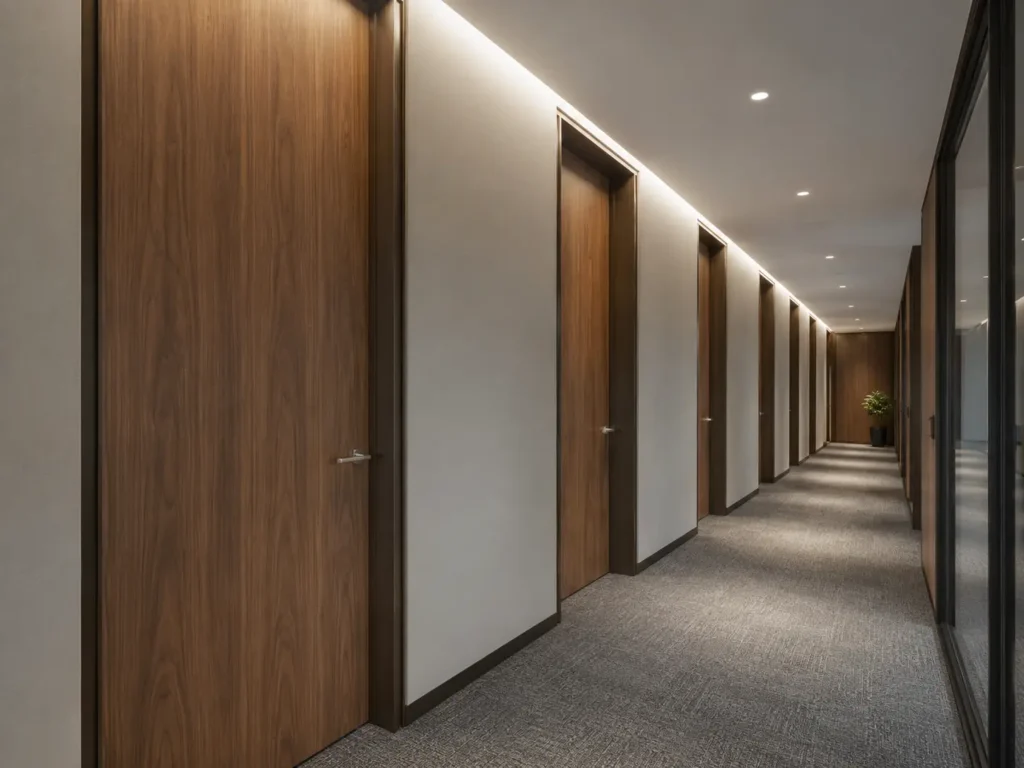
The hollow core door is the standard for large-scale, budget-conscious residential developments. Despite the name, they are not entirely empty; they contain a structural honeycomb interior made of cardboard or plastic, wrapped in a thin wood or synthetic veneer.
- Key Features: Honeycomb interior structure, lightweight profile.
- Pros: Unbeatable affordability for bulk purchasing, very lightweight, and easy to hang.
- Cons: Minimal sound insulation, highly susceptible to impact damage, and cannot be sanded or repaired easily if punctured.
- Best Applications: Utility rooms, standard residential closets, and budget multi-family housing projects where cost-saving is the primary directive.
Steel Doors: Industrial Strength and Maximum Security
When durability, security, and fire resistance are non-negotiable, the steel door is the required specification. Constructed from heavy-duty steel casings—often filled with high-density foam or mineral cores—these doors are built to withstand severe abuse.
- Key Features: Heavy-gauge steel exterior, frequently carrying strict fire ratings.
- Pros: Unbeatable structural integrity, top-tier fire resistance, and virtually impenetrable security. They also fit perfectly into modern, industrial-minimalist architectural designs.
- Cons: Prone to denting upon extreme impact, heavy, and typically restricted to commercial or utilitarian aesthetics.
- Best Applications: Commercial kitchens, secure server rooms, stairwell fire exits, and industrial lofts.
Fiberglass Doors: Moisture-Resistant and Versatile
The fiberglass door is a marvel of modern composite engineering. Molded to perfectly mimic the textured grain of real wood or cast in sleek, smooth panels, fiberglass offers a highly durable alternative for specific environmental challenges.
- Key Features: Composite fiberglass shell wrapped around an insulating core.
- Pros: Completely impervious to moisture—it will never rot, warp, or rust. Offers excellent thermal insulation and requires almost zero maintenance.
- Cons: Custom sizing can be difficult to source as they are cast in specific molds; extremely cheap variations can look artificial.
- Best Applications: High-humidity zones, luxury Sanitary environments, basement entrances, and coastal property interiors.
Metal & Glass Doors: Modern Aesthetics for Open Concepts
To achieve a high-end, minimalist interior that maximizes natural light, sleek metal-framed glass doors are trending heavily in modern architecture. These doors use slim, dark metallic profiles holding vast panes of tempered or frosted glass.
- Cross-Category Integration: These doors pair flawlessly with our Metal & Glass partitions and modern Lighting fixtures to create expansive, bright, open-concept spaces without sacrificing zoning.
Can’t Find the Door Type You Are Looking For?
Building projects often require highly specialized or bespoke architectural elements. If the standard door types listed above do not perfectly align with your current project specifications, our design team is ready to assist.
Whether you need custom oversized pivot doors, specialized hospital-grade acoustic doors, or bespoke hidden frameless doors, welcome to communicate directly with our professionals. Your Dedicated Project Manager can source, custom-design, and manufacture the exact specifications required to bring your blueprint to life.
Data Comparison: Which Interior Door Type is Best?
Use this quick-reference table to evaluate which door type aligns with your project’s budget, acoustic needs, and durability requirements.
| Door Type | Relative Cost | Soundproofing (STC) | Durability | Recommended Project Type |
| Solid Wood | Excellent (30-35+) | Very High | Luxury Villas, High-End Hotels | |
| Solid Core | $$ | Excellent (30-35+) | High | Commercial Offices, Apartments |
| Hollow Core | $ | Poor (20-25) | Low | Standard Residential, Closets |
| Steel | $$$ | Varies (Core Dependent) | Extreme | Kitchens, Secure Facilities |
| Fiberglass | $$ | Good (25-30) | High | Bathrooms, High-Humidity Areas |
Streamline Procurement with George Homes’ One-Stop Service
Sourcing the right doors is only one fragment of a major construction project. George Homes removes the complexity of international procurement by providing a true one-stop-shop experience.
Beyond doors and windows, we supply fully integrated material packages including Flooring & Staircase solutions, comprehensive Kitchen & Wardrobe cabinetry, and curated Furnishings & Supplies tailored specifically for B2B procurement and soft furnishing niches.
By working with George Homes, you are assigned a Dedicated Project Manager who oversees everything from free initial CAD designs to rigorous factory QA and consolidated global shipping. We warmly invite international project managers, developers, and architects to visit our expansive headquarters and showrooms in Foshan to experience our high-end materials firsthand.
Frequently Asked Questions (FAQs)
No, not necessarily. Solid wood doors offer superior natural aesthetics and prestige for luxury builds. However, solid core doors provide better environmental stability (less warping) and high cost-efficiency, making them “better” for large-scale commercial projects.
No. Hollow core doors lack the soundproofing (STC rating) and durability required for busy commercial environments. For office spaces, solid coredoors or steel doors are heavily recommended to ensure privacy and longevity.
Yes. High-quality fiberglass doors are manufactured with highly realistic woodgrain textures. When professionally stained, they closely mimic the appearance of genuine wooddoor products while offering superior moisture resistance.
References
- Window & Door Manufacturers Association (WDMA): Industry standards for architectural wood flush doors and performance ratings.
- Architectural Acoustics Guidelines: Standards for Sound Transmission Class (STC) ratings in commercial and residential building materials.
Contact Your Dedicated Project Manager Today
Ready to streamline your building project with premium materials and unified global shipping? Stop coordinating with dozens of different factories and let our expert team handle the heavy lifting.
Contact your Dedicated Project Manager today to request our complete catalog, discuss custom design solutions, or get a comprehensive bulk quote for your current development.
Email us directly at: georgeteam.global@gmail.com or click the WhatsApp icon in the bottom right corner for an instant consultation!