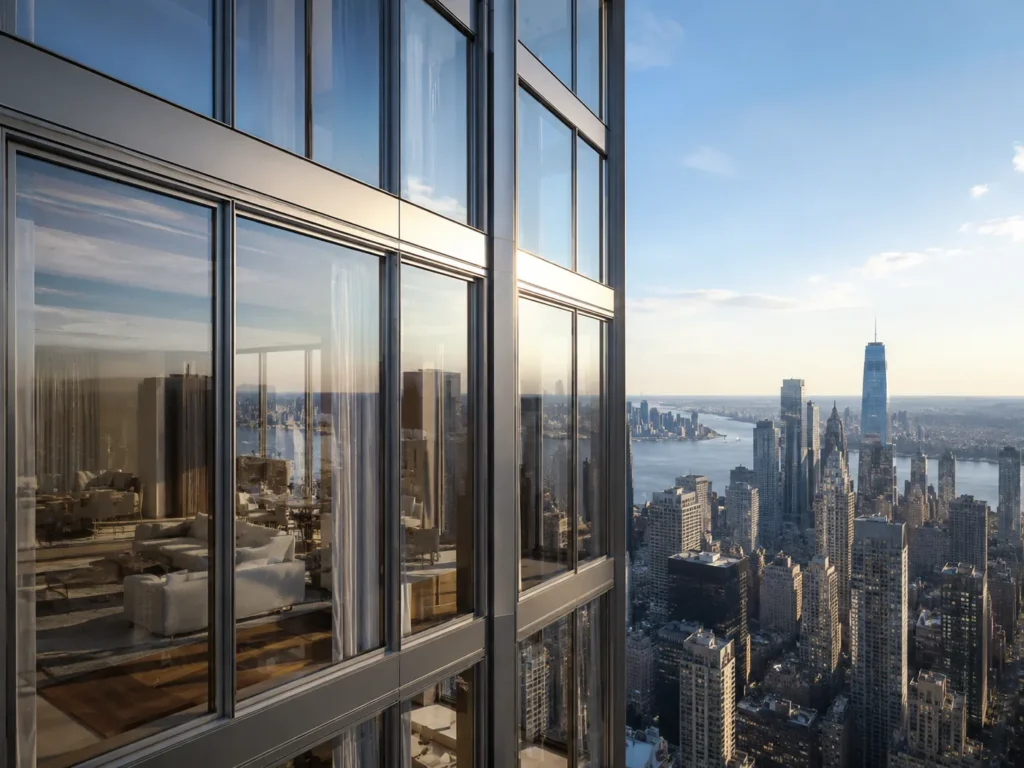
High-rise architecture is no longer defined only by height. Today, the value of a tower is shaped by how well its facade performs: how much natural light it brings in, how effectively it controls heat, how safely it responds to wind pressure, and how quietly it protects occupants from the city below.
For developers, architects, contractors, and procurement teams, high rise building windows are not a decorative afterthought. They are a core part of the building envelope, directly influencing energy use, occupant comfort, facade appearance, safety compliance, and long-term asset value.
This article explains the most important high-rise window design trends and how to translate them into practical project decisions. It also shows how George Homes supports high-end residential towers, hotels, apartments, and commercial projects with integrated high-rise glazing solutions and one-stop supply support.
Why High-Rise Building Windows Matter More Than Ever
In a low-rise home, a window is often evaluated by appearance, ventilation, and basic insulation. In a high-rise building, the same decision becomes much more complex. Every window or facade module must respond to wind load, solar heat gain, acoustic pressure, thermal movement, water penetration risk, and safety requirements.
That is why modern high rise building windows are increasingly specified as engineered systems rather than standalone products. A reliable system must consider the frame, glass, spacer, sealant, hardware, drainage path, anchoring method, and installation tolerance as one complete assembly.
For developers, this has direct business impact:
- Better thermal performance can reduce cooling and heating demand.
- Better acoustic performance can improve tenant satisfaction in dense urban areas.
- Better structural design can reduce long-term maintenance and leakage risk.
- Better facade consistency can increase the perceived value of luxury properties.
- Better sourcing coordination can reduce project delays and supplier conflicts.
As a global supplier of premium architectural materials, George Homes focuses on connecting architectural design intent with manufacturing, material coordination, and project delivery. For high-rise projects, that means helping clients choose window and facade systems that look refined, perform reliably, and remain practical to produce at scale.
Key High-Rise Building Window Design Trends
The strongest commercial window trends are not only about appearance. They combine visual minimalism, energy performance, safety, and project efficiency.
Slimmer Frames and Larger Glass Panels
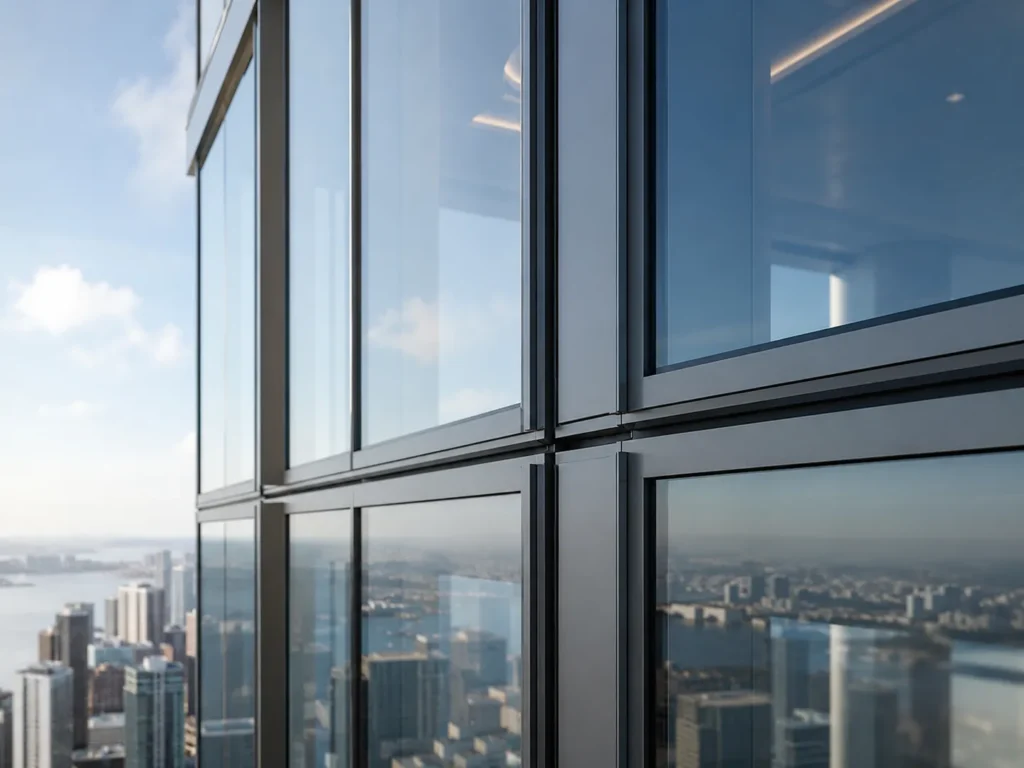
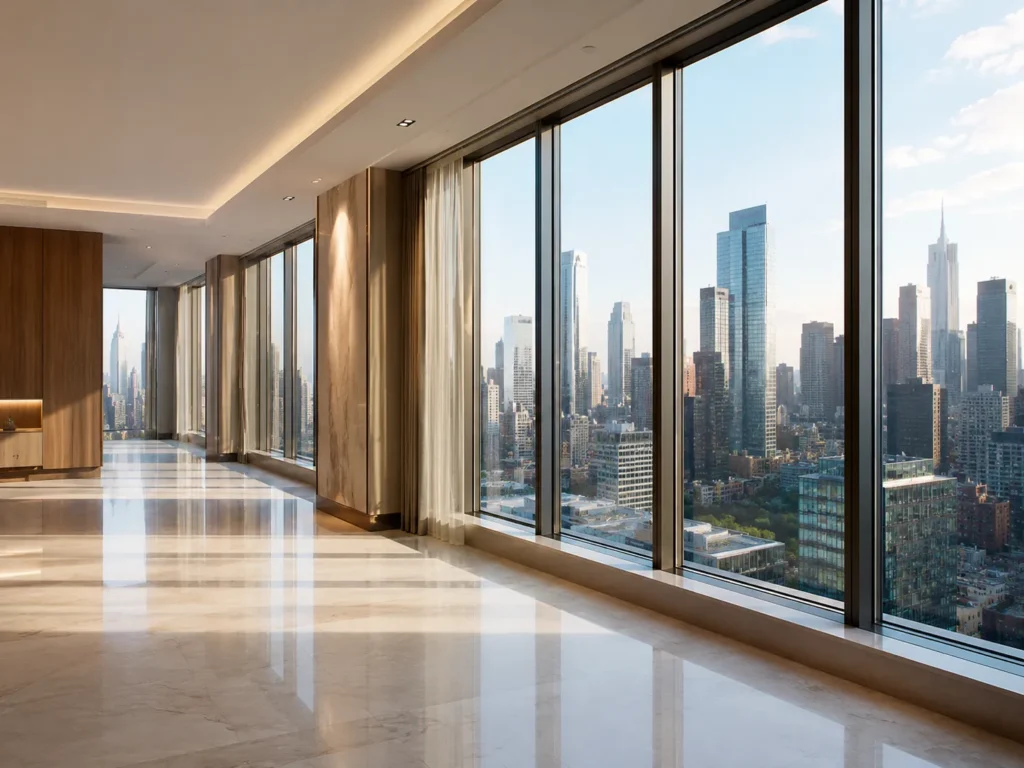
Luxury towers increasingly favor clean facade lines, slim aluminum profiles, and larger glass areas. This creates a more open interior experience and supports the “quiet luxury” style often seen in high-end apartments, hotels, and office towers.
However, larger glass panels require more careful engineering. The system must account for glass thickness, wind pressure, deflection limits, structural silicone requirements, and safe handling during installation. A slim frame is only valuable when it can still meet the project’s performance requirements.
High-Performance Low-E Glass
Low-E glass remains one of the most important technologies in modern high-rise facade design. By controlling heat transfer and solar radiation, Low-E coatings help reduce HVAC loads while preserving daylight and exterior views.
For hot climates, the priority is usually a lower Solar Heat Gain Coefficient, or SHGC, to reduce unwanted solar heat. For colder climates, the specification may focus more on insulation and overall U-Factor. The best choice depends on climate, orientation, building use, and local energy code requirements.
Acoustic Comfort as a Premium Feature
In dense cities, high-rise buildings face traffic noise, rail noise, nightlife, aircraft noise, and mechanical equipment noise. For luxury apartments, hotels, and commercial towers, acoustic comfort is no longer optional. It directly affects how residents sleep, how hotel guests experience the room, and how commercial tenants evaluate interior quality.
Laminated glass, asymmetrical glass thickness, wider air gaps, and properly sealed aluminum frames can all improve sound control. For projects near highways, airports, or busy urban centers, acoustic performance should be reviewed early rather than treated as a late-stage upgrade. For a more detailed breakdown of glazing, sealing, and specification methods, see our How to Soundproof Windows: Proven Solutions for High-End Projects.
Sustainable and Recyclable Material Choices
Sustainability in high-rise facade design is not only about choosing recyclable materials. It also depends on energy performance, product durability, accurate sizing, and reducing unnecessary waste during production and installation. For large-scale projects, even small specification errors can create repeated material loss across hundreds of window units.
Aluminum is widely used in high-rise window systems because it is strong, stable, recyclable, and suitable for slim profiles. When paired with thermal breaks and high-performance glass, aluminum window systems can support both design freedom and energy efficiency. This makes it an important category within sustainable building materials for large-scale projects.
Window size planning also plays an important role in cost control and facade coordination. Standardized or semi-standardized dimensions can simplify production, reduce lead times, and make replacement or maintenance easier in the future. For early-stage planning, you can review our Standard Window Sizes Guide for Residential, Villa & Commercial Projects before finalizing the high-rise window schedule.
Unitized and Prefabricated Facade Systems
For large towers, speed and consistency matter. Unitized curtain wall systems and prefabricated window modules are becoming more common because they can reduce on-site labor, improve quality control, and shorten installation schedules.
Instead of assembling every detail on-site, many facade elements can be manufactured in controlled factory conditions. This supports better sealing quality, more consistent finishes, and fewer installation errors. For B2B buyers, prefabrication can also reduce coordination pressure between architects, contractors, and suppliers.
Performance Metrics Developers Should Compare Before Sourcing
A high-rise window specification should not rely only on visual samples. Before choosing a supplier, developers should compare measurable performance data.
| Performance Metric | What It Means | Why It Matters for High-Rise Projects |
|---|---|---|
| U-Factor / U-Value | Measures heat transfer through the window system | Lower values usually mean better insulation and improved energy efficiency |
| SHGC | Measures how much solar heat passes through the glass | Lower SHGC helps reduce cooling loads in hot or high-sun climates |
| Visible Transmittance | Measures how much visible light enters the space | Helps balance daylight, views, glare, and energy performance |
| STC / OITC | Measures sound reduction performance | Important for towers near roads, airports, railways, or busy commercial areas |
| Design Pressure | Indicates resistance to wind pressure and structural loads | Critical for tall buildings, coastal zones, and hurricane-prone regions |
| Water Penetration Resistance | Measures resistance to rain under pressure | Helps reduce leakage risk during storms and wind-driven rain |
| Safety Glazing Type | Tempered, laminated, or laminated tempered glass | Helps meet safety requirements and reduce glass fall risk |
These metrics are important because small differences become significant at tower scale. A slight improvement in glass performance may affect thousands of square meters of facade area. A weak drainage detail may cause repeated maintenance across many floors. A poorly coordinated finish may create visible inconsistency across the entire elevation.
For this reason, George Homes recommends reviewing both product-level data and full system performance before final procurement. For high-rise projects, the question should not be “Which window looks best?” but “Which complete system performs best for this building, climate, budget, and delivery schedule?”
Matching High-Rise Glazing Solutions to Project Scenarios
Different towers require different window and facade strategies. A luxury apartment tower, a hotel, a corporate office, and a coastal mixed-use building may all need different glazing systems.
| Project Scenario | Recommended Window / Glazing Direction | Main Benefit |
|---|---|---|
| Luxury residential tower | Slim-frame thermally broken aluminum windows with Low-E insulated glass | Balances clean appearance, comfort, and energy performance |
| Urban hotel or serviced apartment | Acoustic laminated glass with high-quality sealing system | Improves guest comfort and room privacy |
| Hot-climate commercial tower | Low-SHGC Low-E glass with advanced thermal break frames | Reduces cooling pressure and supports energy targets |
| Coastal high-rise project | Impact-resistant laminated glass and stronger structural system | Improves resistance to wind, debris, and severe weather |
| Premium office tower | Unitized curtain wall or structurally glazed facade | Supports faster installation and a clean modern facade |
| Landmark project with strong sun exposure | Dynamic tinting or advanced solar-control glass | Controls glare while preserving views and daylight |
For example, if a developer is building a luxury residential tower in a high-wind coastal zone, the safer direction is not simply to specify “larger glass.” The design team should first review wind-load requirements, water penetration resistance, laminated safety glass options, anchoring details, and local building code requirements. In this type of project, the window or curtain wall system must be selected as a complete engineered assembly, not as separate glass and frame components.
If a commercial tower is located in a hot urban market such as Dubai, Riyadh, Singapore, or Miami, the specification should prioritize solar control, Low-E performance, thermal breaks, and glare management. If the project is in a dense downtown district, acoustic laminated glass and airtight sealing become major value drivers.
This scenario-based approach helps procurement teams avoid overbuying unnecessary features while still protecting the project from under-specification risk. It also gives architects, contractors, and developers a clearer way to compare different high-rise glazing solutions before final sourcing.
Procurement Checklist for Safer, Smoother Delivery
Choosing the right product is only one part of high-rise window success. The larger challenge is coordination. Many project delays happen because the design team, glass supplier, frame supplier, hardware supplier, and installer are not aligned early enough.
Before placing an order, developers and contractors should confirm the following:
- Has the supplier reviewed climate, wind load, building height, and project location?
- Are glass, frame, hardware, color, finish, and accessories coordinated as one system?
- Are U-Factor, SHGC, acoustic rating, and design pressure clearly documented?
- Are shop drawings and technical details reviewed before production?
- Are samples approved for color, profile, glass appearance, and hardware finish?
- Is the packaging suitable for long-distance shipping and high-rise site handling?
- Is there a clear delivery schedule for phased installation?
- Can the supplier support doors, windows, facade elements, and related architectural materials together?
This is where George Homes provides a stronger B2B advantage. Instead of forcing clients to coordinate several disconnected factories, our one-stop manufacturing and sourcing approach helps align windows, doors, facade materials, interior finishes, and project-specific customization.
By integrating commercial Doors & Windows solutions with broader building material supply, George Homes helps developers reduce supplier fragmentation, improve finish consistency, and simplify communication across the procurement process.
For high-rise projects, this support can be especially valuable because one wrong specification may affect hundreds or thousands of units. Early coordination helps protect the project budget, installation schedule, and final facade quality.
FAQ: High-Rise Building Windows
The best choice depends on the building height, climate, wind load, acoustic requirements, and design style. For most premium projects, thermally broken aluminum window systems with Low-E insulated glass offer a strong balance of energy efficiency, durability, and modern facade design.
In many high-rise projects, laminated glass is strongly recommended and may be required by local building codes. Its interlayer helps hold broken glass together, improving safety and reducing the risk of falling glass after impact or breakage.
Developers should review system performance data, glass options, frame details, wind-load resistance, acoustic performance, shop drawing support, packaging, delivery planning, and project experience. For large towers, supplier coordination ability is just as important as product quality.
Conclusion: Better High-Rise Windows Start with Better Project Coordination
The future of high rise building windows is not defined by glass size alone. The real trend is smarter integration: slimmer profiles, stronger structures, better energy performance, improved acoustic comfort, safer glazing, and more reliable delivery.
For developers and architects, the right window system should support both design ambition and long-term performance. For contractors and procurement teams, the right supplier should reduce complexity, not create more coordination work.
George Homes helps global clients source premium architectural glass, aluminum window systems, facade materials, and supporting building products through a one-stop project approach. Whether you are developing a luxury apartment tower, a hotel, a commercial building, or a coastal high-rise project, our team can help match your design goals with practical manufacturing and delivery solutions.
To reduce sourcing risk and improve project efficiency, consult with your Dedicated Project Manager today. Share your drawings, project location, performance requirements, and target style, and George Homes will help you build a clearer specification plan for your next high-rise project.
References
- U.S. Department of Energy. “Energy Performance Ratings for Windows, Doors, and Skylights.”
- National Fenestration Rating Council (NFRC). “Energy Performance Ratings and Certification for Windows, Doors, and Skylights.”
- ASCE. “ASCE/SEI 7-22: Minimum Design Loads and Associated Criteria for Buildings and Other Structures.”
- International Code Council. “2024 International Building Code, Chapter 24: Glass and Glazing.”
- U.S. Green Building Council. “LEED Rating System.”
- U.S. Green Building Council. “LEED for Building Design and Construction: New Buildings.”