Choosing between Double Glazed aluminum Windows and triple glazed aluminum windows is not just a matter of adding one more pane of glass. For builders, developers, architects, and private villa owners, the right glazing choice directly affects thermal comfort, acoustic control, structural load, energy performance, installation cost, and long-term return on investment.
The short answer is simple:
Double glazed aluminum windows are the best value for most standard residential and commercial projects. Triple glazed aluminum windows are the better choice for luxury villas, cold climates, Passive House projects, large glass façades, and buildings exposed to heavy traffic or airport noise.
This guide explains the real differences between double and triple glazing, how to compare U-value and sound performance, when the upgrade is worth it, and how George Homes helps you specify, manufacture, and ship the right window system for your project.
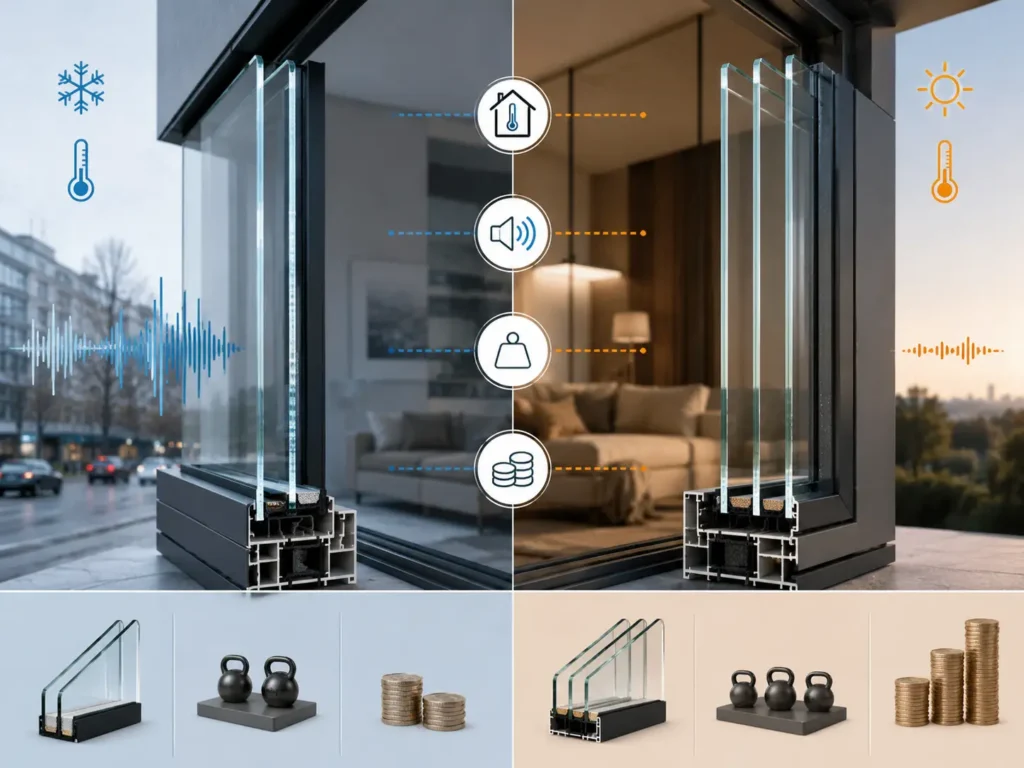
Quick Comparison: Double Glazed vs Triple Glazed Aluminum Windows
| Factor | Double Glazed Aluminum Windows | Triple Glazed Aluminum Windows |
|---|---|---|
| Glass structure | 2 panes of glass, 1 sealed cavity | 3 panes of glass, 2 sealed cavities |
| Thermal performance | High | Very high |
| Typical project value | Best balance of cost and performance | Premium performance for demanding projects |
| Weight | Lighter and easier to install | Heavier; requires stronger frames and hardware |
| Acoustic control | Good to very good | Very good to excellent when properly specified |
| Cost | More budget-friendly | Higher upfront investment |
| Best for | Standard homes, hotels, apartments, commercial buildings, moderate climates | Luxury villas, cold regions, Passive House projects, high-noise locations, premium developments |
| Procurement risk | Lower | Needs more careful engineering and quality control |
What Are Double Glazed Aluminum Windows?
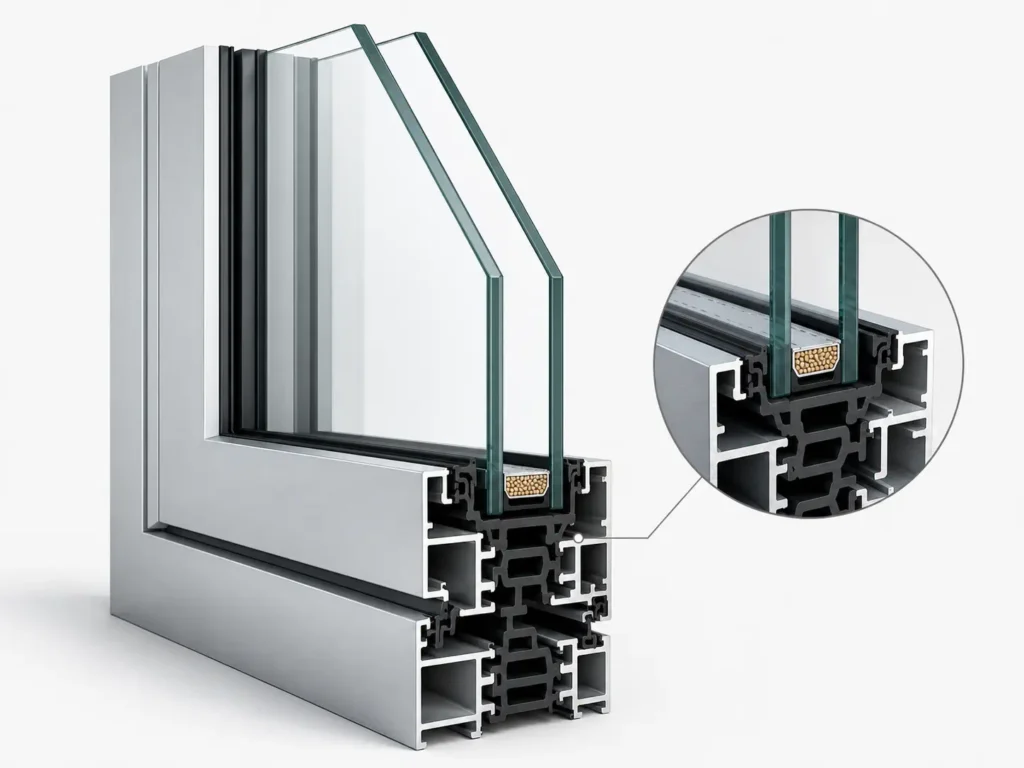
Double Glazed aluminum Windows use two panes of glass separated by a sealed air or gas-filled cavity. This cavity helps slow heat transfer between the indoors and outdoors. In modern systems, the cavity is often filled with argon gas, while the glass may include Low-E coatings to improve energy performance.
For aluminum windows, the frame design is just as important as the glass. Because aluminum naturally conducts heat, high-quality double glazed aluminum windows should use a thermally broken aluminum frame. A thermal break, usually made from polyamide or another insulating material, separates the interior and exterior aluminum profiles. This reduces heat transfer through the frame and helps prevent condensation.
Key Benefits of Double Glazed Aluminum Windows
1. Strong performance at a controlled cost
Double glazing is often the most practical choice for projects that need reliable energy performance without significantly increasing the budget.
2. Suitable for many climates
In moderate climates, high-quality double glazing with Low-E glass, argon gas, and a thermal break can provide excellent comfort and energy efficiency.
3. Easier installation and lower structural burden
Double glazed units are lighter than triple glazed units. This reduces stress on hinges, sliding tracks, curtain wall connections, and surrounding structural openings.
4. Flexible design options
Double glazing works well for casement windows, sliding windows, fixed windows, tilt-and-turn systems, balcony doors, and many commercial window solutions.
5. Good acoustic improvement
Compared with single glazing, double glazing can significantly reduce outdoor noise. For hotels, apartments, and urban residential projects, it is often enough when paired with proper seals and quality installation.
What Are Triple Glazed Aluminum Windows?
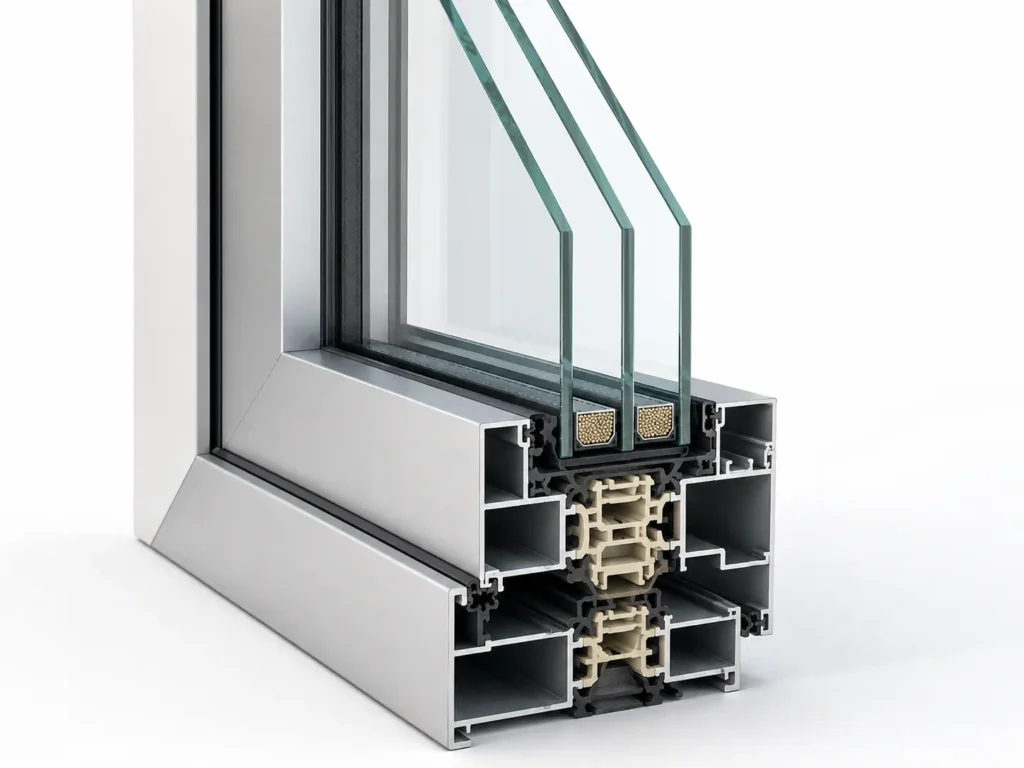
Triple glazed aluminum windows use three panes of glass and two sealed cavities. These cavities can be filled with argon or krypton gas, and one or more glass surfaces can include Low-E coatings. This structure creates a more insulated barrier between indoors and outdoors.
Triple glazing is designed for higher performance. It can reduce heat loss, increase interior glass surface temperature, improve comfort near large windows, and support ultra-low-energy building goals.
However, triple glazing is also heavier and thicker. That means the aluminum profiles, thermal breaks, hardware, gaskets, and installation details must be designed specifically for the additional load.
Key Benefits of Triple Glazed Aluminum Windows
1. Better thermal insulation
Triple glazing can achieve lower U-values than standard double glazing, especially when combined with Low-E coatings, gas fills, warm-edge spacers, and thermally broken aluminum frames.
2. Improved comfort beside large glass areas
In cold climates, large windows can create a “cold surface” feeling. Triple glazing helps keep the inner glass surface warmer, improving comfort near floor-to-ceiling windows and wide façade openings.
3. Stronger potential for acoustic control
Triple glazing can provide better sound reduction, especially when the glass thickness, cavity width, laminated glass, and sealing system are correctly specified. This is valuable for urban villas, hotels, offices, and projects near busy roads, railways, or airports.
4. Premium positioning for high-end projects
For high-end residential windows, luxury villas, and sustainable buildings, triple glazing supports a more premium specification and can increase perceived property value.
5. Better support for Passive House and ultra-low-energy projects
In colder or heating-dominated climates, triple glazed systems are often required to meet strict comfort and energy targets. The exact requirement should always be confirmed through project-specific energy modeling.
U-Value, SHGC, and Whole-Window Performance Explained
Many buyers compare windows only by the number of glass panes. This is a mistake. A triple glazed unit with a weak frame can underperform, while a well-engineered double glazed system can perform very well.
When comparing energy-efficient glazing, focus on these metrics:
U-Value / U-Factor
U-value measures how much heat passes through a window. The lower the U-value, the better the insulation.
For international projects, U-value is often expressed as W/m²K. In North America, U-factor is commonly used in BTU/hr·ft²·°F. Most importantly, professional ratings should consider the whole window, not just the center of the glass.
That means the final performance depends on:
- Glass type
- Number of panes
- Low-E coating
- Gas fill
- Spacer system
- Aluminum frame design
- Thermal break width
- Gaskets and sealing
- Installation quality
SHGC
Solar Heat Gain Coefficient, or SHGC, measures how much solar heat enters through the window. A lower SHGC helps reduce cooling load in hot climates. A higher SHGC can be useful in cold climates where passive solar heat is desirable.
This is why there is no single “best” glass for every country. A villa in Canada, a hotel in Dubai, and a coastal residence in Florida may all need different glass specifications.
Visible Transmittance
Visible transmittance measures how much daylight passes through the window. Triple glazing and Low-E coatings can sometimes reduce visible light slightly, so the glass selection should balance daylight, heat control, and privacy.
Air Leakage
Even high-performance glass cannot compensate for poor sealing. For aluminum windows, gasket quality, corner assembly, drainage design, and installation accuracy are essential.
Thermal Performance: Is Triple Glazing Always Better?
In pure insulation terms, triple glazing usually performs better than double glazing. But “better” does not always mean “necessary.”
For many commercial buildings and standard residential projects in mild or moderate climates, high-quality double glazing already delivers excellent comfort and energy savings. The additional investment in triple glazing may not generate a strong ROI if heating and cooling loads are already manageable.
Triple glazing becomes more valuable when:
- The project is located in a cold climate
- The building has large glass façades
- The owner wants premium indoor comfort
- The project targets Passive House or near-zero-energy performance
- Energy costs are high
- The property is positioned as a luxury development
- The window area is large compared with the wall area
For hot climates, triple glazing may still be useful, but the glass specification must focus on solar control. In these regions, SHGC, Low-E coating type, shading design, and orientation may matter more than simply adding another glass pane.
Acoustic Performance: Which One Is More Soundproof?
Triple glazing can improve sound insulation, but it is not automatically the best soundproofing option in every case.
A standard triple glazed unit with three identical panes may not block sound as effectively as expected. For serious acoustic performance, the glass package should be engineered with:
- Different glass thicknesses
- Laminated acoustic glass
- Wider or asymmetric cavities
- High-quality compression seals
- Proper frame drainage without air leakage
- Accurate installation around the perimeter
For example, a well-designed double glazed unit with laminated acoustic glass can sometimes outperform a basic triple glazed unit. Therefore, if your project is near a highway, airport, railway, school, entertainment district, or dense urban road, you should request an acoustic glass specification rather than only asking for “triple glazing.”
George Homes can help you evaluate the noise environment and recommend the right configuration for your project.
Weight and Structural Load: A Critical Detail for Builders
Triple glazed aluminum windows are heavier than double glazed units. This affects both manufacturing and installation.
Before selecting triple glazing, your project team should confirm:
- Maximum sash size
- Frame depth
- Wall opening strength
- Hinge load capacity
- Sliding track rating
- Handle and locking system strength
- Curtain wall or façade connection details
- Installation method
- Shipping and site handling conditions
This is especially important for large sliding doors, oversized fixed windows, multi-story curtain walls, and projects with remote overseas installation teams.
If the frame, hardware, or installation method is not designed for the extra weight, triple glazing can create long-term problems such as sash sagging, difficult operation, seal failure, or water leakage.
Cost and ROI: When Is Triple Glazing Worth It?
Triple glazing has a higher upfront cost because it requires more glass, more complex insulating glass production, stronger frames, heavier hardware, and more careful logistics.
However, the upgrade can be worthwhile when it supports the overall project value.
Triple glazing is usually worth it for:
- Luxury private villas
- Cold-climate projects
- Passive House or low-energy buildings
- High-end residential windows with large openings
- Premium hotels and resorts
- Buildings in high-noise areas
- Projects where long-term comfort is more important than lowest upfront cost
- Properties marketed around sustainability and energy efficiency
Double glazing is usually better for:
- Budget-sensitive commercial projects
- Moderate climates
- Standard apartments
- Office buildings with controlled HVAC systems
- Renovations with existing structural limits
- Projects where weight, lead time, and installation simplicity are important
The best decision should not be based only on glass price. It should consider the complete cost of ownership, including energy use, comfort, maintenance, installation risk, and property positioning.
Best Choice by Project Type
Luxury Villas
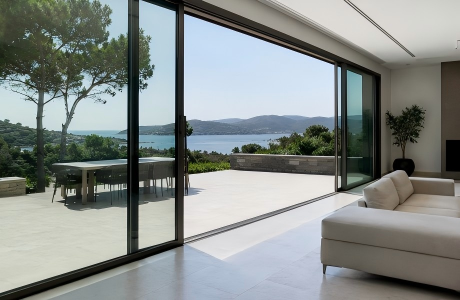
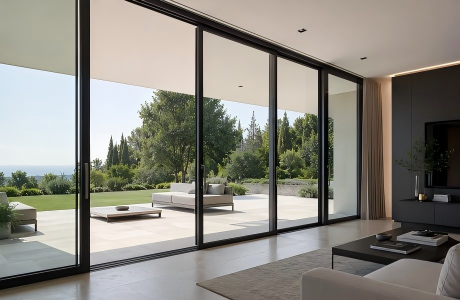
For luxury villas, especially those with large glass walls, ocean views, mountain views, or open-plan living spaces, triple glazed aluminum windows are often the premium choice.
They help improve:
- Indoor comfort
- Acoustic privacy
- Energy efficiency
- Condensation resistance
- Property value
- Long-term owner satisfaction
However, the window system must be engineered as a complete package. Glass, frame, hardware, drainage, sealing, and installation all need to work together.
Commercial Buildings
For many commercial window solutions, double glazing provides the best balance between cost, performance, and construction efficiency.
It is especially suitable for:
- Office buildings
- Apartment developments
- Hotels
- Student housing
- Mixed-use buildings
- Retail projects
- Standard commercial façades
Triple glazing may be selected for premium offices, cold regions, high-noise districts, or sustainability-focused developments.
Hotels and Resorts
For hotels, comfort and noise control are major concerns. Double glazing may work well in quiet areas, while triple glazing or acoustic laminated glass may be better for urban hotels, airport hotels, or resorts near busy roads.
For guest rooms, the most important goal is not only energy efficiency but also sleep quality.
Cold-Climate Projects
In cold regions, triple glazing can significantly improve comfort and reduce heat loss. It also helps reduce condensation risk because the interior glass surface stays warmer.
For this type of project, triple glazing should be strongly considered, especially when the window area is large.
Hot-Climate Projects
In hot climates, the priority is often reducing unwanted solar heat gain. Double glazing with the correct Low-E coating and low SHGC can perform very well.
Triple glazing may still be used, but the glass selection must be carefully tuned to avoid unnecessary cost and weight.
Project Specification Checklist
Before ordering custom aluminum windows, confirm the following details:
- Project location and climate zone
- Building type: villa, apartment, hotel, office, commercial building, or resort
- Required U-value or U-factor
- Required SHGC
- Acoustic requirements
- Wind load and water tightness requirements
- Window opening size and sash size
- Frame color and finish
- Glass thickness and Low-E coating type
- Argon or krypton gas fill
- Spacer type
- Hardware brand and load capacity
- Installation method
- Local code or project certification requirements
- Shipping destination and packaging requirements
This checklist helps prevent the most common procurement mistakes: choosing glass first and discovering too late that the frame, hardware, or installation plan cannot support the specification.
Why Choose George Homes for Custom Aluminum Windows?
Choosing between double and triple glazing is only one part of a successful building project. The bigger challenge is coordinating the right materials, drawings, production schedule, quality inspection, and international shipping.
George Homes provides complete custom aluminum windows and one-stop building material solutions for overseas residential and commercial projects.
Our support includes:
- Project requirement analysis
- Window and door specification guidance
- Aluminum profile and glass configuration recommendations
- Shop drawings and design coordination
- Factory production follow-up
- Quality inspection before shipment
- Export packaging and global logistics support
- Coordination with other building material categories
As part of our one-stop solution, George Homes can also support related project materials, including Doors & Windows, Tile, Sanitary, Marble & Granite, Kitchen & Wardrobe, Flooring & Staircase, Lighting, and Furniture Collection.
This helps builders, contractors, and developers reduce supplier communication costs, avoid mismatched materials, and keep the project style consistent from exterior façade to interior finish.

Final Recommendation: Double or Triple Glazing?
Choose Double Glazed aluminum Windows if your project needs reliable energy efficiency, lower cost, easier installation, and strong overall performance in a moderate climate.
Choose triple glazed aluminum windows if your project needs maximum insulation, better comfort near large glass areas, stronger acoustic potential, or a premium specification for luxury and high-performance buildings.
The best solution depends on your climate, budget, building type, glass area, acoustic needs, and long-term performance goals.
For most standard commercial projects, double glazing is the smarter value choice.
For luxury villas, Passive House projects, cold climates, and high-noise environments, triple glazing can be a worthwhile investment.
FAQs About Triple Glazed vs Double Glazed Aluminum Windows
Yes. Modern double glazed aluminum windows with Low-E glass, argon gas, warm-edge spacers, and thermally broken aluminum frames can deliver excellent energy performance for many residential and commercial projects.
Not always. Triple glazing offers better insulation potential, but it also costs more and adds weight. In mild climates or budget-sensitive projects, high-quality double glazing may provide a better ROI.
It can, but soundproofing depends on the full glass design. Laminated glass, different pane thicknesses, cavity size, seals, and installation quality all affect acoustic performance.
For luxury villas, triple glazing is often the premium choice, especially in cold climates, noisy locations, or projects with large floor-to-ceiling windows. In warm climates, solar-control double glazing may also be an excellent option.
Ask for the full specification, including glass structure, U-value, SHGC, frame profile, thermal break, hardware capacity, surface finish, water tightness, wind load performance, packaging method, and production lead time.
Get a Project-Specific Window Recommendation
Not sure whether your project needs double glazing or triple glazing?
George Homes can help you compare window configurations based on your climate, building type, design drawings, budget, and performance goals.
Click the WhatsApp icon in the bottom right corner to speak with a Dedicated Project Manager and request a custom quote for your aluminum window system.
References & Further Reading
- U.S. Department of Energy. “Energy Performance Ratings for Windows, Doors, and Skylights.”
- U.S. Department of Energy. “Window Types and Technologies.”
- U.S. Department of Energy. “Windows, Doors, and Skylights.”
- National Fenestration Rating Council. “NFRC Official Website.”
- Passive House Institute. “Component Certification.”
- Passive House Institute. “Component Database: Window Frames.”