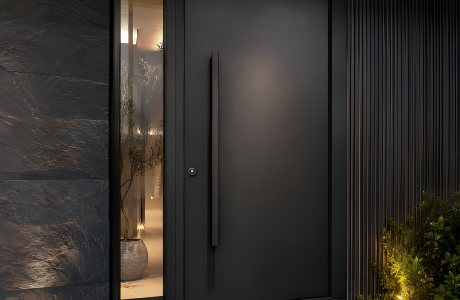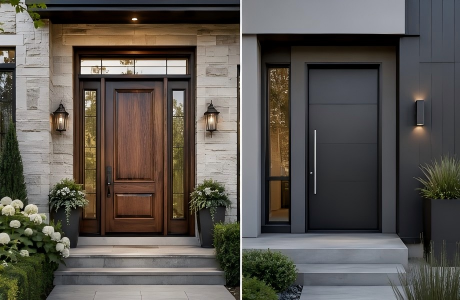
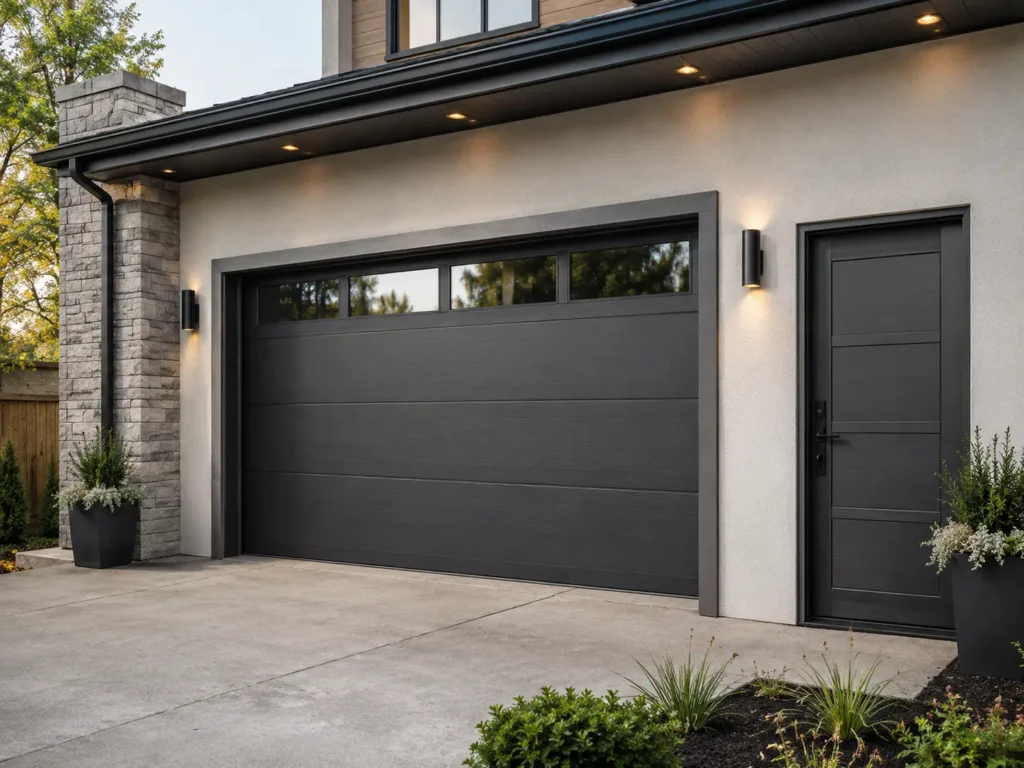
A garage personnel door is a normal pedestrian door installed in or near a garage. It lets people walk in and out without opening the large vehicle door.
That sounds simple, but in real projects it solves many small daily problems.
Think about a homeowner who only wants to grab a bicycle, a toolbox, or a delivery parcel. Opening a full sectional garage door for that small task feels slow and unnecessary.
In a commercial garage, the problem is even clearer. A maintenance worker may need to enter the space several times a day, but the overhead door should not cycle every time someone walks in.
For a heated, cooled, or workshop-style garage, a smaller pedestrian door also helps reduce the amount of conditioned air lost during daily use.
That is why many residential villas, service buildings, workshops, and commercial garages now include a separate pedestrian access door.
The key is to choose the right door for the right location. A side door on a detached garage is not the same as a door between an attached garage and a house. A basic storage-room door is not the same as a secure commercial side door. The material, frame, lock, seal, threshold, and code requirements all matter.
What Is a Garage Personnel Door?
A garage personnel door is built for people, not vehicles. It is also called a garage side door, pedestrian garage door, garage access door, pass door, or wicket door.
There are three common types.
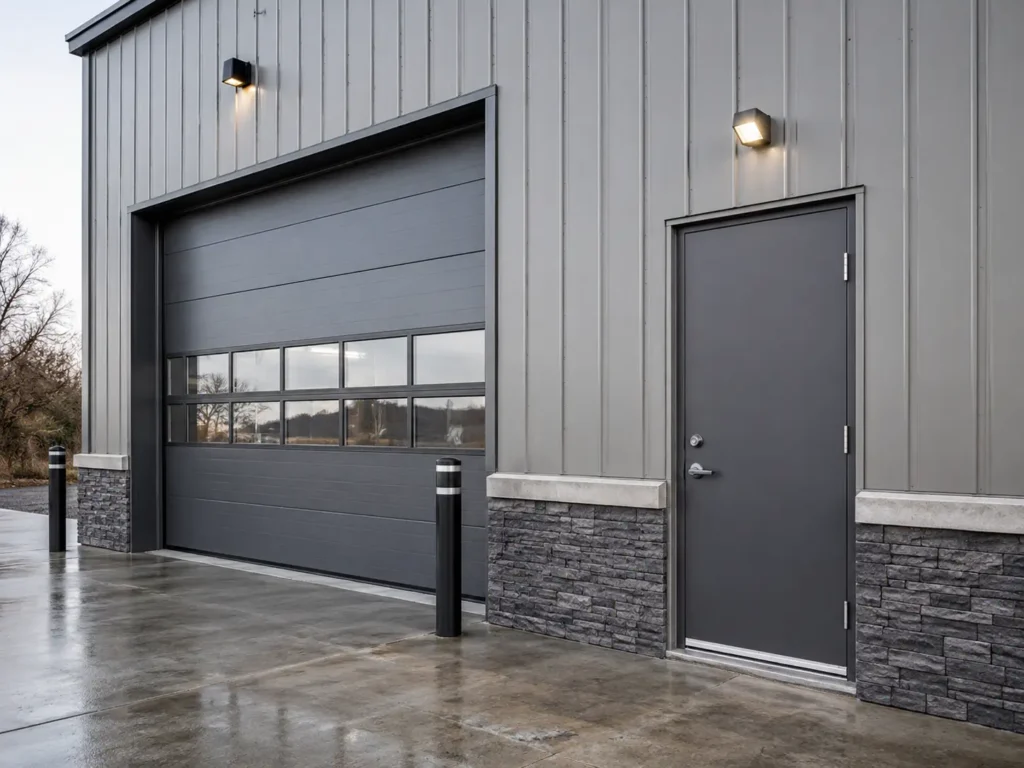
The first is an external garage side door. This is a separate door installed in the garage wall. It may open to a driveway, garden, service area, warehouse yard, or side passage. For most projects, this is the cleanest and easiest solution.
The second is a connecting door between an attached garage and the main building. This door may connect to a house, corridor, utility room, office, or workshop. It often has more safety requirements because the garage may contain vehicles, fuel, tools, or equipment.
The third is a wicket door. This is a small pedestrian door built into a larger garage door. It saves wall space, but it can create a raised threshold and more moving parts. It also needs careful coordination with the garage door system.
For a new project, a separate side-hinged garage personnel door is usually the most practical choice if wall space is available.
When Does a Garage Personnel Door Make Sense?
A garage personnel door is useful when the garage is entered by people more often than vehicles.
For example, in a villa project, the garage may also store bicycles, golf equipment, garden tools, cleaning machines, or seasonal furniture. Opening the full vehicle door every time is slow and unnecessary.
In a commercial building, staff may need to enter a workshop, stock room, or service area many times each day. A pedestrian door gives them a controlled entry point without exposing the whole garage opening.
In a climate-controlled garage, the benefit is even clearer. The U.S. Department of Energy notes that exterior doors can lose energy through air leakage and heat conduction, especially when they are uninsulated, poorly installed, or not properly sealed.[1] A smaller, well-sealed door helps reduce the amount of air exchanged during daily use.
A personnel door is especially worth considering when:
- The garage is used several times a day.
- The main garage door is large or slow to open.
- The space stores valuable tools, vehicles, or inventory.
- The garage is heated, cooled, or humidity-controlled.
- Staff need controlled pedestrian access.
- The building design needs a cleaner, more private side entrance.
For a small detached garage that is rarely used, it may not be necessary. But for high-end homes, workshops, and commercial garages, it often improves daily convenience.
Material Options: Steel, Aluminum, Composite, or Wood?
The best material depends on the project. Security, climate, maintenance, and design style should all be considered.
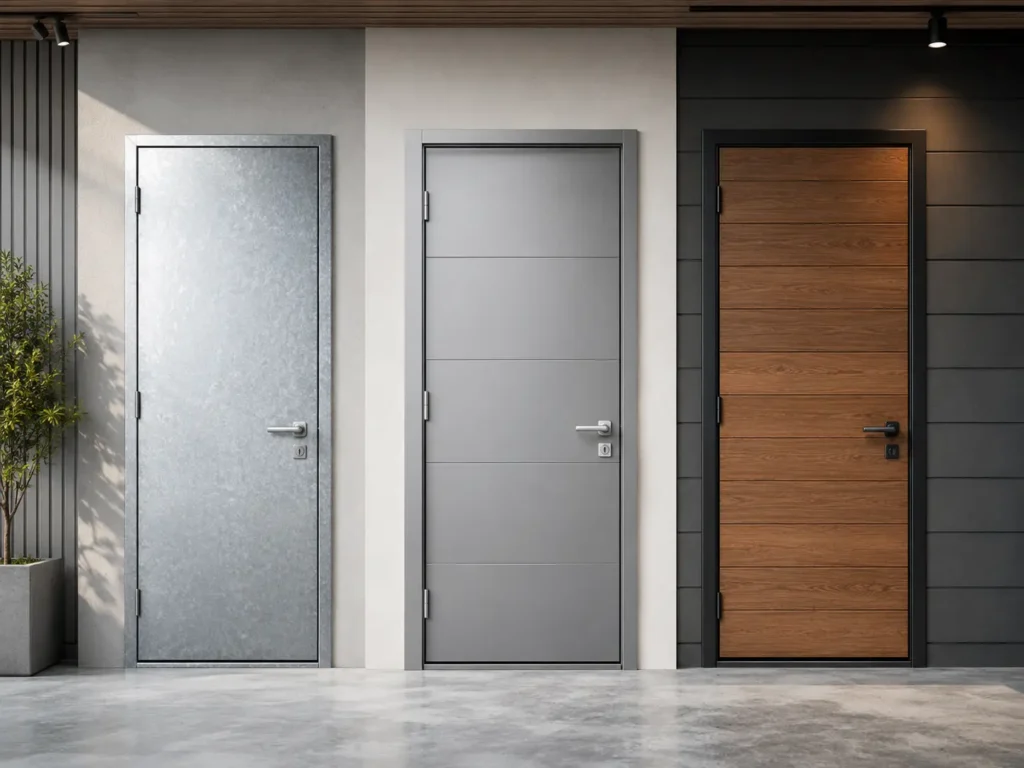
| Material | Best For | Main Benefit | Watch Out For |
|---|---|---|---|
| Steel | Commercial garages, workshops, high-security projects | Strong and durable | Needs proper coating in wet or coastal areas |
| Aluminum | Modern villas, coastal buildings, clean architectural designs | Lightweight and corrosion-resistant | Needs thermal-break design for better insulation |
| Composite / Fiberglass | Residential garages and humid climates | Low maintenance | Quality varies by manufacturer |
| Wood / Wood-look | Luxury villas and traditional homes | Warm appearance | Natural wood needs regular maintenance |
Steel is often the safest choice for commercial garage side doors because it works well with stronger frames, commercial hinges, and heavy-duty locks. SDI classifies standard steel doors into four levels, from Standard Duty to Maximum Duty, which helps specifiers match the door to the expected use level.[2]
Aluminum is a good option for modern projects. It looks clean, resists corrosion, and works well with minimalist doors and windows. For garages that are heated or cooled, ask whether the aluminum profile is thermally broken. Otherwise, the frame may transfer heat more easily.
Composite and fiberglass doors are useful when the owner wants lower maintenance. They can also imitate a wood look without the same level of moisture movement.
Wood gives a warmer luxury look, but it needs more care. In humid, coastal, or high-sun areas, the finish, edge sealing, and maintenance plan should be confirmed before selection.
Security, Insulation, and Code Details Buyers Should Check
A secure garage personnel door is not just a strong door leaf. The whole opening matters.
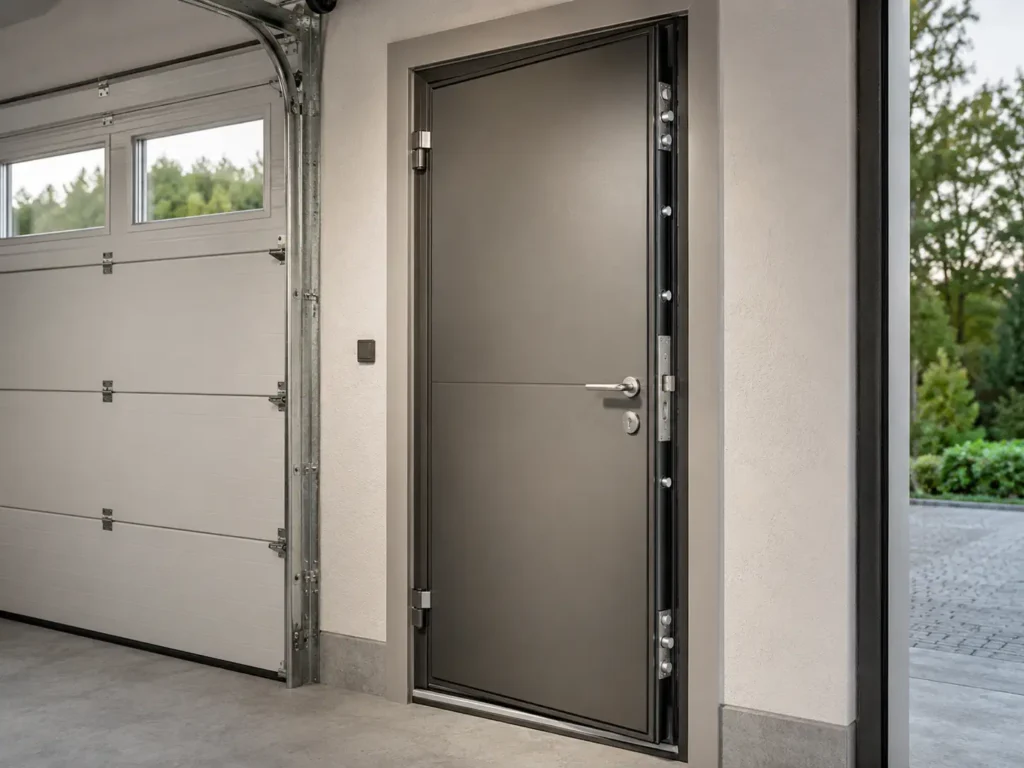
Start with the frame. A strong lock will not help much if the frame is weak or poorly fixed to the wall. For commercial and high-value residential projects, the door should come with a reinforced frame, suitable anchors, and proper hardware preparation.
Next, check the lock system. Some projects only need a quality deadlock. Others may require a multi-point locking system, electronic access control, keypad entry, card reader, or panic hardware. If the door is part of an emergency exit route, the lock must allow safe exit according to local code.
Hinges also matter. For outward-opening doors, exposed hinges may need non-removable pins, hinge bolts, or security studs.
For insulation, do not only ask whether the door is “insulated.” Ask about the complete assembly:
- Door core
- Frame design
- Weather seals
- Bottom sweep
- Threshold
- Glazing
- Installation gap sealing
The U.S. Department of Energy uses ratings such as U-factor and air leakage to measure door and window performance. A lower U-factor means less heat flow, while lower air leakage means a tighter assembly.[3]
If the door connects an attached garage to a house or occupied building, fire separation may also matter. The 2024 International Residential Code includes specific rules for openings between a dwelling unit and a garage.[4] Requirements vary by country and region, so the project team should always confirm the local code before ordering.
How to Choose a Garage Personnel Door Supplier
A reliable garage personnel door supplier should do more than send a product photo and price.
For project buyers, the first question should be: can the supplier confirm the full door set?
That means:
- Door leaf
- Frame
- Hinges
- Lockset
- Cylinder
- Handle
- Seals
- Threshold
- Closer, if needed
- Glazing, if needed
- Finish color
- Packaging method
- Installation drawings
Many problems happen because the quotation only covers the door leaf, while the frame, hardware, threshold, or seals are excluded.
For B2B projects, also ask for shop drawings. The drawings should show the opening size, door handing, wall connection, frame depth, threshold, hardware preparation, and finish.
For coastal projects, confirm whether the coating, fasteners, hinges, and locks are suitable for humid or salt-air environments.
In commercial buildings, pay closer attention to door duty level, closing hardware, access control, and daily traffic volume.
For attached garages, check fire separation and safety requirements before production starts.
A good supplier should also help the garage personnel door match the wider Doors & Windows package. That way, the side entrance feels like part of the building design, not an afterthought.
Why George Homes Works for Project Buyers
For a single homeowner, buying one garage side door may be simple. For builders, contractors, developers, and overseas project managers, the challenge is different.
The door has to match the design. The hardware has to fit the use. The finish has to coordinate with the windows, garage door, entrance door, and exterior materials. The shipment has to arrive safely and on time.
George Homes provides One-Stop Building Project Solutions for residential, hospitality, and commercial projects. Instead of managing separate suppliers for each product category, clients can coordinate Doors & Windows, Kitchen & Wardrobe, and Flooring & Staircase through one project workflow.
With more than 20 years of industry experience, our team can support:
- Product selection
- Material and finish matching
- Shop drawing review
- Sample confirmation
- Production follow-up
- Quality inspection
- Export packaging
- Global logistics coordination
Each project is supported by a Dedicated Project Manager, so clients have one clear point of contact from early discussion to shipment.
If you are sourcing residential or commercial garage side doors, send us your drawings, dimensions, quantities, finish requirements, and delivery destination. Our team can help you review the best door type and prepare a project quotation.
Frequently Asked Questions
A garage personnel door is a pedestrian access door installed in or near a garage. It allows people to enter and exit the garage without opening the main vehicle door, improving convenience, privacy, and everyday access.
Steel is often preferred for strength, security, and commercial use. Aluminum is suitable for modern or coastal projects, while composite and wood-look doors are often chosen for residential or luxury designs. The best choice depends on climate, security level, maintenance needs, and project style.
Not always. A door between an attached garage and an occupied building may require fire-rated construction, self-closing hardware, or other safety features depending on local building codes. An exterior garage side door may have different requirements.
Yes, in many cases. However, the wall structure, opening size, drainage, utilities, fire separation, and local approval requirements should be checked before installation. A professional assessment is recommended before cutting a new garage opening.
Conclusion
A garage personnel door makes daily garage access easier, safer, and more private. It can also help reduce unnecessary use of the main garage door and support better climate control when the door is properly sealed.
For the best result, do not treat it as a basic side door. Check the material, frame, hardware, insulation, threshold, installation details, and local requirements before ordering.
George Homes can help builders, contractors, and project owners coordinate the garage personnel door with the wider building-material package.
Contact your Dedicated Project Manager through the WhatsApp chat icon or [reach out to us here] to share your project drawings and request a quotation.
References
- U.S. Department of Energy — Doors
- Steel Door Institute — Selection & Usage Guide for Standard Steel Doors
- U.S. Department of Energy — Energy Performance Ratings for Windows, Doors, and Skylights
- International Code Council — 2024 International Residential Code, Section R302.5