
For builders, developers, architects, and project managers, importing windows is not just a pricing decision. It is a compliance decision. A window package may look beautiful, arrive on time, and still create major problems if the product cannot meet local energy codes, wind-load requirements, impact-resistance rules, or inspection documentation standards.
This is especially important for projects in Florida, coastal U.S. markets, hurricane-prone regions, and high-end residential developments where exterior envelope performance is closely reviewed. If you are sourcing NFRC certified windows China or comparing Florida impact rated windows wholesale options, the safest strategy is simple: verify the product before purchase, not after shipment.
This guide explains how NFRC ratings, Florida Building Code approvals, and Miami-Dade NOA documentation affect imported window procurement. It also shows what documents you should request before placing a bulk order.
Quick Answer: What Certifications Should Imported Windows Have?
Imported windows for U.S. projects may need different approvals depending on the project location, building type, climate zone, and local authority requirements.
For energy performance, many projects require windows with verified NFRC ratings, including U-Factor, Solar Heat Gain Coefficient, Visible Transmittance, and Air Leakage. For hurricane-prone areas, especially Florida coastal markets, projects may also require Florida Product Approval, Miami-Dade NOA, impact-resistant glass, approved installation drawings, and design pressure ratings.
In short, the right window is not simply the one with the lowest price. It is the product that matches the project’s drawings, local code, structural requirements, and inspection process.
Why Compliance Matters When Importing Windows
Imported windows can offer strong value for large residential, villa, hotel, apartment, and mixed-use projects. However, the savings only matter if the product can pass review and perform on-site.
Non-compliant windows can cause:
- Failed permit review
- Failed field inspection
- Rejected product submittals
- Costly replacement orders
- Project delays
- Water leakage risks
- Wind-load or impact-resistance failures
- Disputes between owner, contractor, supplier, and installer
For overseas procurement, the most common mistake is assuming that a factory test report is enough. In reality, U.S. projects often require product-specific documentation that can be checked by architects, engineers, building officials, or local authorities.
That is why a compliance-first sourcing process is essential.
What Is NFRC Certification?
NFRC stands for National Fenestration Rating Council. It provides standardized energy performance ratings for windows, doors, skylights, and related fenestration products.
For builders and developers, NFRC ratings are useful because they make different products easier to compare. Instead of relying only on supplier claims, buyers can review standardized values related to heat transfer, solar heat gain, daylight transmission, and air leakage.
When sourcing NFRC certified windows China, the key point is verification. You should not only ask whether a window is “NFRC rated.” You should ask for the specific product line, glass configuration, frame system, CPD information, and performance values that match your project.
How to Read the NFRC Window Label
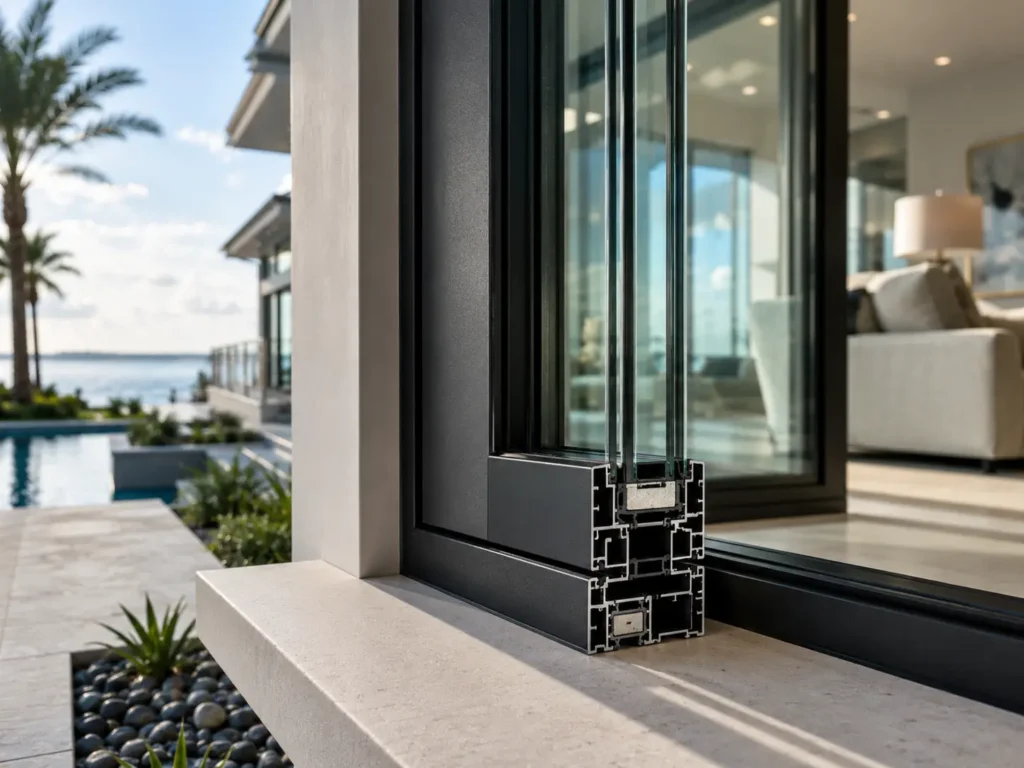
An NFRC label usually includes several performance values. These values help architects and builders choose the right window package for the climate and project type.
U-Factor
U-Factor measures how much non-solar heat transfers through the window assembly. A lower U-Factor generally means better insulation.
For cold climates, low U-Factor windows help reduce heat loss. For hot climates, U-Factor still matters, especially for air-conditioned buildings where thermal performance affects operating costs.
Solar Heat Gain Coefficient
Solar Heat Gain Coefficient, or SHGC, measures how much solar heat enters through the window. A lower SHGC helps reduce cooling loads in hot and sunny climates.
For Florida, the Caribbean, the Middle East, Southeast Asia, and other hot regions, SHGC is often one of the most important values to review.
Visible Transmittance
Visible Transmittance, or VT, measures how much visible light passes through the window. A higher VT allows more natural daylight into the space.
For luxury villas, hotels, and residential projects, VT affects both comfort and design. However, higher daylight transmission should be balanced with glare control, privacy, shading, and heat gain.
Air Leakage
Air Leakage measures how much air passes through the window assembly under test conditions. Lower air leakage usually means a tighter product.
However, installation quality also matters. Even a high-performance window can leak air or water if installed incorrectly.
Why Builders Source NFRC Certified Windows from China
Sourcing NFRC certified windows China can make business sense for developers managing large projects, especially when the order includes many window types, custom sizes, balcony doors, sliding systems, curtain wall elements, or coordinated exterior packages.
The advantages may include:
- Better bulk pricing
- More customization options
- Integrated doors and windows procurement
- Factory-direct communication
- Matching finishes across different systems
- Coordinated packaging and container loading
- Better control over project-wide aesthetics
However, the supplier must be able to support compliance. A low price is not enough. Builders should request documentation before confirming production.
What to Verify Before Ordering NFRC Windows
Before placing an order, request the following:
- NFRC product information or CPD details
- U-Factor, SHGC, VT, and Air Leakage values
- Glass build-up details, including Low-E coating and gas fill if applicable
- Frame material and thermal break details
- Full product drawings
- Shop drawings matched to project openings
- Test reports for the correct window series
- Installation instructions
- Warranty terms
- Packaging plan for export shipping
- Confirmation that the quoted product matches the certified configuration
This step protects your project from one of the biggest procurement risks: receiving a product that is similar to the certified system but not actually the certified configuration.
Understanding Florida Impact Window Requirements
Florida has some of the strictest building envelope requirements in the United States because of hurricane exposure, wind-borne debris risk, and coastal weather conditions.
For window procurement, the most important items to review are:
- Florida Building Code compliance
- Florida Product Approval number, if applicable
- Miami-Dade NOA, if applicable
- HVHZ approval status
- Impact-resistant glass type
- Design Pressure, usually shown as positive and negative pressure values
- Approved installation instructions
- Opening size limits
- Substrate and anchoring requirements
- Expiration dates and code version
For Florida projects, do not assume that one approval works everywhere. The exact requirement depends on the project address, building type, local jurisdiction, exposure category, design pressure calculations, and authority having jurisdiction.
What Is Miami-Dade NOA?
Miami-Dade NOA stands for Notice of Acceptance. It is a product approval document issued through Miami-Dade County for products that have been reviewed for use under specific conditions.
For many builders, Miami-Dade NOA is treated as a strong indicator of hurricane-resistance documentation, especially for products used in High-Velocity Hurricane Zone conditions. However, the details matter. A valid NOA should be checked for product category, system type, approval limits, design pressure, impact rating, installation method, and expiration date.
A product may have a NOA, but the approved size, glass type, frame configuration, anchoring method, or substrate may not match your project. That is why the NOA must be reviewed together with the project drawings.

Florida Product Approval vs. Miami-Dade NOA
Both Florida Product Approval and Miami-Dade NOA can matter for window projects, but they are not the same thing.
| Item | Florida Product Approval | Miami-Dade NOA |
|---|---|---|
| Main use | State-level product approval | Miami-Dade product acceptance |
| Common document | FL number | NOA number |
| Key review points | Product type, code version, impact status, DP rating, limitations | Product type, HVHZ use, impact rating, DP rating, approved drawings |
| Best for | Verifying product eligibility in Florida | Verifying product acceptance for Miami-Dade/HVHZ-type conditions |
| Buyer action | Search the FL number and review limitations | Search the NOA and review approved drawings |
For Florida impact rated windows wholesale, the safest approach is to check both the approval document and the actual product specification before confirming the order.
NFRC vs. Florida Impact Codes: What Is the Difference?
NFRC and Florida impact requirements solve different problems.
NFRC focuses on energy performance. Florida impact approvals focus on structural performance, wind pressure, debris impact, and installation conditions.
| Feature | NFRC Certification | Florida Impact / FBC / NOA |
|---|---|---|
| Primary purpose | Energy efficiency | Hurricane resistance and structural compliance |
| Main values | U-Factor, SHGC, VT, Air Leakage | Design Pressure, impact rating, approved sizes, anchoring |
| Main concern | Heat gain, heat loss, daylight, air leakage | Wind loads, debris impact, approved installation |
| Relevant for | Energy code and product comparison | Permit review and field inspection in Florida/coastal regions |
| Buyer risk | Wrong glass or frame configuration | Wrong approval, size, anchoring, or DP rating |
A compliant Florida window package may still need NFRC data for energy compliance. Likewise, an NFRC-rated window is not automatically an impact-rated Florida product.
Common Mistakes When Importing Windows for Florida Projects
Mistake 1: Accepting Supplier Claims Without Verification
A supplier may say “NFRC available” or “impact tested,” but that is not enough. You need document numbers, product series, test reports, approved drawings, and matching specifications.
Always verify whether the quoted product is the same configuration as the documented product.
Mistake 2: Ignoring Design Pressure
Design Pressure, often shown as DP or positive/negative pressure values, is critical for Florida and coastal projects. The required DP depends on building height, location, exposure, opening size, and engineering calculations.
Do not choose windows based only on glass thickness. The complete system must meet the required pressure.
Mistake 3: Using the Wrong Glass Configuration
Impact-resistant glass is not one universal product. Different laminated glass combinations, interlayers, insulated glass units, coatings, and thicknesses may produce different performance results.
If the NOA or FL approval is based on a specific glass build-up, your order should match it.
Mistake 4: Forgetting Installation Instructions
Many inspection failures happen because the installed product does not follow approved instructions. Fastener type, fastener spacing, edge distance, substrate type, buck requirements, and sealant details can all matter.
For imported windows, ask for approved installation drawings before production.
Mistake 5: Treating Wholesale Price as the Only ROI Factor
Bulk procurement can reduce unit cost, but the real ROI comes from avoiding rework, delays, inspection issues, and replacement shipments.
The best Florida impact rated windows wholesale supplier should help you manage compliance, packaging, shop drawings, logistics, and after-sales support.
Compliance Checklist Before You Request a Quote
Before asking for a final quotation, prepare a clear project package. This helps the supplier quote accurately and helps your team verify compliance earlier.
Send the supplier:
- Project location
- Floor plans and elevations
- Window schedule
- Opening sizes
- Required frame color and finish
- Required glass performance
- Wind-load or DP requirements
- Impact requirement, if applicable
- NFRC values required by the project
- Florida Product Approval or NOA requirement, if known
- Wall type and installation substrate
- Delivery timeline
- Packaging and unloading requirements
- Any local consultant or engineer comments
A professional supplier should be able to respond with product recommendations, drawings, performance data, and document availability.
How George Homes Supports Imported Window Compliance
George Homes helps builders and developers reduce procurement risk by combining product sourcing, documentation support, design coordination, and project management.
Our team supports clients through a practical workflow:
- Review project drawings, window schedules, and BOM requirements
- Match the project with suitable Doors & Windows systems
- Confirm performance needs such as U-Factor, SHGC, impact rating, and design pressure
- Coordinate shop drawings and product specifications
- Prepare export packaging and logistics plans
- Support communication between factory, client, designer, and installer
This approach is especially valuable for multi-category projects where windows must coordinate with exterior doors, interior finishes, and whole-house material procurement.
More Than Windows: One-Stop Building Project Solutions
A successful project does not depend on Windows alone. Builders also need consistent quality, coordinated finishes, reliable lead times, and clear communication across categories.
George Homes provides a one-stop building project solution covering premium Doors & Windows, elegant Tile and Sanitary products, precision Marble & Granite, customized Kitchen & Wardrobe systems, refined Flooring & Staircase solutions, decorative Lighting, curated Furniture Collection, practical furnishings-supplies, custom Metal & Glass, and complete Appliances & Sourcing support.
For villa developers, contractors, and project owners, this integrated model reduces the complexity of dealing with many separate suppliers.
Dedicated Project Manager for Overseas Procurement
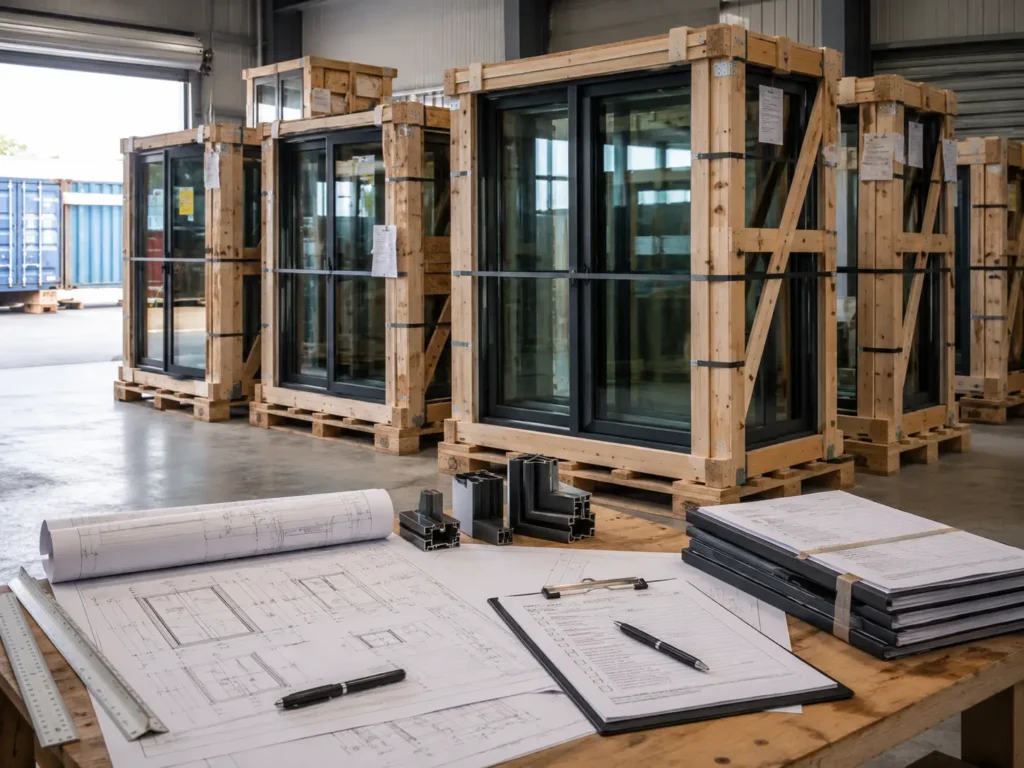
International procurement can fail when details are not managed carefully. Measurements, drawings, finishes, packing lists, production schedules, and shipping documents must all align.
That is why George Homes assigns a Dedicated Project Manager to support each project. The project manager helps coordinate communication, organize product information, follow up with factories, and reduce misunderstandings before production starts.
For builders sourcing from China, this can be the difference between a smooth shipment and a costly delay.
Visit Our Foshan Showrooms
For large projects, many clients prefer to inspect products before confirming bulk orders. George Homes welcomes builders, designers, developers, and project owners to visit our Foshan showrooms to review materials, finishes, window systems, hardware, furniture, tiles, sanitary ware, stone, lighting, and other project categories in person.
A showroom visit allows your team to compare options, confirm quality, and build a more accurate procurement plan.
Frequently Asked Questions
No. Only specific product lines and configurations may have NFRC-rated data. Always ask for the product series, glass configuration, U-Factor, SHGC, VT, Air Leakage, and relevant documentation before ordering.
No. Requirements depend on the project location, jurisdiction, wind zone, product use, and local authority. Miami-Dade and Broward County projects often have stricter HVHZ-related requirements, while other areas may follow different Florida Product Approval or local requirements.
No. NFRC certification relates to energy performance. Florida impact approval relates to structural performance, impact resistance, wind pressure, and installation conditions. A window may need both types of documentation.
Yes, but only if the product documentation, approval limits, sizes, glass configuration, and installation method match the project requirements. For large developments, overseas wholesale sourcing can reduce cost, but compliance verification must happen before production.
Conclusion: Source Windows by Compliance, Not Price Alone
For builders and developers, imported windows can deliver strong value when the sourcing process is managed correctly. The key is to verify energy ratings, impact documentation, approval limits, installation drawings, and project-specific requirements before production begins.
Whether you need NFRC certified windows China, Florida impact rated windows wholesale, or a complete one-stop material package, George Homes can help you organize the procurement process with fewer risks and better coordination.
Ready to start your next project?
Send us your floor plans, window schedule, BOM, or project requirements. Our team will help review suitable systems, coordinate documents, and prepare a tailored quotation.
Contact your Dedicated Project Manager through WhatsApp or email to discuss your Building Material Sourcing needs.
References for Further Verification
- National Fenestration Rating Council
- U.S. Department of Energy — Energy Performance Ratings for Windows, Doors, and Skylights
- Florida Building Commission / Florida Product Approval Search
- Miami-Dade County Product Control Search
- Local authority having jurisdiction, project engineer, or architect for final project-specific compliance