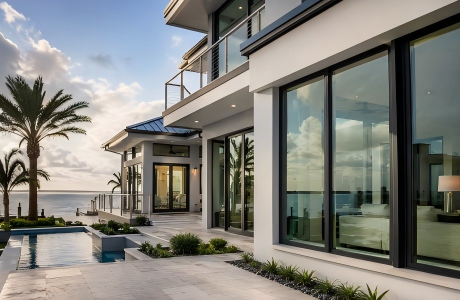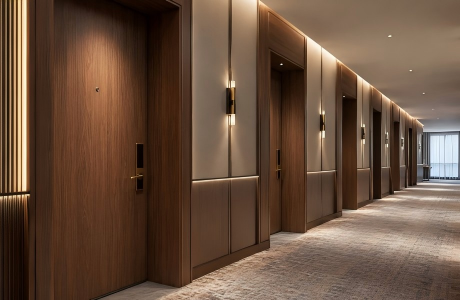
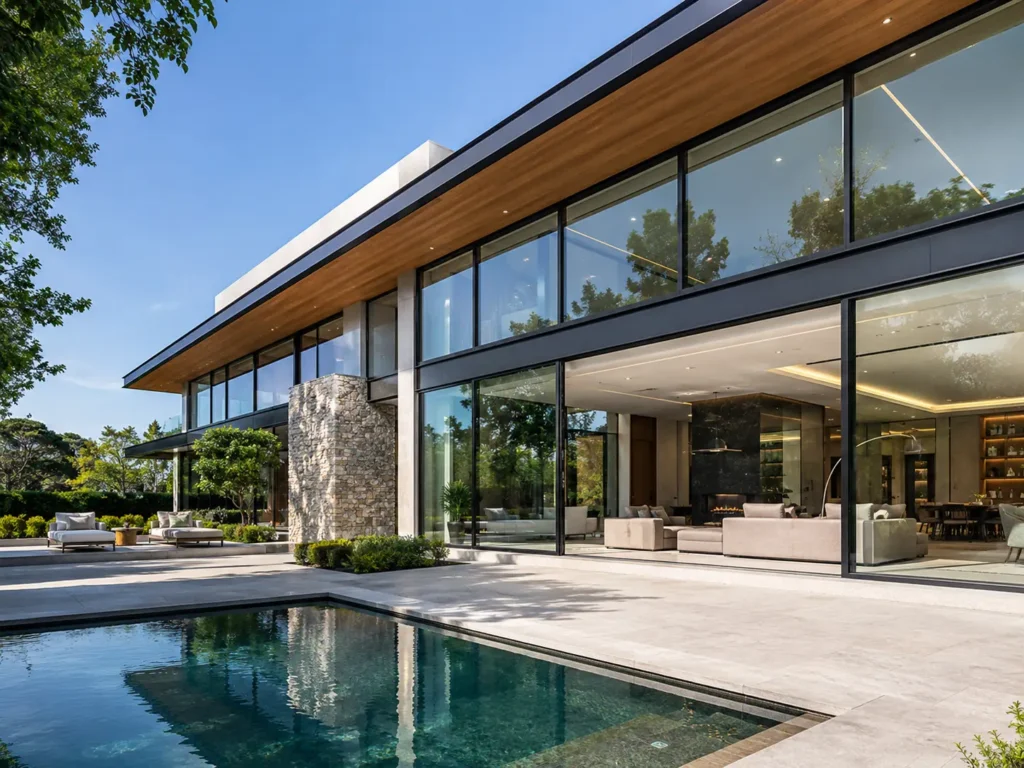
Luxury architecture is no longer defined only by marble floors, designer furniture, or dramatic lighting. Today, the window system often determines how the entire property feels, performs, and connects with its surroundings.
For high-end villas, coastal estates, modern mansions, boutique hotels, and luxury commercial developments, standard residential windows are rarely enough. Large glass openings, slim frames, panoramic views, strong wind resistance, acoustic comfort, and energy performance all require a more advanced solution.
That is why the architectural aluminum window has become one of the most preferred choices for premium building projects worldwide.
Whether you are a villa owner planning a quiet luxury home, a developer managing multiple residences, or a contractor sourcing materials overseas, choosing the right architectural aluminum window supplier can directly affect your project’s appearance, comfort, delivery schedule, and long-term value.
This guide explains what makes architectural aluminum windows different, which specifications matter most, and how George Homes helps global clients simplify window procurement through one-stop building materials and furniture solutions.
What Is an Architectural Aluminum Window?
An architectural aluminum window is a high-performance window system designed for custom, large-scale, and design-driven building projects.
Unlike standard residential windows, architectural aluminum windows are usually engineered around the project’s drawings, local climate, opening sizes, glass requirements, and design intent. They are commonly used in:
- Luxury villas and private residences
- Coastal homes and resort properties
- High-end apartments and penthouses
- Boutique hotels and hospitality projects
- Modern commercial buildings
- Custom homes with large glass façades
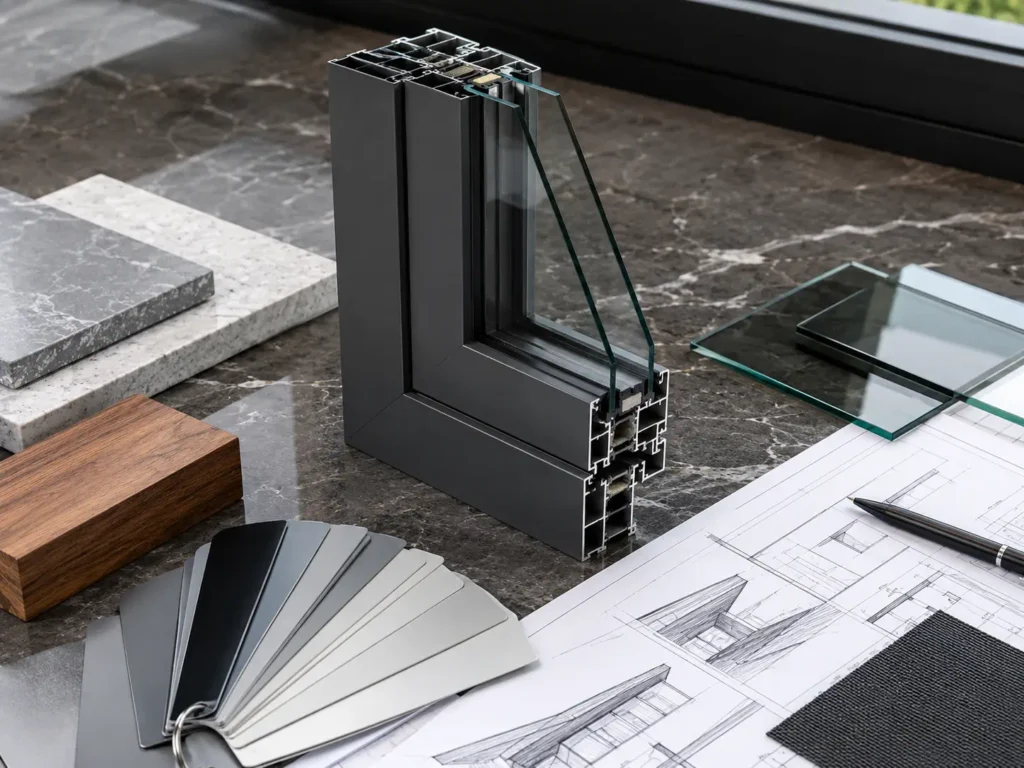
The key difference is not only the material. It is the entire system: aluminum profiles, thermal breaks, glass configuration, hardware, drainage, sealing, surface finish, and installation compatibility.
A premium architectural aluminum window should provide three things at the same time: minimalist aesthetics, structural reliability, and measurable building performance.
Why Aluminum Is Ideal for Luxury Architectural Windows
Slim Sightlines for Modern Luxury Design
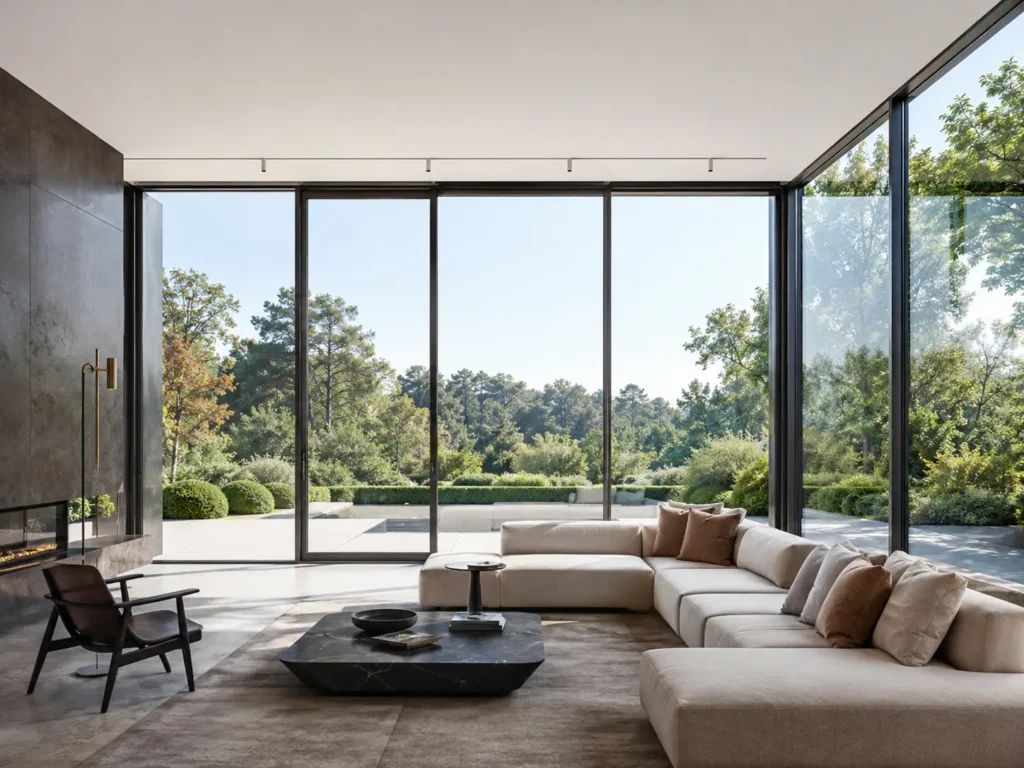
Luxury homes often use large openings to create a seamless connection between indoor living areas and outdoor views. Thick frames can interrupt that experience.
Architectural aluminum profiles offer high strength with relatively slim frame dimensions. This allows designers to create expansive glass areas without making the window system feel bulky.
For modern villas, this is especially important. Slim sightlines support:
- Panoramic views
- Cleaner elevations
- More natural daylight
- Minimalist exterior design
- Better visual connection to gardens, pools, mountains, or coastlines
For quiet luxury interiors, the best window frame is often the one that does not visually dominate the space.
Strength for Large Glass Openings
Large glass panels create significant structural demands. Window systems must resist wind pressure, support heavy insulated glass units, and maintain long-term alignment.
Architectural aluminum is well suited for large openings because the material offers excellent strength-to-weight performance. This makes it suitable for fixed picture windows, sliding systems, casement windows, tilt-and-turn windows, and custom window walls.
For coastal villas, hillside homes, and multi-story buildings, this structural advantage is especially valuable.
Long-Term Durability With Low Maintenance
Luxury projects require materials that look refined but do not create constant maintenance problems.
Aluminum does not rot like timber and does not easily warp like lower-grade plastic profiles. When finished properly with high-quality powder coating, anodizing, or PVDF coating, aluminum windows can maintain a clean, premium appearance for decades.
This makes architectural aluminum windows a strong option for demanding environments such as:
- Coastal areas
- Hot and humid climates
- High-sun regions
- Urban buildings exposed to pollution
- Luxury rental or hospitality properties requiring low maintenance
Flexible Customization for Bespoke Projects
Every luxury project has its own architectural language. A reliable architectural aluminum window supplier should support customization in frame color, profile style, glass type, hardware, opening method, and project-specific dimensions.
Common customization options include:
- Matte black, champagne, bronze, grey, white, or custom RAL colors
- Anodized metallic finishes
- Wood-grain aluminum finishes
- Low-E double or triple glazing
- Laminated acoustic glass
- Tempered safety glass
- Impact-rated glass for hurricane-prone areas
- Oversized fixed glass panels
- Corner windows
- Arched, angled, or special-shaped windows
This flexibility allows the window system to match both the building exterior and the interior design scheme.
Key Performance Specifications Buyers Should Check
A premium window should not be selected by appearance alone. For luxury projects, technical performance matters just as much as aesthetics.
Before placing an order, ask your supplier to confirm the following specifications.
Thermal Performance
Modern architectural aluminum windows should use thermal break technology. A thermal break is a non-conductive barrier placed between the interior and exterior aluminum profiles. It reduces heat transfer through the frame and helps improve interior comfort.
For energy-conscious projects, also consider:
- Low-E glass
- Argon-filled insulated glass units
- Double or triple glazing
- Warm-edge spacer systems
- Climate-specific glass selection
In cold climates, lower U-factor performance is usually preferred to reduce heat loss. In hot climates, a lower SHGC can help reduce solar heat gain. The ideal combination depends on project location, building orientation, shading, and local energy requirements.
Acoustic Comfort
Luxury homes should feel peaceful. For urban villas, coastal resorts, or homes near highways, airports, or busy streets, acoustic performance is a major selling point.
To improve sound reduction, your supplier may recommend:
- Laminated acoustic glass
- Different glass thickness combinations
- Wider air gaps
- High-quality gaskets and seals
- Proper installation detailing
The window frame, glass, seal, and installation must work together. Even expensive glass will not perform well if the window system is poorly sealed.
Wind Load and Structural Engineering
Large windows must be engineered for local wind pressure conditions. This is especially important for coastal homes, high-rise apartments, exposed hillsides, and hurricane-prone regions.
A professional architectural aluminum window supplier should be able to review your drawings and recommend suitable profile systems, glass thickness, mullion design, reinforcement, and anchoring methods.
For high-risk locations, ask whether the window system can support impact-rated or hurricane-rated glass requirements.
Water Drainage and Air Tightness
Water leakage is one of the most expensive window failures in luxury construction. A beautiful window is not successful if it allows rainwater to enter the building envelope.
Important details include:
For overseas projects, it is especially important to confirm installation drawings before production. Many window problems happen not because the product is poor, but because product design and site installation details were not coordinated early enough.
- Multi-layer weather seals
- Proper drainage channels
- Pressure-equalized design where applicable
- Quality corner joints
- Compatible flashing and installation details
- Reliable hardware compression
Surface Finish Quality
The surface finish affects both appearance and durability. For luxury projects, the finish should resist fading, chalking, corrosion, and scratches as much as possible.
Common finish options include:
- Powder coating
- PVDF coating
- Anodizing
- Wood-grain aluminum finish
For coastal or high-UV environments, premium coating systems are strongly recommended. If color consistency across doors, windows, railings, and other metal elements matters, provide your supplier with the exact color code and finish sample requirements early in the design stage.
Architectural Aluminum vs. Wood, uPVC, Vinyl, and Steel Windows
Different materials suit different project types. For luxury homes, the best choice depends on design style, opening size, maintenance expectations, climate, and budget.
| Feature | Architectural Aluminum | Wood | uPVC / Vinyl | Steel |
|---|---|---|---|---|
| Structural Strength | Excellent for large openings | Good, but often requires thicker frames | Suitable for standard openings | Excellent |
| Sightlines | Slim and modern | Thicker, traditional look | Usually thicker | Very slim |
| Maintenance | Low | High | Low | Moderate to high |
| Customization | Very flexible | Flexible | Limited for luxury projects | Flexible |
| Weather Resistance | Excellent with proper finish | Sensitive to moisture | Can vary by quality and climate | Requires strong corrosion protection |
| Best Use | Luxury villas, large glass, modern architecture | Traditional premium homes | Budget or standard residential projects | Ultra-premium heritage or industrial design |
| Cost-to-Value | Strong for luxury projects | Good but maintenance-heavy | Economical but less premium | High cost |
For large openings, coastal homes, and minimalist luxury projects, architectural aluminum often offers the best balance of strength, aesthetics, durability, and long-term value.
Best Applications for Architectural Aluminum Windows
Luxury Villas
For villas, architectural aluminum windows help create open, light-filled spaces while maintaining a refined exterior. Floor-to-ceiling fixed windows, large sliding systems, and slim-frame casement windows are popular choices.
Coastal Homes
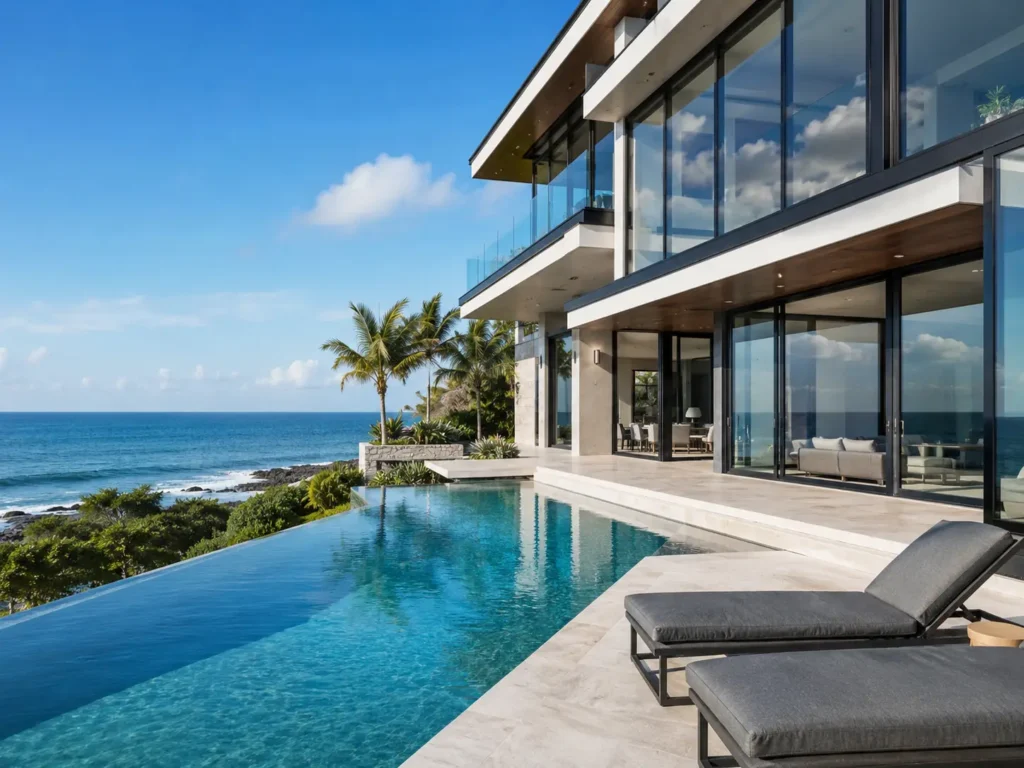
Coastal homes need corrosion-resistant finishes, strong sealing, wind resistance, and sometimes impact-rated glass. Aluminum systems with premium coatings and proper drainage design are ideal for this environment.
Boutique Hotels and Resorts
Hospitality projects require durability, acoustic comfort, design consistency, and easier maintenance. Architectural aluminum windows can support both guest comfort and long-term operational efficiency.
High-End Apartments and Penthouses
For upper-floor residences, wind load, acoustic performance, and precise installation are critical. Aluminum window systems provide strength for large openings while maintaining a modern luxury look.
Modern Commercial Projects
Architectural aluminum windows are also widely used in offices, showrooms, clubhouses, and commercial buildings where appearance, daylight, and energy performance matter.
How to Choose the Right Architectural Aluminum Window Supplier
Choosing the right architectural aluminum window supplier is not just about comparing price per square meter. For international projects, supplier capability affects production accuracy, quality control, shipping safety, installation coordination, and after-sales support.
Here are the most important points to evaluate.
Can the Supplier Work From Architectural Drawings?
For luxury projects, the supplier should be able to review CAD drawings, window schedules, elevations, and opening dimensions. They should understand how to translate architectural intent into manufacturable window systems.
A good supplier should help confirm:
- Window type and opening method
- Frame depth and profile series
- Glass configuration
- Hardware requirements
- Color and finish
- Drainage direction
- Installation clearance
- Packing and shipping method
Can They Customize the Entire System?
A true architectural supplier should offer more than standard sizes. Ask whether they can provide custom dimensions, special shapes, oversized glass, matching doors, and coordinated finishes across different product categories.
For luxury projects, customization is often the difference between an average result and a truly premium result.
Do They Understand International Project Requirements?
For projects in North America, Australia, the Middle East, Europe, the Caribbean, or island markets, the supplier must understand that every region has different climate and compliance expectations.
Ask about:
- Energy performance data
- Wind pressure requirements
- Glass safety requirements
- Impact glass options
- Hardware durability
- Coating performance
- Installation drawings
- Export packing standards
Do They Provide Quality Control Before Shipping?
Once windows are shipped internationally, fixing mistakes becomes expensive. Before shipment, the supplier should inspect dimensions, finish, glass, hardware, accessories, labeling, packaging, and order completeness.
For large projects, ask for photos, videos, inspection reports, and packing lists before container loading.
Can They Coordinate With Other Building Materials?
Windows do not exist alone. They interact with doors, flooring, stone, tiles, cabinetry, wall panels, lighting, and furniture. When these categories are sourced separately, design mismatches and schedule conflicts become more likely.
This is where a one-stop building materials supplier can reduce project complexity.
The George Homes Advantage: One-Stop Solutions for Luxury Building Projects
George Homes helps overseas villa owners, developers, builders, contractors, and designers source premium building materials and furniture from one coordinated supply chain.
Instead of contacting separate factories for windows, doors, cabinets, tiles, sanitary ware, flooring, lighting, stone, furniture, and appliances, you can work with one dedicated team from design coordination to final delivery.
For your architectural aluminum window package, George Homes can assist with:
- Window system selection
- Drawing review
- Custom size confirmation
- Aluminum profile and finish options
- Glass configuration recommendations
- Hardware matching
- Quality control before shipping
- Container loading coordination
- Matching doors and other building materials
This is especially valuable for luxury homes and commercial projects where every material must feel consistent.
With George Homes’ One-Stop Solutions for Building Materials and Furniture, your window package can be coordinated together with premium Doors & Windows, Tile, Sanitary ware, Marble & Granite, custom Kitchen & Wardrobe cabinetry, Flooring & Staircase materials, and Lighting solutions.
To complete the interior, our Furniture Collection can be matched with the same design direction, helping your project achieve a unified quiet luxury aesthetic from exterior glazing to final furnishing.
For larger developments, our Appliances & Sourcing service can also help coordinate additional project requirements such as elevators, generators, and other specialized building products.
The result is a simpler procurement process, fewer communication gaps, better design consistency, and more predictable project delivery.
What Information Should You Send Before Requesting a Quote?
To receive an accurate quotation for architectural aluminum windows, prepare the following information:
- Floor plans and elevations
- Window schedule, if available
- Opening dimensions
- Project location and climate conditions
- Preferred window types
- Glass requirements, such as Low-E, laminated, tempered, or impact-rated glass
- Frame color and finish preference
- Wind load or local code requirements, if known
- Quantity and delivery timeline
- Photos or reference images of your desired style
The more complete your information is, the faster your supplier can recommend the right system and provide a realistic quotation.
Common Mistakes to Avoid When Buying Architectural Aluminum Windows
Mistake 1: Choosing Only by Price
Low prices may hide weak profiles, poor hardware, thin coating, low-grade glass, or insufficient sealing. For luxury projects, the lowest quote is rarely the lowest total cost.
Mistake 2: Ignoring Local Climate
A window suitable for a dry inland climate may not be suitable for a coastal or hurricane-prone location. Always select the system based on project environment.
Mistake 3: Treating Glass and Frame Separately
The glass, aluminum profile, thermal break, gasket, hardware, and installation details must work as a system. Choosing premium glass alone does not guarantee strong performance.
Mistake 4: Confirming Dimensions Too Late
Custom windows require accurate dimensions. Late changes can delay production, increase cost, or create installation problems.
Mistake 5: Forgetting About Packing and Shipping
Oversized windows require professional export packing. Crates, glass protection, labeling, and loading plans should be confirmed before shipment.
Frequently Asked Questions
Yes. Modern architectural aluminum windows can be highly energy efficient when designed with thermal break profiles, Low-E glass, insulated glazing units, and proper sealing. The final performance depends on the complete window system, not the frame material alone.
Yes, but the finish and hardware must be selected carefully. For coastal homes, choose premium coating, corrosion-resistant hardware, proper drainage design, and suitable glass options based on local wind and exposure conditions.
Yes. They can be customized in size, shape, frame color, finish, glass type, opening method, and hardware. This is one of the main reasons they are popular for luxury villas and bespoke architectural projects.
Standard aluminum windows are usually designed for common residential openings and limited customization. Architectural aluminum windows are designed for custom projects, larger glass sizes, stronger performance requirements, and more refined design details.
Bring Your Architectural Vision to Life
Premium windows are not just openings in a wall. They shape the view, control the light, protect the building envelope, and define the feeling of the entire property.
If you are planning a luxury villa, coastal estate, boutique hotel, or commercial development, choosing the right architectural aluminum window supplier is one of the most important procurement decisions you will make.
George Homes provides bespoke architectural aluminum window solutions together with complete one-stop building materials and furniture sourcing. Our team can review your drawings, recommend suitable systems, coordinate matching materials, and help you build a more beautiful and efficient project from concept to delivery.
Ready to streamline your next luxury build? Click the WhatsApp icon in the bottom right corner to speak instantly with a Dedicated Project Manager, or send us your floor plans for a customized project quotation.
References
- U.S. Department of Energy — Energy Performance Ratings for Windows, Doors, and Skylights
- U.S. Department of Energy — Window Types and Technologies
- National Fenestration Rating Council — Window Energy Performance Labels
- Whole Building Design Guide — Windows and Glazing
- ASTM International — ASTM E1886 and ASTM E1996 impact performance standards
- FGIA/AAMA — AAMA 2605 architectural coating performance specification