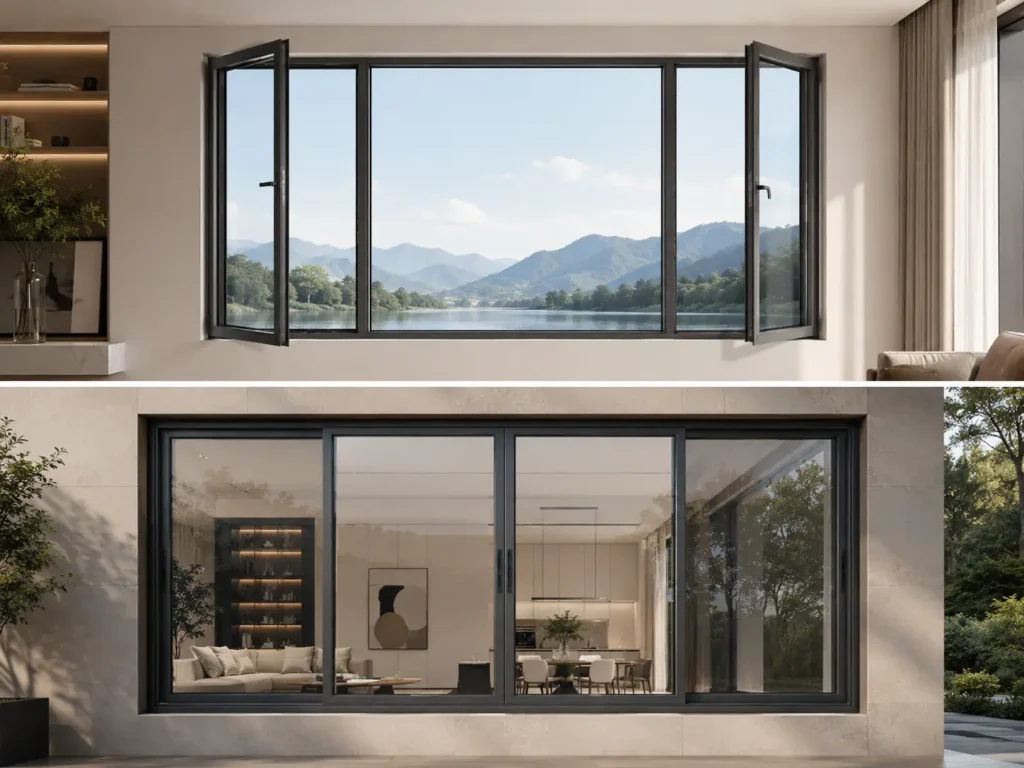
When specifying architectural details for high-end residential or commercial projects, the choice of fenestration directly impacts the building’s aesthetic appeal, thermal performance, and long-term value. For builders, contractors, and villa owners, deciding between casement vs sliding windows is a critical engineering and design decision.
Both window styles offer distinct advantages, but understanding their mechanical differences and ideal applications is essential for a successful build. In this comprehensive comparison, we will break down the features, pros, cons, and performance metrics of casement windows and sliding windows to help you make the best choice for your next project.
Understanding the Basics
Before diving into the technical specifications, it is important to clearly define how each window style operates.
What Are Casement Windows?
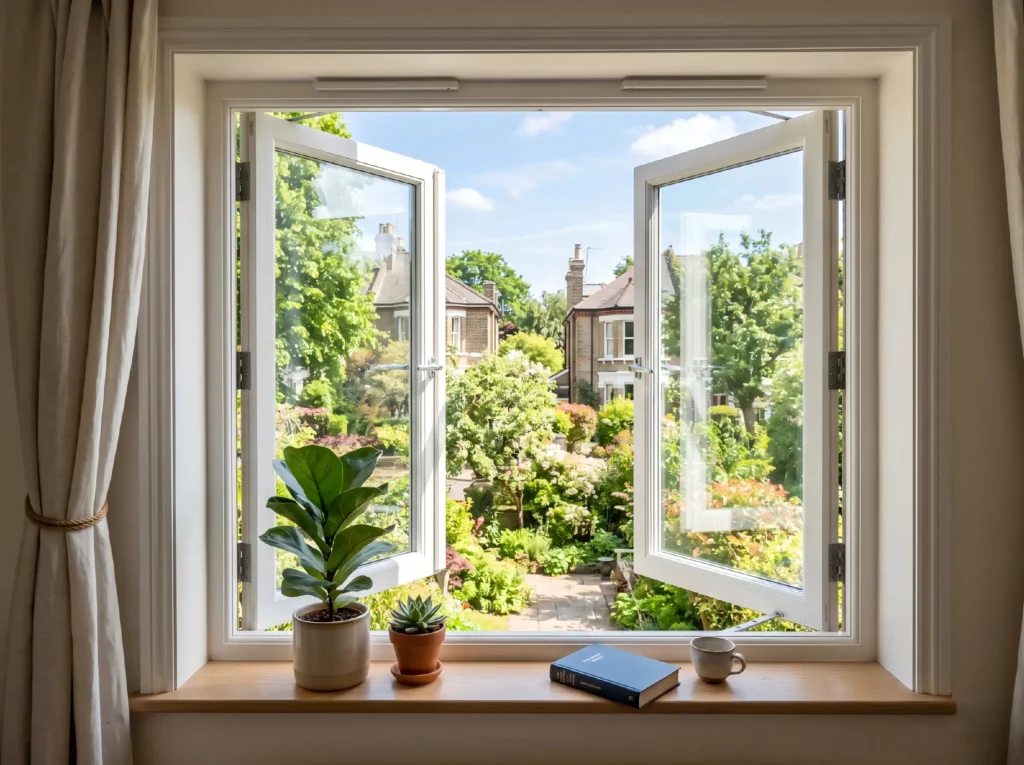
Casement windows are attached to their frame by one or more hinges on the side. They typically swing outward like a door and are operated using a mechanical crank or a lever. Because the entire sash opens, they provide maximum ventilation and unobstructed views when fully extended. They are a staple in modern, minimalist designs where clean lines and superior airflow are prioritized.
What Are Sliding Windows?
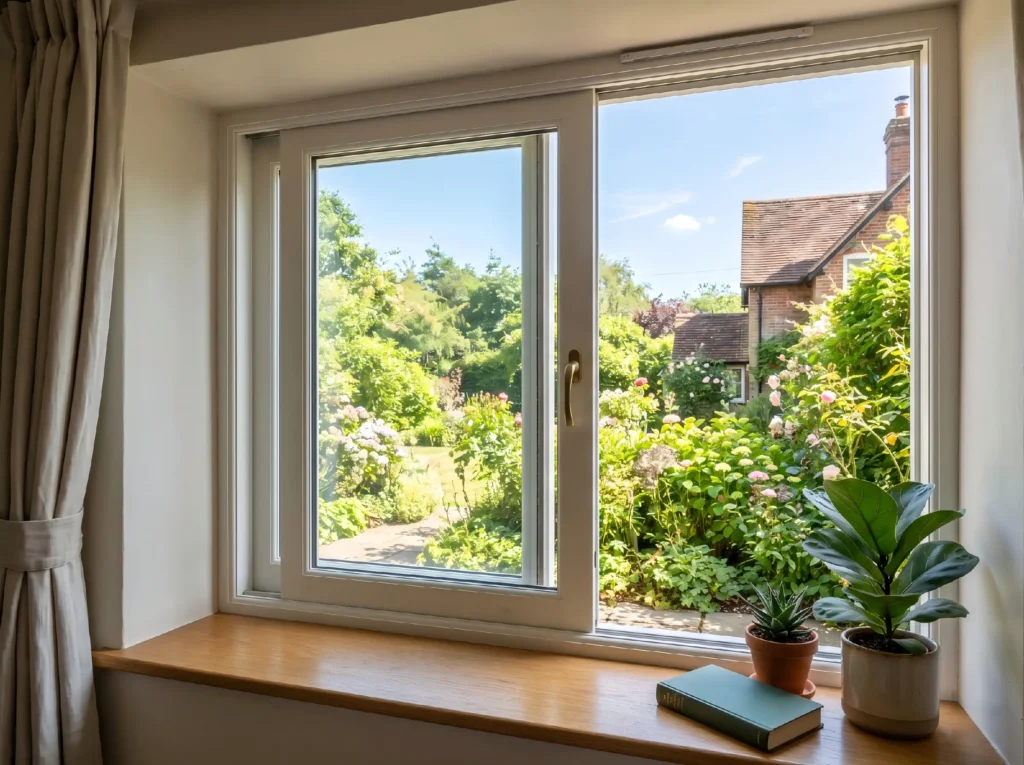
Sliding windows (or gliding windows) operate horizontally along a top and bottom track. Usually, one pane remains stationary while the other pane glides smoothly over it. They function similarly to sliding glass doors but on a smaller scale. Sliding windows are highly favored in contemporary architecture where horizontal proportions are desired and exterior space is limited.
Casement vs Sliding Windows: A Detailed Comparison
To help project managers and architects make informed procurement decisions, here is a direct data comparison of the two styles across key performance metrics:
| Feature | Casement Windows | Sliding Windows |
| Ventilation | Up to 100% opening | Up to 50% opening |
| Energy Efficiency | Excellent (Compression seal) | Good (Weatherstripping) |
| Space Required | Requires exterior swing clearance | Zero exterior/interior space needed |
| Unobstructed View | Good (no center stile when open) | Excellent (large single glass panels) |
| Security | High (Hook-shaped locks in frame) | Medium to High (Depending on track locks) |
| Maintenance | Low (Hinges require occasional oil) | Medium (Tracks must be kept free of debris) |
Energy Efficiency and Weather Tightness
In luxury villas and high-rise commercial buildings, thermal performance is paramount. Casement windows generally outperform sliding windows in energy efficiency. When a casement window is closed and locked, the sash presses tightly against the frame, creating an airtight compression seal. This superior sealing mechanism is highly effective at blocking drafts and resisting high winds.
Sliding windows, by contrast, rely on flexible weatherstripping along their tracks to keep air out. While modern manufacturing has drastically improved their efficiency, they do not achieve the same airtight compression seal as a casement window, making them slightly more susceptible to minor air leaks over time.
Ventilation and Airflow Control
If maximizing fresh air is a priority for the interior design, casement windows are the clear winner. Because the entire window swings open, they provide 100% ventilation. Furthermore, the angled sash can catch passing side breezes and direct them directly into the room. Sliding windows can only open as far as their tracks allow—meaning only half of the window space can be open at any given time.
Space and Architectural Constraints
The physical space surrounding the window opening dictates which style is practical. Sliding windows are lateral; they require zero exterior or interior clearance. This makes them ideal for walkways, patios, or areas where an outward-swinging window would obstruct foot traffic. Casement windows require clear exterior space to swing open freely.
Pros and Cons of Casement Windows
Pros:
- Superior Insulation: Unmatched energy efficiency due to the compression seal design.
- Maximum Airflow: Opens fully to catch and funnel breezes into the home.
- High Security: Locks are embedded directly into the window frame, making them incredibly difficult to pry open from the outside.
- Modern Aesthetics: Perfectly complements “Quiet Luxury” and minimalist architectural styles.
Cons:
- Space Limitations: The outward swing requires clear exterior space.
- Size Constraints: Extremely large casement windows can place excessive stress on the hinges over time.
Pros and Cons of Sliding Windows
Pros:
- Space-Saving Design: Perfect for tight spaces since they do not swing outward.
- Ease of Operation: Gliding mechanisms make them incredibly easy to open and close, even for very large sizes.
- Expansive Views: Can be manufactured in wider dimensions, providing a broader, unobstructed view of the outdoors.
- Durability: Fewer mechanical parts (no cranks or hinges) means less wear and tear on the hardware.
Cons:
- Lower Ventilation: Only half of the window area can be opened.
- Track Maintenance: The bottom track requires regular cleaning to ensure the rollers do not jam with dust or dirt.
Which Window Style Suits Your Commercial or Residential Project?
Choosing between casement vs sliding windows often comes down to the specific room, the surrounding environment, and the overall design language of the project.
Best Applications for Casement Windows
Casement windows are ideal for high-end villas in climates that experience extreme weather, as their tight seal provides superior insulation. They are also highly recommended for hard-to-reach areas, such as over a kitchen sink or behind a bathtub, where turning a crank is easier than sliding a heavy sash.
Best Applications for Sliding Windows
Sliding windows are the go-to choice for wide horizontal openings and rooms facing patios, decks, or walkways. Because they do not protrude, they are a safe and practical option for high-traffic areas. When paired with high-quality Tile or seamless Flooring & Staircase transitions, expansive sliding windows can beautifully blur the lines between indoor and outdoor living spaces.
In many luxury builds, architects choose to mix both styles. You might specify Doors & Windows that feature sliding glass for the ground-floor patio integration, while utilizing casement windows for upper-floor bedrooms to maximize cross-ventilation. Ensuring consistency in the frame color and glass type ties the whole design together perfectly.
Frequently Asked Questions (FAQ)
Yes. When locked, casement windows press tightly against the frame to form a compression seal, effectively blocking air and water infiltration. Sliding windows use weatherstripping, which is effective but slightly less airtight than a compression seal.
Sometimes, but only if they are poorly installed or if the weatherstripping wears down over time. High-quality sliding windows from reputable manufacturers are engineered to minimize air leakage significantly.
Yes. It is very common in modern architecture to use sliding windows for wide, high-traffic areas (like patios) and casement windows for bedrooms and bathrooms where maximum ventilation and privacy control are needed.
Generally, yes. Casement windows have more complex mechanical parts (such as cranks and heavy-duty hinges) and tighter manufacturing tolerances, which usually makes them slightly more expensive than sliding windows of the same size.
Why Source Your Doors & Windows from George Homes?
Selecting the right window type is only half the battle; finding a reliable manufacturing partner is just as critical. At George Homes, we have over 20 years of experience providing One-Stop Building Project Solutions for global B2B clients, including contractors, architects, and luxury home builders.
We eliminate the headache of coordinating with multiple factories. When you partner with us, you are assigned a Dedicated Project Manager who oversees everything from initial design and measurements to production and final shipping.
Whether you need energy-efficient windows, premium Sanitary fixtures, or custom Kitchen & Wardrobe cabinetry, we ensure all materials meet strict international engineering standards and reflect a cohesive, high-end aesthetic.
We warmly invite you to visit our expansive offline showroom in Foshan, China, to experience our quality firsthand and discuss your project blueprints with our engineering team.
References
Ready to elevate your next building project?
Stop dealing with communication delays and mismatched materials. Partner with George Homes for premium, B2B-standard building materials and seamless project management.
Contact us today via WhatsApp to speak directly with a dedicated project manager, or send us your floor plans for a comprehensive quotation!