When specifying materials for high-end residential, hotel, or commercial developments, interior doors play a crucial role in both the structural integrity and the overall aesthetic of the space. As builders, contractors, and villa owners evaluate their options, the debate often comes down to two premium choices: the solid wood door and the solid core door.
Understanding the technical and aesthetic differences between these two types is essential for maintaining project budgets while delivering unparalleled quality. This comprehensive breakdown explores the unique advantages of both solid core interior doors and solid wood interior doors, helping you determine the ideal fit for your specific application.
What is a Solid Wood Door?
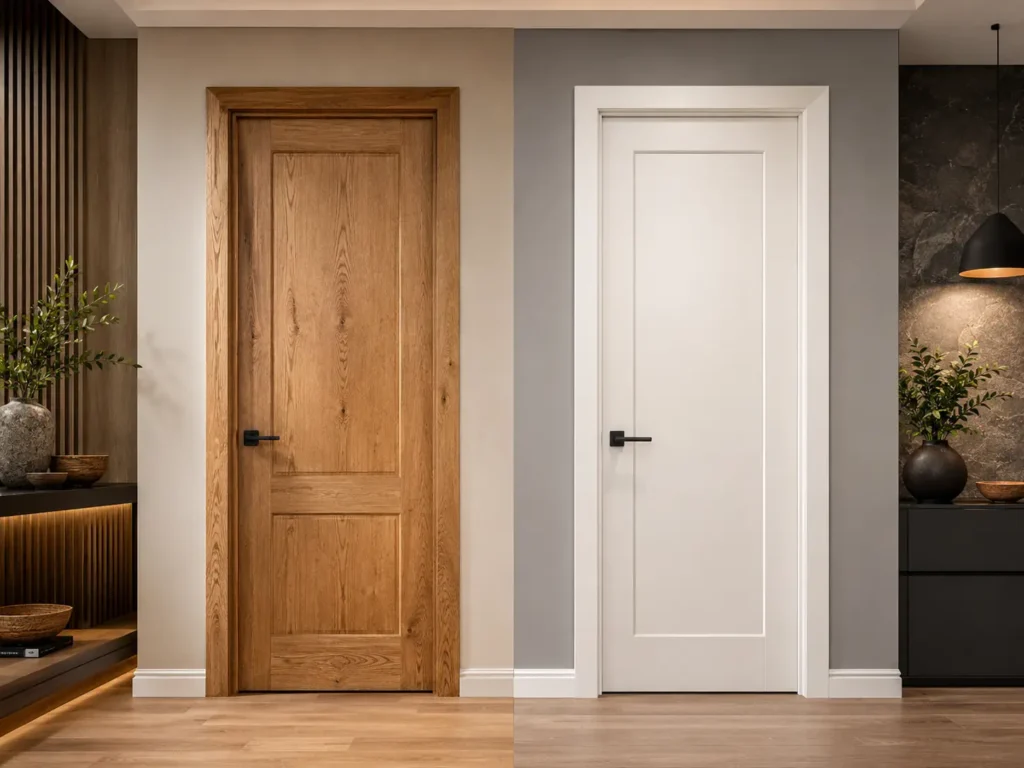
A solid wood door is constructed entirely from natural wood. Whether crafted from a single, continuous slab or multiple solid wood panels joined together, these doors contain no hollow spaces or engineered wood fillers.
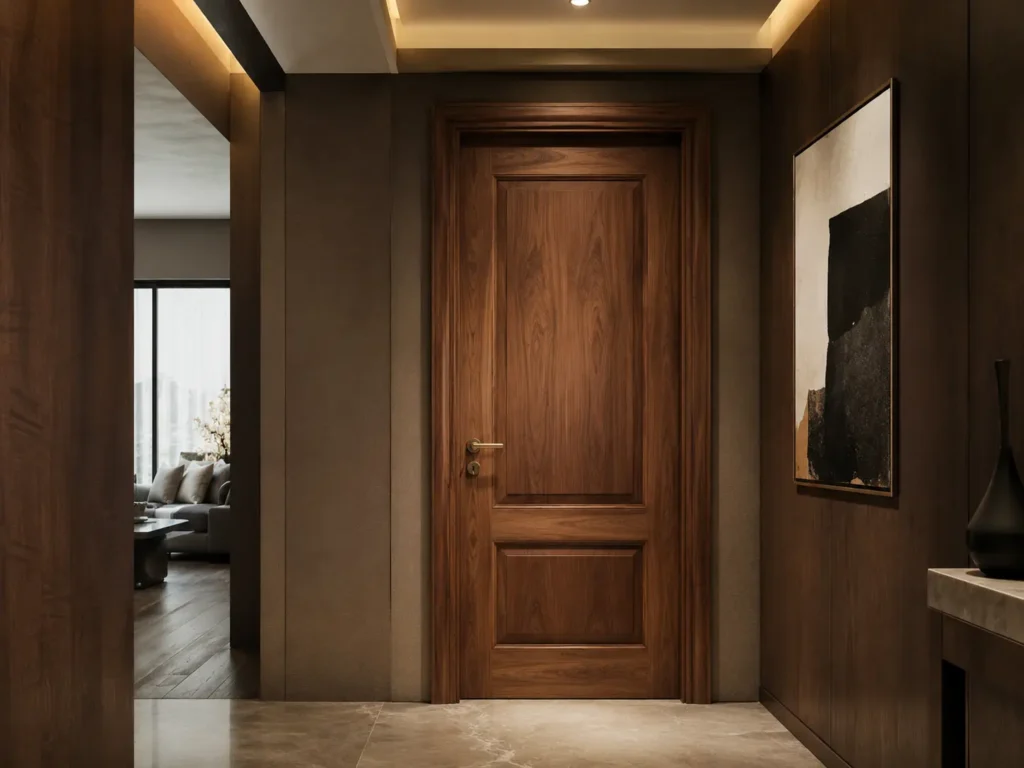
This 100% natural construction provides an authentic, premium texture that is impossible to perfectly replicate. For projects aiming for a “Quiet Luxury” or Minimalist design aesthetic, the natural grain, weight, and organic feel of solid wood perfectly elevate the surrounding architecture, making it a staple in luxury villas and high-end residential projects.
Advantages of Solid Wood Interior Doors
- Unmatched Aesthetic Appeal: The natural wood grain offers a timeless, sophisticated look that enhances high-end interiors.
- Superior Durability: When properly maintained, solid wood doors can last for generations, withstanding heavy daily use.
- Repairability: Unlike veneered options, a solid wood surface can be sanded down, refinished, and repaired multiple times to remove deep scratches or dents.
- High Resale Value: Premium materials increase the overall perceived and actual value of a property.
Disadvantages to Consider
- Higher Investment: Because they are made from pure, raw materials, they are the most expensive door option on the market.
- Climate Sensitivity: Natural wood is hygroscopic, meaning it will expand and contract with changes in humidity and temperature, which can occasionally lead to warping if not properly sealed or acclimatized.
What is a Solid Core Door?
A solid core door is a highly engineered alternative. It consists of an interior core made from dense engineered wood—such as medium-density fiberboard (MDF) or particleboard—wrapped in a high-quality natural wood veneer or synthetic skin.
This construction technique allows solid core doors to mimic the substantial feel and visual appeal of natural wood while offering enhanced structural stability. They are the go-to standard for commercial spaces, multi-family residences, and modern building projects where performance and cost-efficiency must meet.
Advantages of Solid Core Interior Doors
- Exceptional Soundproofing: The dense, heavy engineered core provides superior acoustic insulation, making solid core interior doors excellent for bedrooms, home offices, and hotel rooms.
- Warp Resistance: The engineered core is incredibly stable and does not expand or contract with humidity fluctuations like natural wood.
- Cost-Effective: You achieve the heavy, luxurious feel of solid wood at a fraction of the cost.
- Fire Resistance: Many solid core options inherently offer better fire ratings due to their dense, continuous construction.
Disadvantages to Consider
- Difficult to Repair: If the outer veneer sustains a deep gouge or scratch, it cannot simply be sanded down and refinished like pure wood.
- Weight: They are incredibly heavy, often requiring robust hinges and careful installation by experienced contractors.
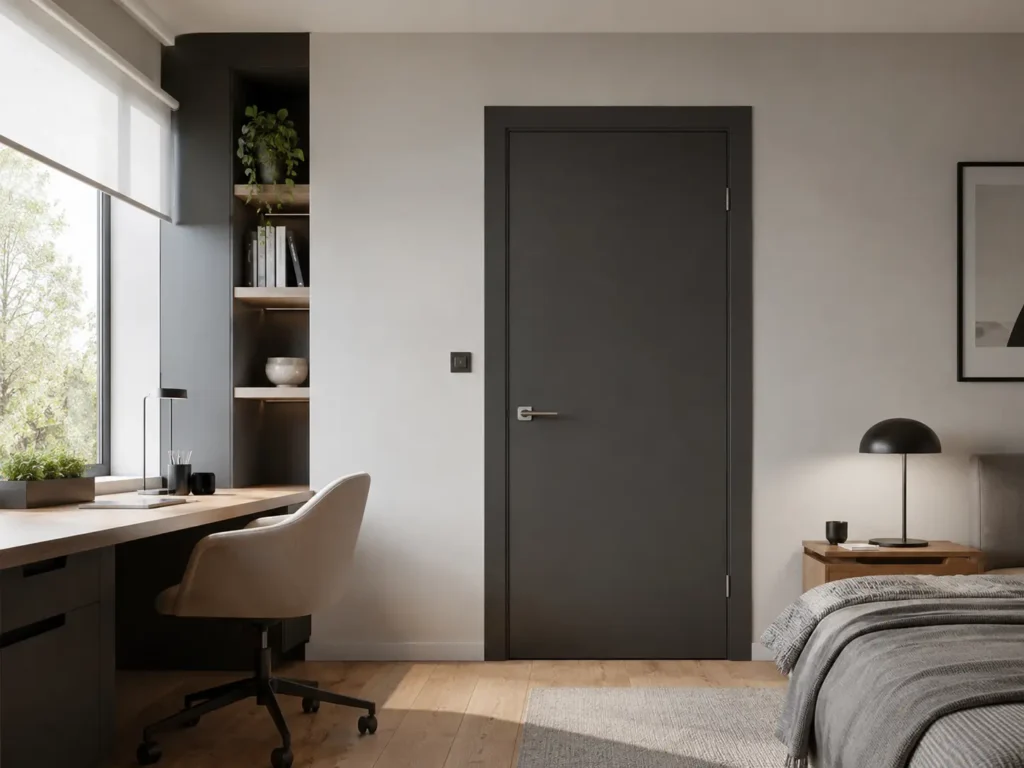
Head-to-Head Comparison: Solid Core vs Solid Wood Doors
To help project managers and procurement teams make swift, accurate decisions, here is a breakdown of how these two premium door types compare across critical metrics:
| Feature | Solid Wood Door | Solid Core Door |
| Material Composition | 100% Natural Wood | Engineered core (MDF) with wood veneer |
| Cost | High | Moderate |
| Sound Insulation | Good | Excellent (Highly dense core) |
| Moisture Resistance | Low (Prone to warping/swelling) | High (Engineered core resists warping) |
| Weight | Heavy | Very Heavy |
| Maintenance & Repair | Easy to sand and refinish | Difficult; veneer cannot be deeply sanded |
| Best Use Case | Luxury villas, main entryways, historical renovations | Commercial projects, interior bedrooms, modern hotels |
Application Scenarios: Matching Doors to Your Project Needs
Selecting between a solid core door and a solid wood door ultimately depends on the specific room’s function and the project’s overall budget allocation.
When to Choose Solid Wood Doors
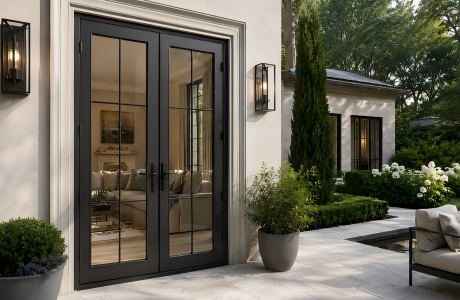
Reserve pure wood doors for areas where visual impact and tactile luxury are the highest priorities. They are the definitive choice for high-end villas, grand primary bedroom entrances, and front entryways where the premium texture of the material serves as a design focal point.
When to Choose Solid Core Doors
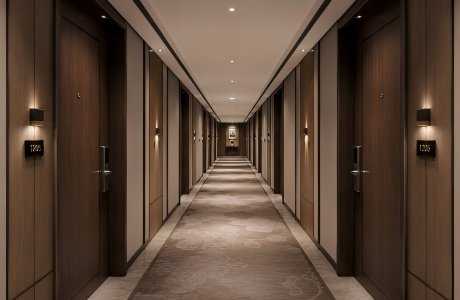
Utilize solid core interior doors for spaces that demand privacy, acoustic control, and environmental stability. They are highly recommended for large-scale multi-family developments, hotel corridors, bathrooms, and interior rooms requiring superior sound deadening without the premium price tag of pure wood.
Frequently Asked Questions (FAQ)
Yes, they generally provide superior soundproofing. The engineered MDF or particleboard core used in a solid core door is extremely dense and uniform, which effectively blocks and deadens sound waves better than the natural variations found in pure wood.
Yes, they are excellent for painting. Because the surface veneer or molded skin is smooth and lacks the deep, unpredictable grain of natural wood, it takes paint beautifully. Ensure you use a high-quality primer before applying your topcoat for the best finish.
Yes, they can warp if exposed to fluctuating environmental conditions. Because natural wood absorbs and releases moisture, high humidity or extreme temperature changes can cause expansion or contraction. Proper sealing and climate-controlled environments mitigate this risk.
Streamline Your Sourcing with George Homes Doors & Windows Solutions
Managing a large-scale residential or commercial project often means dealing with the immense headache of coordinating dozens of different factories for various materials. Delays, mismatched finishes, and communication breakdowns can severely impact your timeline and budget.
As a premier provider of One-Stop Solutions for Building Materials and Furniture for over 20 years, George Homes eliminates these sourcing pain points.
- Comprehensive Integration: Whether you need custom Doors & Windows, premium Flooring & Staircase materials, or complete Kitchen & Wardrobe systems, we ensure all elements align perfectly with your architectural vision.
- Dedicated Project Management: You will be assigned a Dedicated Project Manager who oversees your entire order from initial design and CAD drawing reviews to final manufacturing and global delivery, ensuring strict quality control every step of the way.
Ready to Elevate Your Next Building Project?
Choosing the right materials doesn’t have to be a complex, disjointed process. Let our team of experts help you select the perfect solid wood doors or solid core doors tailored to your exact architectural specifications and budget.
Contact George Homes today to request a customized quote. Connect with us directly via WhatsApp to speak with a Dedicated Project Manager and discover how our one-stop building solutions can streamline your global sourcing.
References:
- Vila, B. (n.d.). Solid Core vs. Hollow Core vs. Solid Wood Doors. Bob Vila. View the Bob Vila Guide
- Architectural Digest. (n.d.). The Ultimate Guide to Interior Doors. Architectural Digest. Visit Architectural Digest