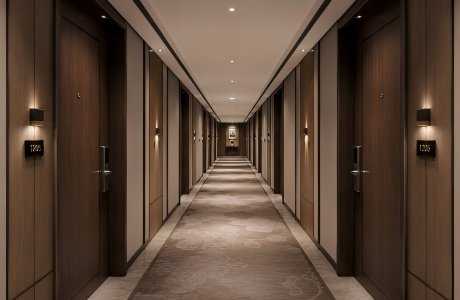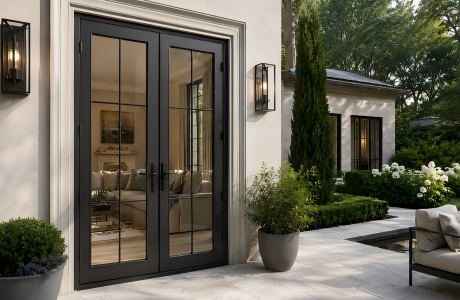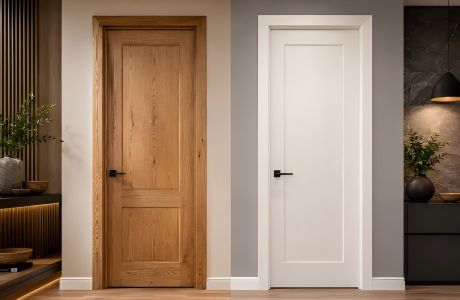
For global project managers, contractors, and builders, the devil is always in the details. When managing the procurement for a large-scale commercial building or a luxury villa, one of the most common—and frustrating—mistakes is ordering the wrong door swing direction.
A miscalculated left vs right hand door might seem like a minor oversight, but on the job site, it can disrupt spatial flow, violate strict building codes, and cause significant project delays. Custom doors are manufactured to precise specifications. If a pre-hung door arrives with the hinge mortises and strike plates routed on the wrong side, the cost to re-order and air-freight a replacement can decimate your profit margins.
In this comprehensive engineering and procurement guide, we will break down exactly how to determine door handing, explore the critical differences between inswing and outswing doors, and show you how to streamline your sourcing process to avoid these costly errors.
What is Door Handing? Inswing vs. Outswing Explained
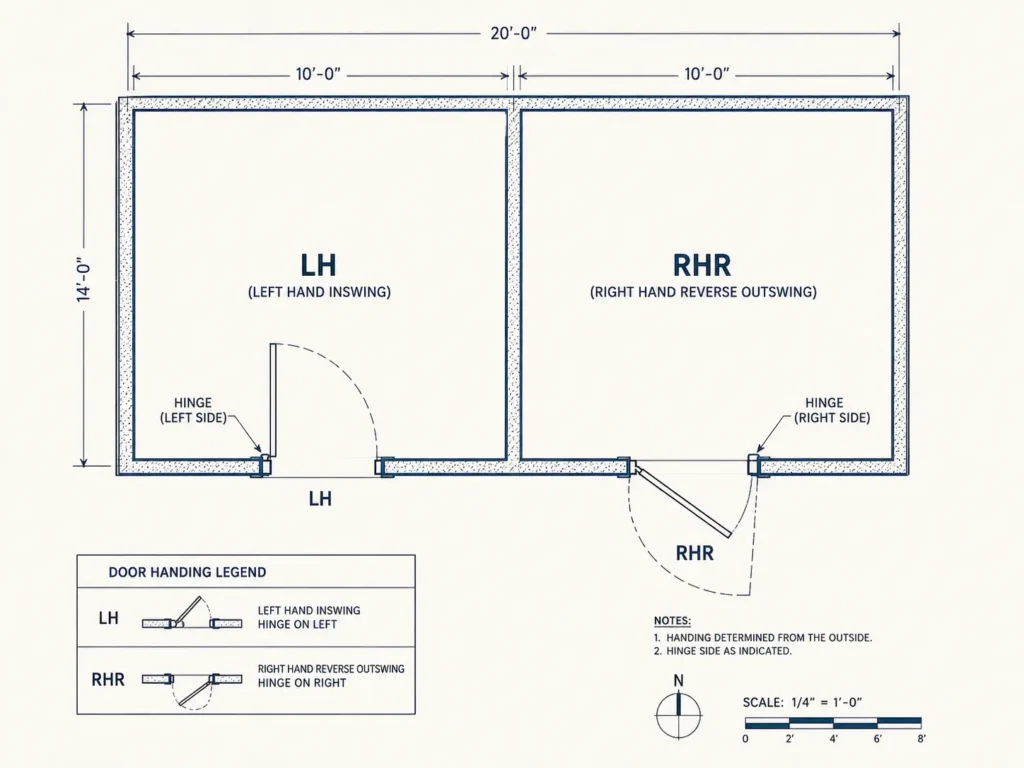
“Door handing” is the architectural terminology used to describe the direction a door swings. Before you can determine if you need a left or right-handed door, you must first confirm the required swing path: Inswing or Outswing.
When sourcing premium Doors & Windows for your project, start by defining these two categories:
- Inswing Doors: The door opens towards you (into the room you are entering). This is the standard configuration for most interior residential spaces, such as bedrooms and bathrooms. It prevents the door from swinging out into a busy hallway and hitting a passerby.
- Outswing Doors: The door opens away from you (out of the room you are in). Outswing doors are heavily utilized in commercial exterior exits for safety egress. They are also used in tight residential spaces, such as shallow utility closets, where an inswing door would hit the interior shelving or Appliances.
How to Determine Left vs Right Hand Door (The “Stand-and-Push” Method)
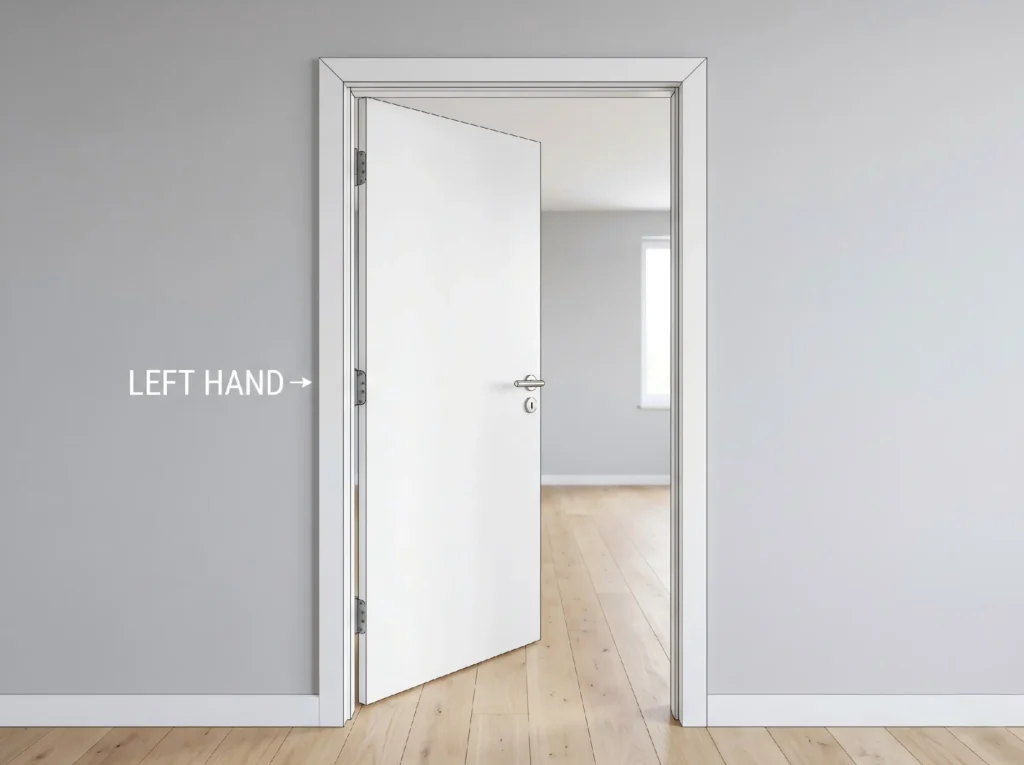
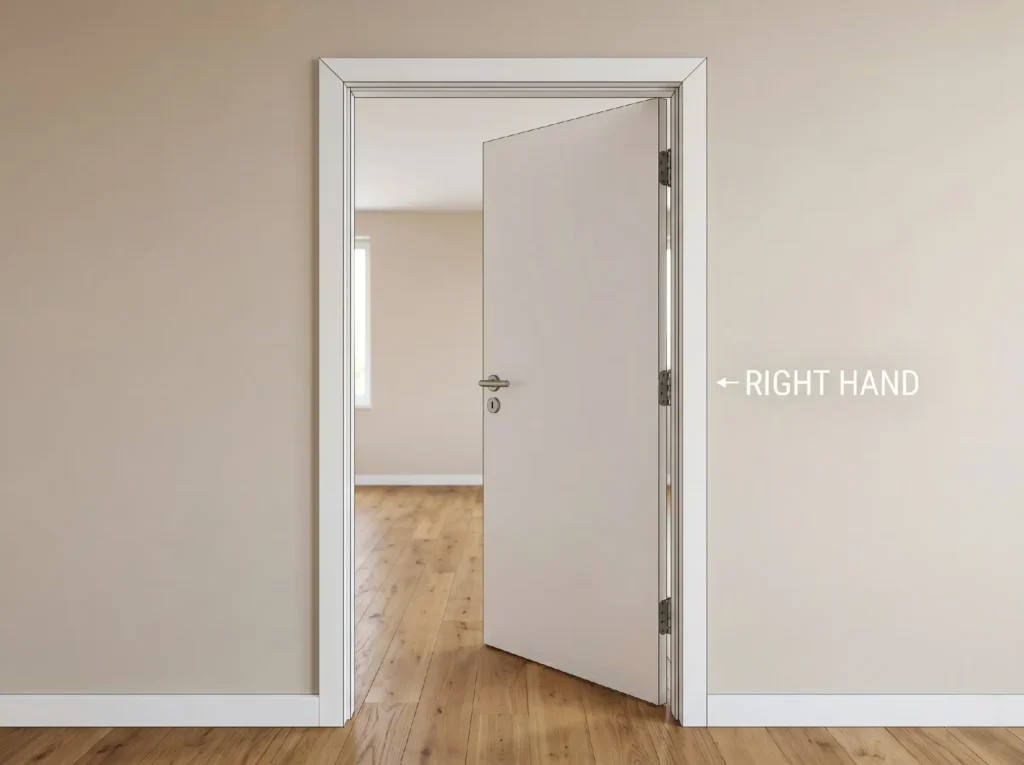
The industry standard for identifying a left vs right hand door is incredibly straightforward if you use the “Stand-and-Push” method.
- Position Yourself: Stand in the doorway facing the door so that it swings away from you. (Imagine you are about to push the door open).
- Locate the Hinges: Look at where the hinges are installed on the door frame.
- Left Hand (LH): If the hinges are on your left, it is a Left Hand door.
- Right Hand (RH): If the hinges are on your right, it is a Right Hand door.
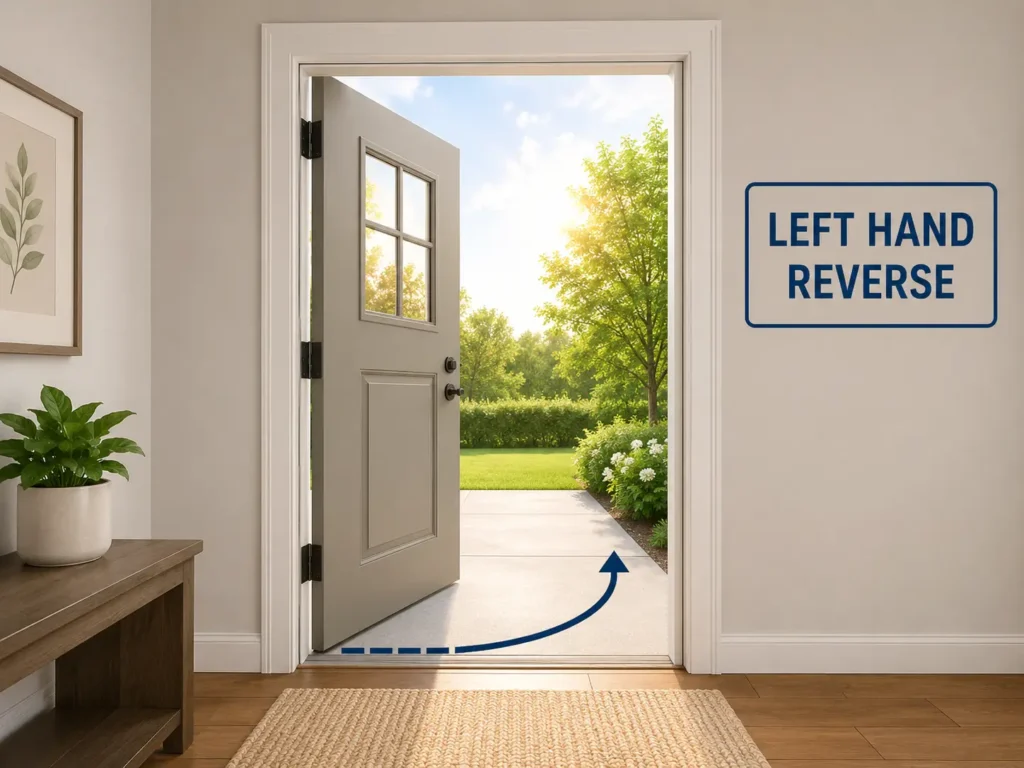
However, if you are pulling the door toward you (an outswing door), the terminology in the hardware industry shifts to “Reverse.”
Door Swing Direction Comparison Data
Use this quick-reference table to empower your purchasing team and ensure accurate data-driven procurement:
| Door Configuration | Where You Stand | Hinge Location | Action to Open | Common Project Application |
| Left Hand (LH) | Outside the room | Left | Push | Standard interior bedroom, office |
| Right Hand (RH) | Outside the room | Right | Push | Standard interior bedroom, office |
| Left Hand Reverse (LHR) | Inside the room | Left | Pull (opens outward) | Exterior commercial exits, tight closets |
| Right Hand Reverse (RHR) | Inside the room | Right | Pull (opens outward) | Exterior commercial exits, tight closets |
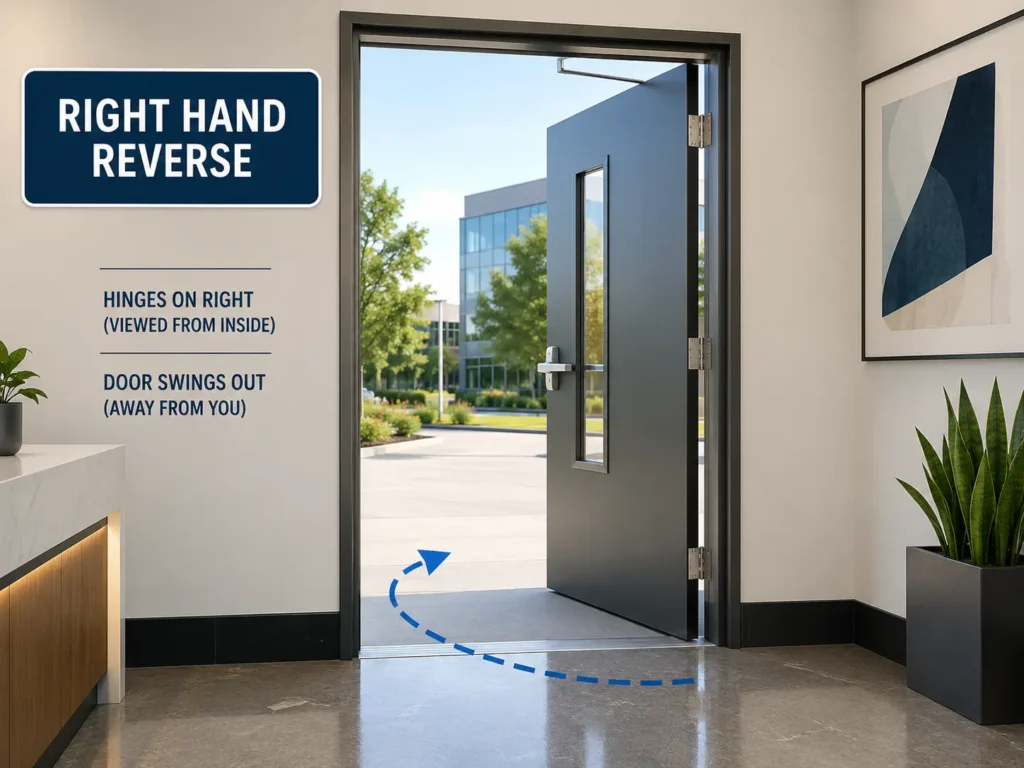
Residential vs. Commercial Doors: Swing Direction Rules
The rules governing door swings change drastically depending on the nature of your construction project.
High-End Residential Projects
In luxury villas, custom homes, and high-end apartments, interior doors typically swing into the room. For instance, when designing a master bedroom, the door should swing inward and rest naturally against a blank wall. It should never open into the middle of the room or block access to custom Furniture Collection pieces.
Furthermore, builders must coordinate door swings to ensure ample clearance over premium flooring. A heavy solid-wood door must swing smoothly over transitions between plush carpets and high-end Flooring & Staircase materials without scraping.
Commercial Building Projects
Commercial developments (hotels, office buildings, shopping malls) are bound by rigid safety codes. In many jurisdictions, public buildings require doors to swing in the direction of egress (outswing) for rooms with high occupant loads. High-traffic exterior exits utilizing heavy-duty Metal & Glass doors almost exclusively use LHR or RHR configurations. This prevents crowd crush during emergency evacuations, allowing people to simply push the panic bar and exit safely.
Avoid These Common Mistakes When Ordering Project Doors
Even veteran procurement managers can make critical errors when managing a bill of materials with thousands of line items. Protect your project timeline by avoiding these standard pitfalls:
- Ignoring Adjacent Fixtures: A bathroom door swinging the wrong way might strike a luxury Sanitary toilet or shatter a glass shower enclosure. Always cross-reference your door schedule against the plumbing and custom cabinetry plans.
- Misreading Floor Plan Symbols: Architectural arcs on a blueprint indicate the door’s exact swing path. Ensure your purchasing department accurately translates these 2D drawings into precise LH or RH specifications before sending the order to the factory.
- Neglecting Hardware Security: Exterior outswing doors have exposed hinges. They require specialized security hinges (with non-removable pins) so intruders cannot simply tap the pins out and remove the door from the frame.
- Fragmented Supply Chains: Sourcing doors from one factory, handles from a second, and Lighting from a third often leads to mismatched handing, sizing errors, and aesthetic clashes.
Why Getting Door Swing Direction Right is Critical for Builders
The orientation of a door dictates how a room functions on a day-to-day basis. For architects and builders, getting the swing direction right is non-negotiable for three primary reasons:
- Spatial Flow and Floor Plans: A door swinging the wrong way can crash into adjacent cabinetry, block narrow hallways, or disrupt the layout of your custom Kitchen & Wardrobe areas. Proper handing ensures seamless movement from room to room, especially in tight layouts.
- Safety and Building Codes: For commercial projects, strict fire safety regulations dictate egress paths. Doors must often swing outward to accommodate the rapid evacuation of crowds. Failing an inspection due to improper door handing will stall the entire project handover.
- Cost and Time Efficiency: Avoiding re-orders saves massive amounts of time. When integrating premium interior doors with luxury Furnishings & Supplies, every piece must arrive ready for immediate, flawless installation.
Streamline Your Procurement with George Homes
Managing a cross-border building project is highly complex. You shouldn’t have to lose sleep worrying if a factory halfway across the world misread your door handing specifications.
At George Homes, we provide complete One-Stop Building Project Solutions that eliminate the friction of global procurement. With over 20 years of industry leadership, we don’t just sell materials; we provide engineering solutions.
When you partner with us, you are assigned a Dedicated Project Manager who meticulously reviews your architectural CAD drawings. Our expert in-house design team validates every single door swing direction, ensuring perfect spatial harmony with your Tile, Marble & Granite, and overall interior layout. We handle the complex technical coordination so you don’t have to deal with multiple uncoordinated factories.
We warmly invite project managers, developers, and builders to visit our expansive offline showrooms. Experience the premium quality of our complete material libraries in person, and let our team streamline your next major build.
Frequently Asked Questions (FAQs)
References
- International Code Council (ICC): 2021 International Building Code (IBC) – Means of Egress (Chapter 10). Detailed structural regulations regarding commercial door swing directions and egress requirements. Read the IBC Egress Code Here
- Builders Hardware Manufacturers Association (BHMA): Standards for Door Handing and Commercial Hardware. Visit BHMA
Contact Your Dedicated Project Manager Today
Don’t let a simple door handing error derail your construction timeline or inflate your project budget. Let the experienced engineering and procurement team at George Homes review your floor plans and provide a flawless, comprehensive materials schedule.
Ready to streamline your building project? Send your architectural drawings and quantities to our team today for a free design validation and wholesale quotation.
📧 Email us directly at: georgeteam.global@gmail.com
💬 Or connect with your Dedicated Project Manager instantly via the WhatsApp widget in the bottom right corner.
Let’s build something extraordinary, together.