Introduction: The Architectural Evolution of Large-Scale Window Treatments
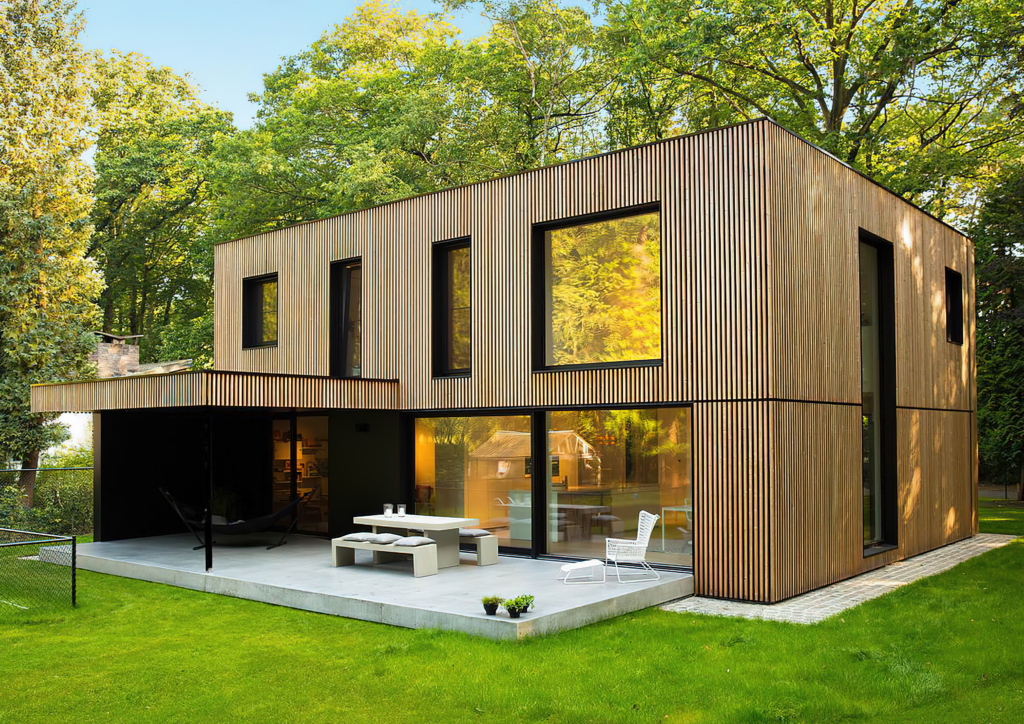
Modern architecture celebrates expansive glass surfaces. From towering floor-to-ceiling office façades to residential panoramic sliding doors, large-scale glazing maximizes natural light and fosters a seamless indoor-outdoor connection. However, managing these massive glass spans presents significant challenges. Standard retail window coverings consistently fail when applied to non-standard dimensions, oversized windows, or high-traffic sliding patio systems.
When off-the-shelf treatments are stretched beyond their designed limits, the structural flaws become immediately apparent. Standard blinds sag under their own weight, suffer from misaligned slats, and leave problematic gaps that compromise both privacy and thermal performance. For architects, builders, and property owners, treating expansive glass requires specialized window coverings engineered to handle large physical dimensions while maintaining long-term operational integrity.
Property owners and project managers searching for custom vertical blinds for windows typically face specific spatial frustrations. Common issues include:
- Light leaks caused by poorly fitting components.
- Frequent mechanical jams in cheap plastic headrails.
- Irregularly shaped windows that standard retail products simply cannot accommodate.
- Premature warping or yellowing of low-grade PVC slats exposed to intense UV rays.
The demand for custom made vertical blinds extends far beyond simple aesthetic preferences. Buyers require high-performance, precision-engineered shading systems capable of managing glare, protecting interiors from UV damage, and integrating smoothly with automated property management infrastructure.
Furthermore, they play a critical role in optimizing a building’s HVAC efficiency. By reflecting solar radiation before it enters a space, custom shading reduces cooling loads during peak summer months and insulates interiors against winter heat loss. For large-scale developments and premium residential projects alike, these systems deliver a clear return on investment through reduced energy expenditures, minimized maintenance requirements, and an elevated interior experience.
What Are Custom Vertical Blinds? Definitions, Mechanics, and Core Advantages
Defining True Customization in Window Hardware
True customization in the window treatment sector means manufacturing components to the exact physical specifications of an opening, rather than modifying a mass-produced product. When ordering custom made vertical window blinds, every element is engineered from scratch. This process involves:
- Specifying heavy-duty extruded aluminum headrails tailored to exact fractions of an inch.
- Calibrating precise vane counts to eliminate overlapping errors or awkward spacing anomalies.
- Selecting specialized control orientations, stack directions, and mounting hardware tailored to the specific structural properties of the wall or window frame.
Foundational Architecture of Vertical Systems
The operational durability of a vertical blind depends entirely on its internal track engineering. High-performance systems use heavy-duty extruded aluminum tracks that resist bending and twisting under heavy workloads. Inside the track, a series of self-aligning carrier clutches hold the individual vertical vanes. These carriers are equipped with clear, UV-stabilized stems that hold each vane securely while allowing for smooth rotation.
Advanced systems incorporate a pantograph or proportional traverse mechanism, which ensures that all carriers move at an identical speed and maintain perfectly uniform spacing during operation. This prevents the bunching, sticking, and uneven tracking common in low-tier retail blinds.
Primary Architectural Scenarios
Vertical window treatments offer distinct functional advantages over horizontal alternatives, particularly in large architectural openings:
- Gravity-Driven Dust Reduction: Because the vanes hang vertically, they collect significantly less dust, allergen debris, and airborne particulates than horizontal surfaces, drastically lowering maintenance cycles in both residential and commercial settings.
- Ergonomic Traffic Management: For walk-out basements, sliding patio doors, and commercial entryways, vertical layouts allow users to slide the treatments aside just enough to pass through, avoiding the need to lift a heavy horizontal blind matrix.
- Natural Deflection Control: The vertical orientation aligns perfectly with the movement of the sun across the horizon, allowing for highly effective lateral light deflection throughout the day.
Why Choose Custom Made Vertical Blinds? Premium Conversion Points
Precision Engineering vs. Trim-to-Size Compromises
Many budget-conscious buyers attempt to purchase mass-market retail blinds and trim them down onsite to fit non-standard window frames. This approach introduces several long-term structural risks. Cutting down pre-fabricated retail options strips away protective factory sealants, exposing raw base materials to environmental moisture and oxidation.
For fabric slats, onsite cutting leads to frayed edges and unravelling weaves over time. For PVC or faux-wood variants, rough cutting introduces microscopic stress fractures that rapidly develop into full cracks under regular thermal expansion. Furthermore, trimming the width of a standard headrail disrupts the spacing of the internal carrier system, resulting in off-center vane stacks, uneven light gaps, and premature mechanical failure. Professional factory-tailored manufacturing completely eliminates these onsite installation risks.
Advanced Light & Privacy Manipulation
The core operational advantage of vertical window treatments lies in the physics of $180^\circ$ vane rotation. Unlike horizontal slats that offer limited upward and downward tilting, vertical vanes can be precisely adjusted to intercept angled solar rays while maintaining an unobstructed view of the exterior environment.
By dialing in the exact rotational angle, users can maximize ambient daylighting deep into a room’s interior while completely blocking the direct line of sight from outside observers. This multi-directional light control is invaluable for urban residential developments and glass-fronted office complexes where daylighting and privacy must coexist.
Best Rooms and Window Types for Custom Vertical Blinds for Windows
Large horizontal glass surfaces require specialized structural support. Large sliding glass patio doors, bi-fold doors, and expansive window walls place unique physical demands on window treatments due to their size and frequent use.
When outfitting these expanses, custom vertical blinds for windows provide a lightweight, structurally sound solution that distributes operating forces evenly across the entire headrail installation, preventing sagging or binding over time.
High-Traffic Residential Zones
In modern residential design, family rooms, dining areas, and open-plan walk-out basements see continuous daily traffic. These spaces require window coverings that can withstand frequent handling without losing their alignment.
Custom vertical solutions adapt easily to these environments, allowing users to configure the track to pull completely clear of the doorway. This protects the louvers from physical impacts and keeps thoroughfares completely clear for families and guests.
Commercial and Corporate Environments
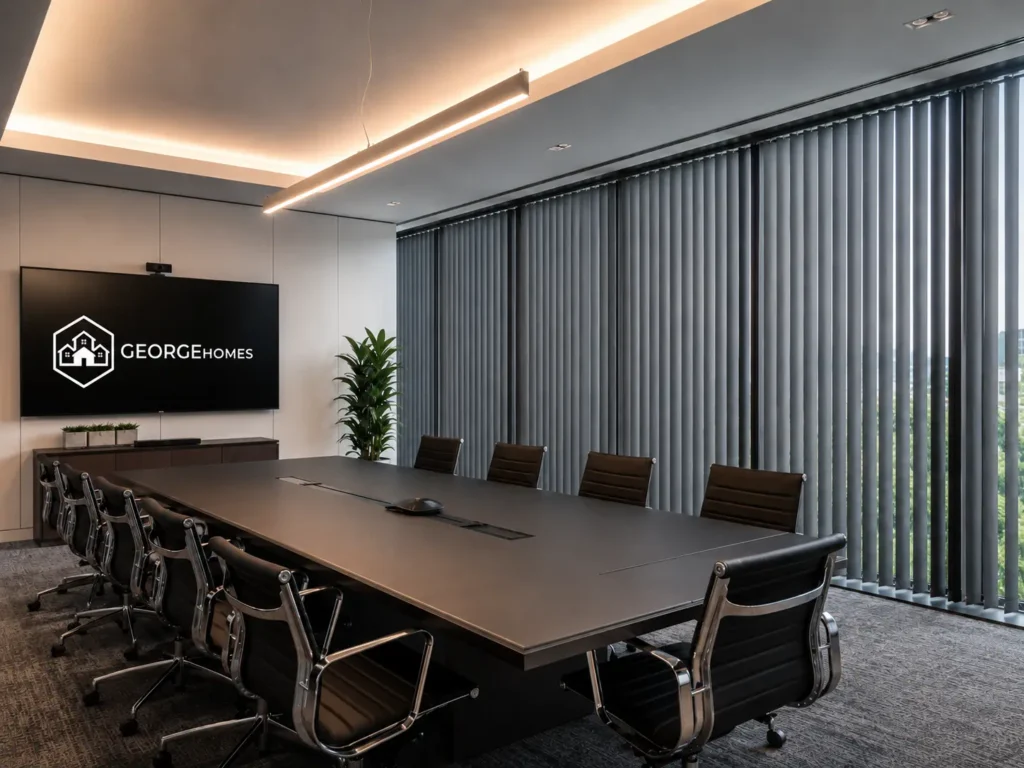
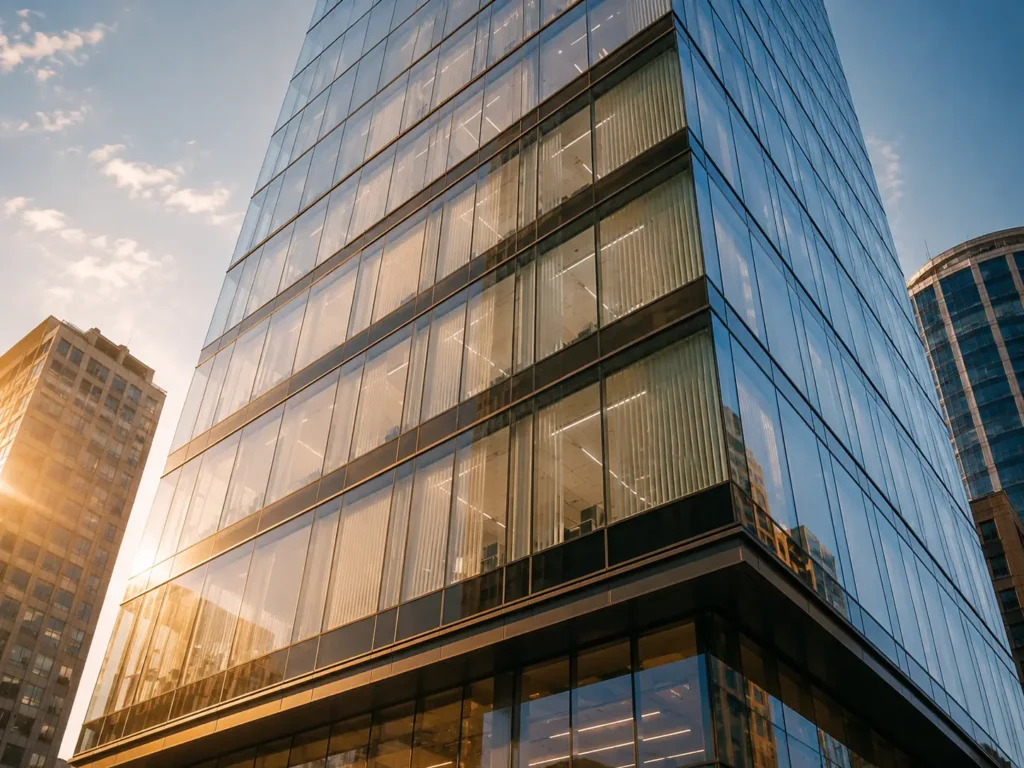
In the commercial sector, managing light is closely tied to employee productivity and comfort. Corporate boardrooms and open-concept offices often suffer from severe screen glare, which causes eye strain and reduces workplace focus.
+-------------------------------------------------------------------+
|  [Window Area] -> Direct Sun Exposure                              |
|       |                                                           |
|       v                                                           |
|  [Custom Vertical Blinds] -> Rotated to Angle of Solar Incidence |
|       |                                                           |
|       +---> Deflects 85% of Direct Thermal Heat                   |
|       +---> Eliminates High-Contrast Screen Glare                 |
|       +---> Preserves Diffused Natural Daylighting                |
+-------------------------------------------------------------------+
Custom vertical blinds solve this issue by diffusing harsh sunlight into comfortable, glare-free workspace illumination. Furthermore, for healthcare clinics, hospitals, and educational facilities, these blinds can be specified with non-porous materials that meet strict infection-control standards and simplify regular sanitation protocols.
Handling Complex Architectural Shapes
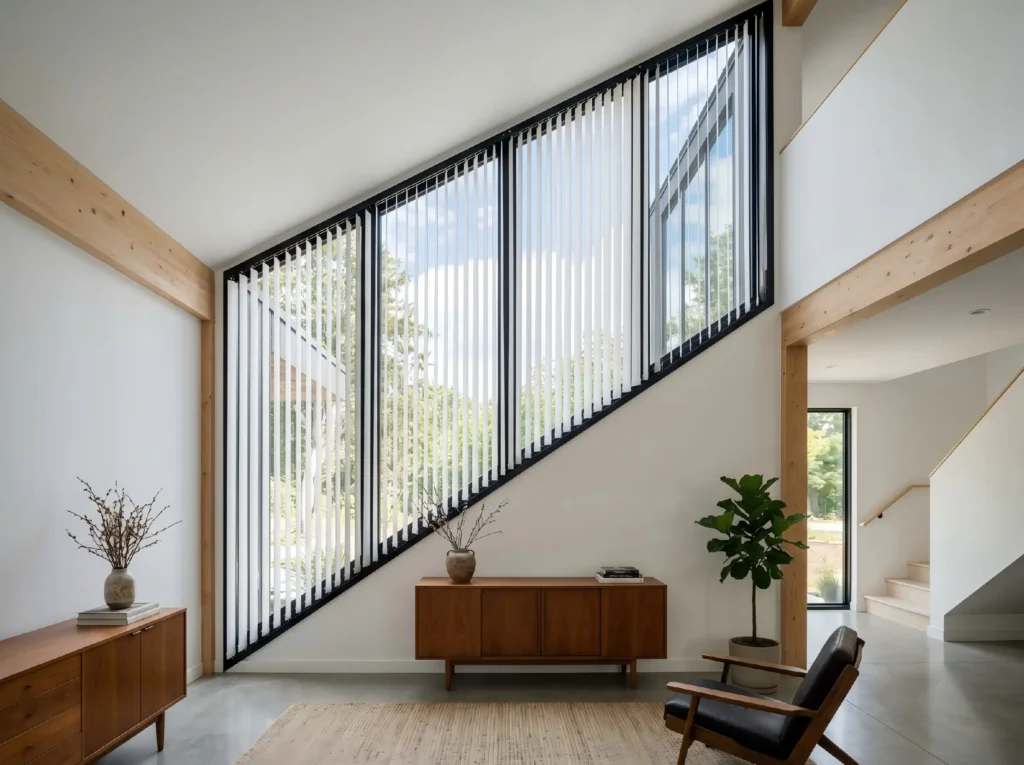
Standard window treatments are generally limited to square or rectangular openings. However, modern architectural designs frequently feature sloped ceilings, A-frame walls, arched transoms, and multi-story double-height windows.
       /|
      / |
     /  |  <--- Sloped / Angled Headrail Integration
    /   |       Requires Custom Carrier Clutches and
   /    |       Varying Vane Lengths
  /     |
 /______|
Custom manufacturing solves these complex layout challenges through specialized engineering. Angled headrails can be built with specialized internal gear configurations that allow vanes to rotate perfectly along a slope, providing reliable light control for challenging architectural shapes.
Materials Comparison: Selecting the Ideal Media for Custom Made Vertical Blinds
Selecting the right material requires balancing structural performance, environmental exposure, and design intent. The physical composition of the vertical vane determines its performance regarding UV exposure, moisture resistance, and acoustics.
Architectural Fabric (Woven, Jacquard, and Blackout Solstices)
Woven architectural fabrics offer excellent sound absorption and design flexibility. These textiles range from open-weave structures that preserve exterior views while softening glare, to tightly woven blackout options designed for complete light control. Fabric vanes reduce echo in spaces with hard surfaces like polished concrete, tile, or expansive glass, making them well-suited for high-end residential interiors and executive conference rooms.
High-Density Rigid PVC
High-density rigid PVC is highly durable and completely non-porous, making it naturally waterproof and ideal for high-humidity environments like kitchens, bathrooms, and indoor pool areas. Rigid PVC louvers maintain their shape without bottom chains or weights, presenting a clean profile that resists bowing or bending even under long periods of direct sun exposure.
Performance Vinyl and Composite Formulations
Engineered vinyl and composite materials are formulated to withstand demanding environmental conditions. These materials are treated with UV stabilizers to prevent yellowing, cracking, and chalking under intense sunlight. This makes them a dependable choice for large south-facing sliding doors and regional projects subject to high UV indexes.
Luxury Wood-Look & Faux-Wood Textures
For spaces that incorporate biophilic design elements, faux-wood and textured composite alternatives offer the rich appearance of natural wood without its functional vulnerabilities. Natural timber vanes can warp, split, or fade when exposed to the high moisture levels and temperature shifts common near large glass surfaces.
In contrast, faux-wood formulations provide the warm look of grain textures while remaining completely stable across wide temperature and humidity swings. This ensures that the vanes remain straight and perfectly aligned over years of service.
Summary Matrix: Material Performance Data Breakdown
| Material Category | UV Resistance | Moisture Proofing | Acoustic Damping | Fire Retardancy Rating | Best Application Scenario |
| Premium Woven Fabric | High (with liner) | Moderate | Excellent | NFPA 701 Compliant | Luxury Living Rooms & Executive Offices |
| Rigid Performance PVC | Outstanding | 100% Waterproof | Moderate | Class A Fire Rated | Kitchens, Bathrooms & Medical Clinics |
| Engineered Vinyl | Superior | High | Good | Self-Extinguishing | High-Traffic Sliding Patio Openings |
| Faux-Wood Composites | High | Moisture Resistant | Good | Flame Retardant | Hospitality Lounges & Biophilic Interiors |
Engineering Protocols: Measuring for Flawless Custom Size Vertical Blinds
The Critical First Step
Accurate measurement is essential for a successful custom installation. Because custom-sized window coverings are built to precise fractions of an inch, errors during the initial site measurement can lead to costly fit issues, light leaks, or mechanical binding against the window frame.
Inside Mount (Recessed) Engineering Protocols
Inside mounting positions the entire blind assembly within the window casing, delivering a clean, flush architectural finish. However, this method requires a perfectly plumb window opening.
- Casing Depth Verification: Measure the flat depth of the window casing to ensure there is enough clearance for the vertical vanes to rotate $180^\circ$ without hitting the glass or interior window hardware.
- The 3-Point Measurement Rule: Take width measurements at the top, middle, and bottom of the opening, and height measurements at the left, center, and right. Record the smallest exact measurement to account for minor structural shifting in the window opening.
- Factory Deductions: Provide the exact opening measurements to the factory. Production teams apply precise structural deductions to ensure the track and vanes operate freely without rubbing against the frame.
Outside Mount (Face-Fixed) Engineering Protocols
Outside mounting fastens the track directly to the wall surface or outer trim molding above the window opening. This layout is ideal for covering shallow window frames, hiding unsightly window casings, or blocking out the maximum amount of perimeter light.
- Determining Perimeter Overlap: Measure the precise width of the window opening and add a minimum of 2 to 3 inches of overlap on each side. This extended footprint minimizes light gaps along the edges when the vanes are fully closed.
- Calculating Structural Headers and Drop Clearance: Mark the mounting brackets high enough above the window trim to secure them into solid wall studs or structural headers. For vertical length, measure down to the desired finish line, leaving at least a half-inch clearance above flooring or carpet piles to ensure smooth movement.
Avoiding Critical Measuring Pitfalls
When completing site surveys, remember to account for protruding architectural elements like window cranks, locks, security sensors, or tile trim pieces. If these details are overlooked, they can catch on the vertical vanes during rotation, causing minor tears or motor strain. Checking for these obstructions early ensures a smooth, trouble-free installation.
Optimizing Style, Color, and Light Control with Custom Made Vertical Window Blinds
The Spectrum of Light Control
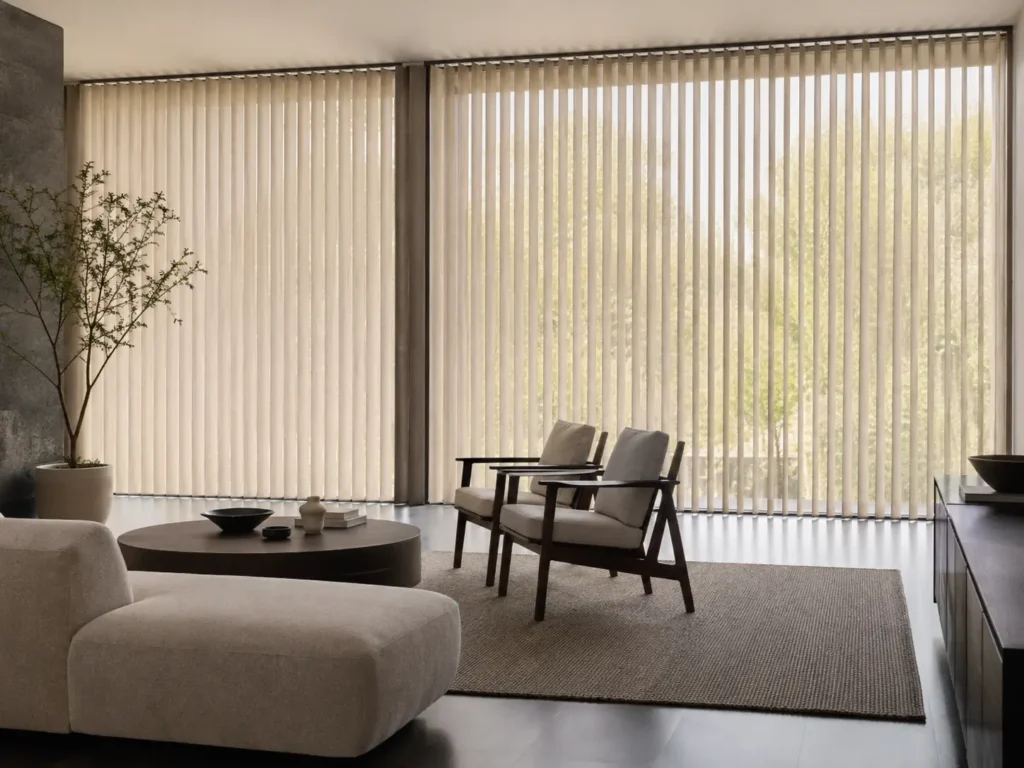
Custom manufacturing lets you tailor light transmission to the specific functional needs of each room. In common living areas, sheer or semi-translucent fabrics soften harsh sunlight into a warm, glare-free ambient glow while preserving a sense of spaciousness.
Conversely, private quarters like bedrooms, media rooms, and presentation centers require complete light blocking. Specifying thick vinyl or interlocking blackout fabrics entirely eliminates outside light, allowing for daytime sleeping, high-contrast screen viewing, and total privacy.
Color Theory and Visual Space Optimization
Window coverings have a significant impact on the perceived size and proportions of a room. Because vertical louvers draw the eye upward, they create the optical illusion of higher ceilings, making low-clearance residential levels or deep commercial floors feel more open and spacious.
Choosing soft white, cream, or cool gray tones helps the treatments blend into modern minimalist walls, creating a clean, understated look. Selecting deep charcoal, matte black, or warm bronze finishes turns large window walls into bold, structured design features.
Stack Placement and Ergonomics
Customizing how your blinds stack when open is key to ensuring natural room traffic and clear views. Track systems can be configured into four main layouts:
- Left Stack: All vanes gather on the left side of the track, keeping the right side completely clear.
- Right Stack: All vanes gather on the right side, ideal for windows with right-opening door paths.
- Split Stack (Center Opening): The louvers open from the middle and divide equally to both sides, mirroring classic drapery style and keeping center-opening sliding doors clear.
- Center Stack: The individual vanes gather into a central bundle, clear of both the left and right edges, which is useful for specialized architectural layouts.
Safety-First Operation
Modern installations prioritize safety alongside style and function. Traditional long loop cords can pose safety risks in homes with young children or pets. Custom vertical blinds address this concern by offering cordless wand controls that easily handle both horizontal movement and vane rotation.
For large-scale properties and commercial developments, motorized automation systems remove the need for manual cords entirely. These systems allow users to adjust entire banks of windows simultaneously using wall switches, remote controls, or automated smart property systems.
Side-By-Side Evaluation: Custom vs. Ready-Made Blinds
Decoding the Real Cost of “Cheap” Window Treatments
Mass-market, ready-made vertical blinds are engineered for low production costs and fast retail distribution. To keep prices low, manufacturers often use thin-gauge steel or plastic headrails, low-density plastics, and loose mechanical tolerances. While these options are inexpensive upfront, they often face operational issues within 12 to 24 months, including cracked carrier stems, tangled control cords, jammed gears, and yellowed or warped vanes.
In contrast, investing in custom-manufactured window treatments means buying commercial-grade components designed for long-term durability. These systems use heavy-duty extruded aluminum tracks, high-density UV-stabilized materials, and precision gear systems that stand up to heavy daily use. This significantly reduces the need for frequent repairs or full replacements, delivering a lower total cost of ownership over time.
Comparative Matrix: Off-the-Shelf vs. Professional Custom Fabrication
| Feature/Specification | Mass-Market Ready-Made Blinds | George Homes Premium Custom Size Blinds |
| Dimensional Accuracy | Rounded to nearest 1–2 inches (Requires cutting) | Tailored to the exact $1/8\text{th}$ of an inch |
| Track & Mechanism | Thin-gauge steel or plastic; prone to jamming | Heavy-duty extruded aluminum; self-aligning clutches |
| Vane Uniformity | Susceptible to bowing, warping, and twisting | Heat-set, UV-stabilized materials for perfect alignment |
| Lifespan Expectancy | 1 – 3 Years (Frequent full replacements needed) | 10+ Years (Backed by structural performance) |
| Stack Customization | Fixed standard stack orientation only | Fully customizable (Left, Right, Split, Center Stack) |
| Regulatory Compliance | Unknown source materials, basic toxic chemicals | Certified GreenGuard Gold & Flame Retardant options |
Frequently Asked Questions
Technical & Regulatory Compliance: Meeting Global Building Standards
Commercial Fire Safety
Large-scale property developments, public buildings, and commercial offices must comply with strict local fire safety regulations. Standard residential retail blinds rarely meet these challenging criteria.
Professional-grade custom made vertical window blinds can be ordered with certified flame-retardant materials that comply with international safety standards like NFPA 701 (in the United States) or BS 5867 (in the United Kingdom). These materials are engineered to self-extinguish when exposed to open flames, limiting the spread of fire and ensuring compliance with local building codes.
Indoor Air Quality (IAQ)
Modern green building programs recognize that materials used indoors have a big impact on overall air quality. Budget plastics and synthetic textiles can release volatile organic compounds (VOCs) over time, which compromises indoor air quality and causes discomfort for occupants.
High-quality custom blinds are built using low-VOC, GreenGuard Gold-certified components. This ensures that even under direct, high-temperature sunlight, the window treatments do not release harmful gasses, supporting a healthier indoor environment for schools, workplaces, and homes.
Smart Building Integration (BMS)
For modern corporate headquarters and energy-conscious residential complexes, window treatments are key to reducing overall energy use. Motorized vertical blinds can be fully integrated with advanced Building Management Systems (BMS).
By connecting automated solar tracking software with motorized blinds, the system automatically adjusts the vane rotation angles to match the movement of the sun. This smart alignment reflects solar heat before it strains cooling systems, helping properties maintain comfortable temperatures and meet strict international LEED energy ratings.
Ready to Transform Your Windows with Engineering Precision?
Get a Bespoke Consultation from Our Project Specialists
Never let standard retail dimensions limit your architectural vision or compromise the quality of your building project. Whether you are constructing a custom private residence, renovating a residential property, or overseeing a large-scale commercial development, George Homes offers custom-sized vertical blinds designed to integrate seamlessly with your architectural blueprints.
Contact us directly via WhatsApp or our online form to receive real-time expert advice on measurements, material selection, and track system configurations.