
In high-density urban developments, boutique hotels, and luxury compact villas, maximizing floor space is a critical priority for architects and developers. Every square millimeter counts. When specifying fixtures for compact en-suites, selecting the wrong door mechanism can ruin a highly optimized layout. A door that swings into a vanity or blocks access to the toilet not only frustrates end-users but also compromises the architectural integrity of the project.
To resolve these spatial bottlenecks, project managers must look toward engineered opening mechanisms. Understanding the precise functional differences between sliding, pivot, and bi-fold shower doors is essential for balancing spatial efficiency with premium aesthetics.
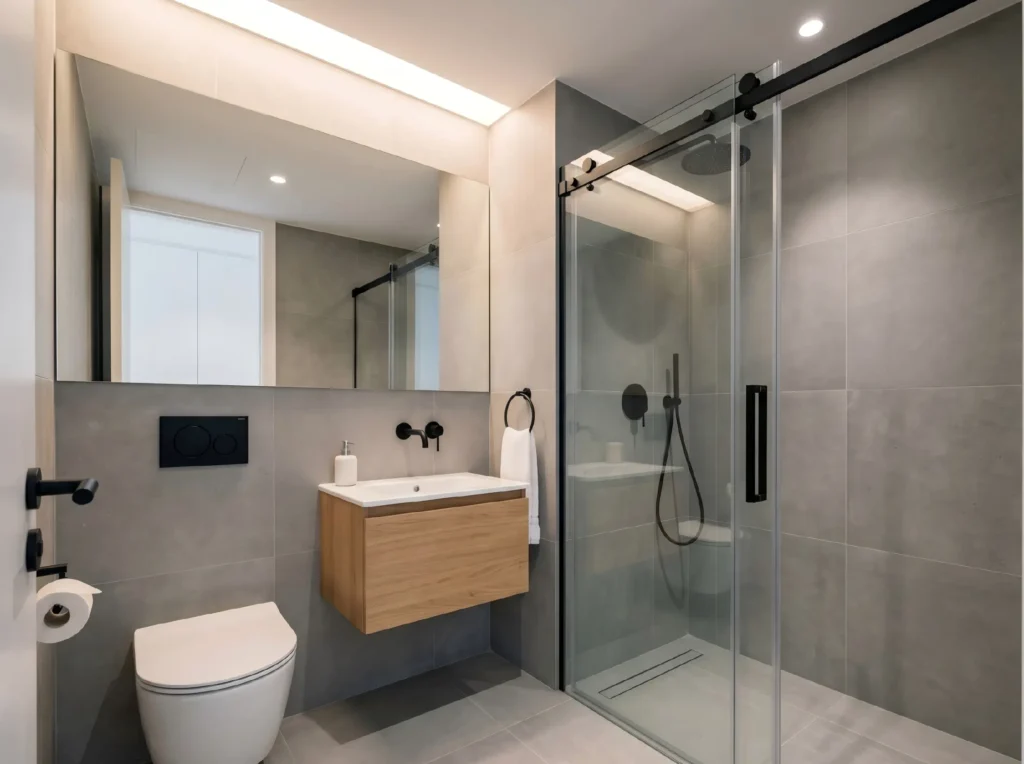
The Engineering of Small Spaces in Commercial & Residential Projects
Successful commercial and residential developments require addressing structural challenges long before the foundation is poured. For compact en-suites, specifying the shower door mechanism during the initial CAD modeling phase prevents costly on-site modifications later.
The shower enclosure does not exist in a vacuum. Its opening arc must perfectly coordinate with your selected Sanitary Ware Solutions to ensure comfortable clearance for daily use. Furthermore, the framing and tracking systems must align flawlessly with the surrounding Tile layouts to guarantee absolute waterproofing, structural stability, and a visually cohesive finish.
Sliding vs. Pivot vs. Bi-Fold: Deep Dive into Mechanisms
When specifying shower doors for tight floor plans, three primary mechanisms dominate the market. Each offers distinct mechanical advantages and engineering trade-offs.
Sliding Shower Doors: The Zero-Footprint Classic
Sliding shower doors operate by gliding horizontally along high-grade stainless steel or architectural aluminum tracks.
- The Mechanism: Panels bypass one another or slide behind a fixed glass panel, completely eliminating the need for outward or inward operational clearance.
- Pros: Requires zero external floor space to open. It is the ideal configuration when the shower enclosure is positioned immediately adjacent to a vanity or toilet.
- Cons: The entry width is inherently restricted to roughly half the total span of the enclosure.
- Best Project Application: High-density multi-family residential towers and standardized business hotel suites. This mechanism pairs exceptionally well with customized framing profiles from our Custom Metal & Glass Solutions to achieve a sleek, modern industrial look.
Pivot Shower Doors: Minimalist Elegance with a Catch
Pivot doors swing outward (or inward) on top and bottom pivot hinges rather than traditional side-mounted wall hinges. This center-aligned weight distribution allows for a highly stable, minimalist structure.
- The Mechanism: The door rotates on engineered pivot points, offering a wide, unobstructed walk-in opening.
- Pros: Delivers a highly coveted frameless aesthetic and provides a significantly wider entry space compared to standard sliding setups.
- Cons: Requires a clear outward swinging radius. Water accumulated on the glass panel can drip onto the main bathroom floor when fully opened.
- Best Project Application: Luxury villa master en-suites or executive hotel suites where achieving a high-end, spacious feel outweighs the need for extreme space conservation.
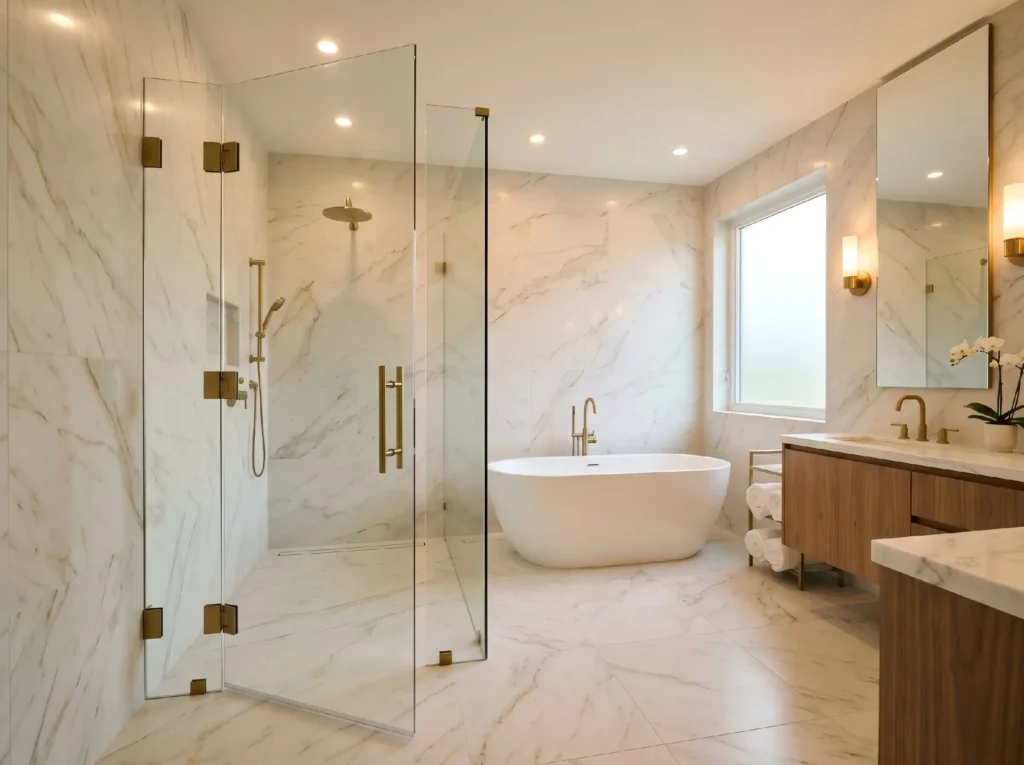
Bi-Fold Shower Doors: The Ultimate Compact Problem-Solver
Bi-fold doors feature two distinct glass panels connected by central hinges, allowing the door to fold inward against itself as it glides open.
- The Mechanism: The panels accordion inward into the shower space, consuming virtually zero footprint in the main bathroom area while maximizing the entry threshold.
- Pros: The ultimate space-saving solution for extreme spatial constraints. It provides excellent access width and is highly effective for compact corner installations.
- Cons: Features more moving mechanical parts, which requires specifying premium, heavy-duty hardware to ensure long-term durability.
- Best Project Application: Micro-apartments, historical building conversions, and highly compact guest bathrooms.
Critical Selection Criteria for Architects & Contractors
B2B procurement decisions extend far beyond simple aesthetics. To ensure project success, builders and project managers must evaluate shower door mechanisms against strict operational criteria:
- Safety & Global Certifications: Commercial liability demands rigorous safety standards. Always specify certified tempered safety glass compliant with international benchmarks such as SGCC (North America), CE (Europe), and AS/NZS 2208 (Australia/New Zealand).
- Hardware Durability & Maintenance: High-frequency environments like hotels require robust corrosion resistance. Specify 304 or 316 marine-grade stainless steel hardware. Incorporating factory-applied anti-limescale glass coatings can drastically reduce ongoing housekeeping and maintenance costs.
- Installation Efficiency: Overseas labor costs can quickly inflate project budgets. Selecting pre-assembled tracking systems or profiles with high structural adjustability allows on-site contractors to accommodate out-of-plumb walls rapidly, saving valuable installation hours.
- Aesthetic & Finish Matching: To maintain a unified design language across the property, custom hardware finishes (such as brushed brass, matte black, or polished chrome) should be specified to match the project’s specialized Lighting fixtures and premium Appliances.
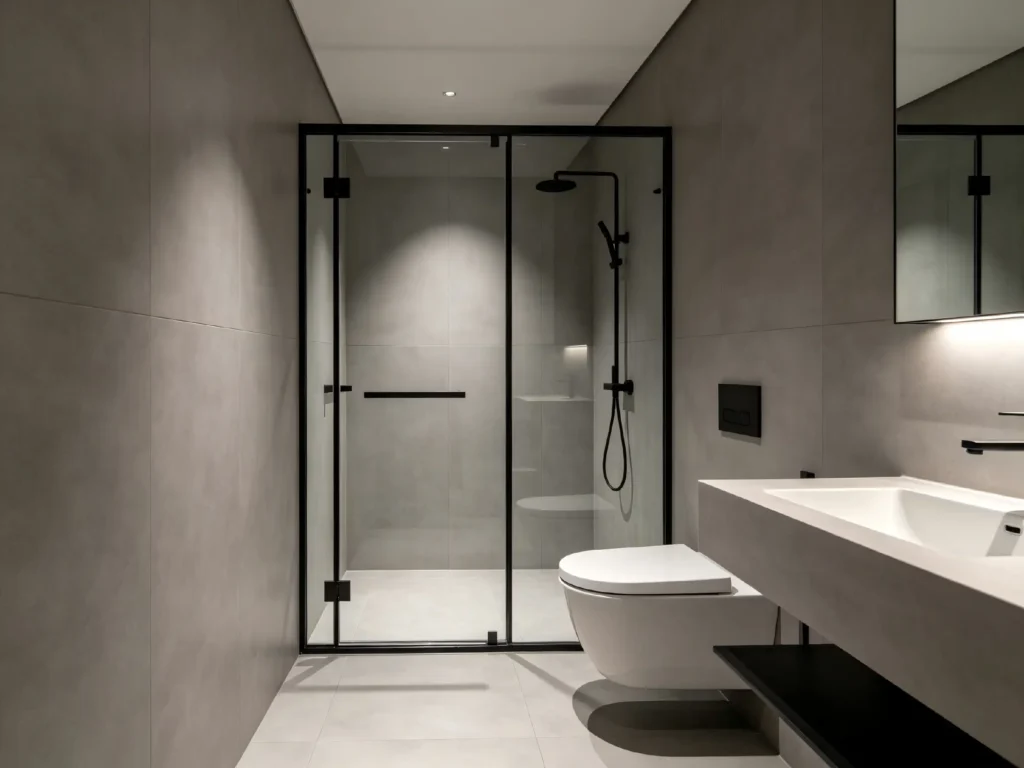
Technical Decision Matrix
Use the matrix below to identify the optimal shower door mechanism based on your specific site constraints and project requirements:
| Door Mechanism | External Clearance Required | Entry Width Access | Installation Labor Cost | Recommended Glass Thickness | Ideal Project Application |
| Sliding | None (Zero Footprint) | Medium (~50% of span) | Low to Medium | 8mm – 10mm | Multi-family apartments, standard hotel rooms |
| Pivot | High (Outward Swing Arc) | Maximum | Medium | 8mm – 10mm | Luxury villas, spacious master en-suites |
| Bi-Fold | None (Inward Folding) | High (~80% of span) | Medium to High | 6mm – 8mm | Micro-apartments, compact corner layouts |
Why Partner with George Homes for Your Bathroom Solutions?
Sourcing architectural products for cross-border developments often involves coordinating glass panels from one factory, structural hardware from another, and shower trays from a third. This fragmented approach frequently leads to site mismatches, delayed timelines, and inflated budgets.
George Homes eliminates these risks through our comprehensive One-Stop Building Project Solutions.
- Solving Multi-Factory Hassles: We engineer, manufacture, and consolidate your entire bathroom specification under one roof, guaranteeing absolute dimensional accuracy before global shipping.
- True One-Stop Capability: Achieve seamless design consistency by unifying your shower enclosures with custom vanities, integrated kitchen & Wardrobe systems, and structural flooring.
- Dedicated Project Support: Every B2B client is assigned a Dedicated Project Manager to oversee end-to-end execution—from providing initial CAD shop drawings to enforcing rigorous quality control and managing international logistics.
We warmly invite global builders, contractors, and developers to visit our expansive 20,000㎡ offline showrooms to inspect our manufacturing excellence firsthand.
Frequently Asked Questions (FAQs)
Conclusion & Actionable Next Steps
Specifying the ideal shower door mechanism requires balancing raw spatial limits with installation efficiency and structural durability. Whether your project demands the zero-footprint performance of a sliding door or the specialized engineering of a bi-fold system, proper planning ensures flawless execution.
Ready to streamline your next commercial or residential development? Contact George Homes today. Send your floor plans and schedules to your Dedicated Project Manager for an itemized project quote and customized engineering support.
Click the WhatsApp icon in the bottom right corner to initiate an instant technical consultation with our global B2B team.
References:
- National Kitchen & Bath Association (NKBA) Bathroom Planning Guidelines & Access Standards.
- International Residential Code (IRC) Section R307.2 – Minimum Clearances for Fixtures.